
Burning Desires, Freezing Hearts: How 9 Lines by Robert Frost Reveal The Fate of The World
Burning Desires, Freezing Hearts: How 9 Lines by Robert Frost Reveal The Fate of The World
Can nine lines really hold the fate of the world?
In Fire and Ice, Robert Frost proves that brevity can still carry immense literary force. This poem is striking not because of its length, but because of its compression. In just a handful of lines, Frost stages a debate about how the world might end — and, more importantly, why.
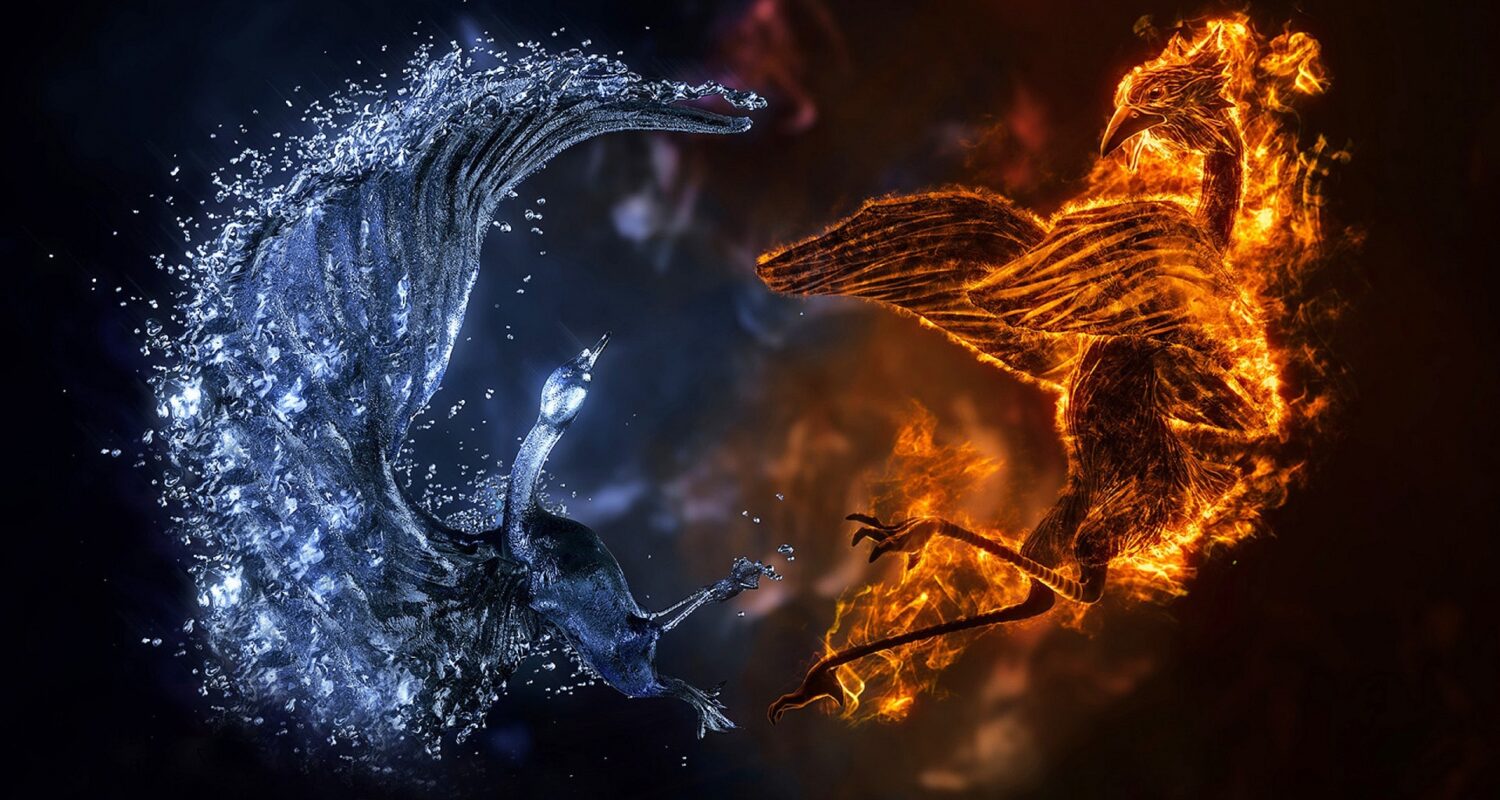
The title itself sets the tone: fire and ice. Two extremes that cannot coexist without tension. From the very beginning, Frost introduces us to a juxtaposition that suggests ideological conflict. These are not merely physical elements; they are symbols, possibilities and philosophies. The contrast invites us to think beyond the literal and into the realm of meaning. “Some say the world will end in fire, / Some say in ice”. The repetition of “Some say” creates an anaphora that reinforces division. It feels like we are overhearing an ongoing argument within society. Frost does not initially take a side; instead, he presents competing visions of destruction. On a scientific level, fire could suggest a cosmic catastrophe, perhaps referring to the sun’s eventual destruction of Earth. Meanwhile ice might evoke another glacial age like we have experienced during the dawn of mankind. But Frost’s true arena is not in astronomical truth but in philosophical reasoning.
Through a philosophical lens, fire becomes desire: burning ambition, passion, greed and the relentless drive to conquer and consume as seen by the few institutions that control the world’s resources. Ice, by contrast, becomes hatred referring to the combined effect of cold indifference, cruelty and emotional isolation. These are not external forces threatening humanity but internal ones that we can already observe when we skim through a news program. When Frost writes, “From what I’ve tasted of desire / I hold with those who favour fire,” he shifts from being a mere observer to a participant. The phrase “tasted of desire” suggests a direct experience. This is not just some abstract speculation but a confession. Frost acknowledges the seductive power of ambition. He seems to suggest that humanity’s relentless urge to dominate — nature, one another and even mortality itself — could become self-destructive. Our desire to survive, to outsmart extinction and to secure permanence may ironically be the very force that ensures our demise.
And yet, Frost complicates his own stance. “But if it had to perish twice…” The possibility of a second destruction introduces a chilling thought: perhaps humanity is capable of more than one kind of ending. Here, Frost pivots. He claims to know “enough of hate” to conclude that “for destruction ice / Is also great”. This is where the poem deepens. Hatred, unlike fiery desire, does not explode all at once. It freezes and isolates. If desire drives us to burn through the world in pursuit of more, hatred keeps us apart — polarised, divided and incapable of unity as we observe in many countries when it comes to the realm of political debates and ideology. A world consumed by ice would not necessarily end in spectacle; it would collapse quietly, through alienation. Relationships would fracture and communities would dissolve. In this image, humanity does not fall in flames and instead withers in cold silence when we are unable to fulfil our collective needs together.
What makes Fire and Ice remarkable is not just its imagery, but its use of word economy. In nine lines, Frost constructs a layered meditation on ambition, hatred and the fragility of human existence. There are no elaborate metaphors stretching across pages, no sprawling narrative arcs. And yet the poem lingers. It invites rereading and it sparks debate as great pieces of literature often do.
In a digital age saturated with images from every direction, our shrinking attention spans threaten our ability to appreciate literary works like novels, poems and plays. In this context, Frost’s poem feels almost radical. It reminds us that depth is not measured in word count. A literary work does not need to be expansive to be expansive in thought. Sometimes compression intensifies meaning and sharpens our search for the universal truth. So what will end the world—fire or ice? Unchecked desire or frozen hatred? Or are we already witnessing both in quieter forms? Frost does not give us an answer and neither does this article written by me. Instead, he hands us a mirror and leaves us with a question — trusts us to finish the argument and revisit the poem for as long as the world exists.









Leave a Comment