Instagram Pinterest Linkedin-in Envelope
    • Home
    • My Writing Corner
      • Pulse of the World
      • Critique Corner
      • Research Desk
      • Philosophy Symposium
      • Creative Chronicles
    • Lifestyle Collective
      • IN-CAFÉ CINEMA
      • IN-CAFÉ JUKEBOX
      • IN-CAFÉ LIBRARY
      • IN-CAFÉ MAP
    • Open Mic
      • Current Affairs
      • History, Arts & Humanities
      • Science & Technology
      • Philosophy & Stoicism
    • About Me
    • Home
    • My Writing Corner
      • Pulse of the World
      • Critique Corner
      • Research Desk
      • Philosophy Symposium
      • Creative Chronicles
    • Lifestyle Collective
      • IN-CAFÉ CINEMA
      • IN-CAFÉ JUKEBOX
      • IN-CAFÉ LIBRARY
      • IN-CAFÉ MAP
    • Open Mic
      • Current Affairs
      • History, Arts & Humanities
      • Science & Technology
      • Philosophy & Stoicism
    • About Me

    Home » My Writing Corner » Critique Corner

    Browsing Category
    Critique Corner
    Critique Corner My Writing Corner

    Dynamic Pricing, “Hydration” Breaks and Market Control: The Influence of US Commercial Practices in the 2026 FIFA World Cup

    June 17, 2026 No Comments

    Dynamic Pricing, “Hydration” Breaks and Market Control: The Influence of US Commercial Practices in the 2026 FIFA World Cup

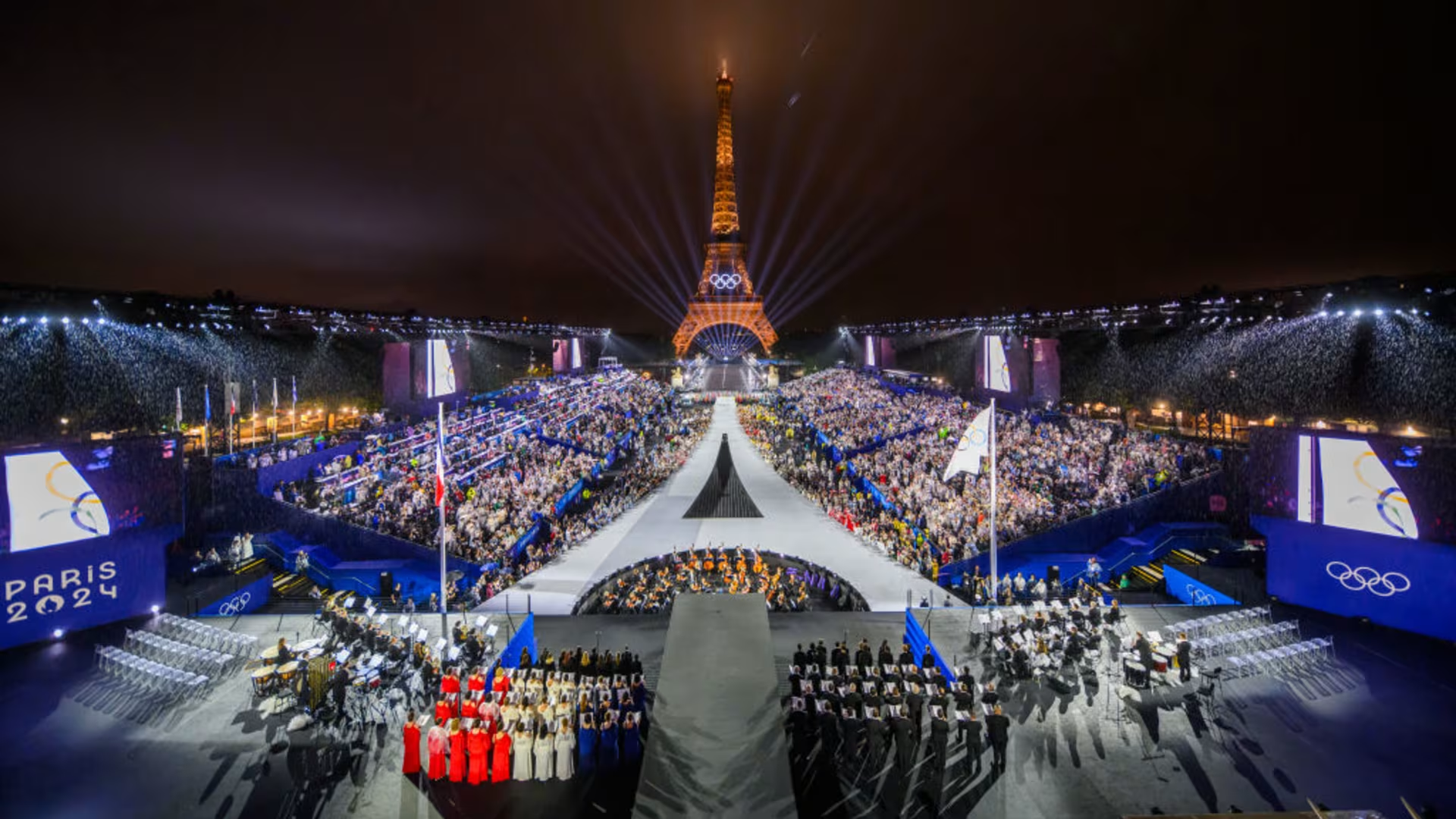
    The 2026 FIFA World Cup arrives as the largest tournament in football history: 48 teams, 104 matches and a tri-nation stage set across North America. It is being framed as a democratisation of the global game — a network‑effect logic in which more nations create more matches, more access and, from FIFA’s perspective, more money. Beneath this narrative of expansion sits a growing contradiction that has already been met with severe backlash from fans across the world. Rising ticket complaints, algorithmic pricing shocks and aggressive advertising campaigns suggest that access itself is being redefined as a premium product rather than a shared cultural right. This analytical piece argues that these shifts are not accidental missteps but planned strategies as a result of FIFA treating the 2026 World Cup as a laboratory for monetisation to pocket its anticipated $13 billion dollars in revenue in which global football meets the economics of US-Style commercialism.

    What constitutes US-Style Commercialism? 


    US-style commercialism could be defined as a specific institutional logic whereby various event aspects are re-engineered as extractable revenue systems drawn from the values, beliefs and tolerance levels of contemporary US citizens. Ritzer (1996) demonstrated  this through a different but related sociological concept known as “McDonalidization”. In simple terms, “McDonalization” suggests that more and more parts of society are starting to work like a fast‑food chain — everything is made to be quick, standardised, predictable and tightly controlled. We can draw Ritzer’s McDonaldization thesis and broader sports sociology into FIFA’s strategic decisions behind the 2026 World Cup. Importantly, these decisions are reflective of various strands of thinking and cultural constituents that contribute to this idea of US-style commercialism. They include but are not limited to:

    • High pricing tolerance as a cultural norm: US sports and entertainment markets normalise extreme price stratification, where elite attendance functions as a status good rather than simple access. This is reflective of the notion of cultural capital: attending becomes less about watching sport and more about signalling exclusivity. In such a system, paying high prices is internalised amongst consumers as a badge of honour and is eventually heavily tolerated as reflected in their willingness to pay.
    • Threat elimination and market enclosure: US sports leagues and platforms often reduce external competition through structural control including franchise systems, exclusive broadcasting rights and integrated resale platforms. This means value is extracted by controlling the entire ecosystem, not just the primary product.
    • Advertising tolerance and attention fragmentation: Unlike football’s traditional continuous narrative, US sport normalises interruption as a revenue mechanism. The game becomes a sequence of monetisable attention windows through curated and predictable ad breaks. In the Superbowl alone, US fans can spend up to an hour watching ads — a practice that is deeply rooted and normalised within consumer culture as a sort of compromise or economic trade-off to access content.
    • Driving culture and infrastructural extraction: US sport is built around car-dependent infrastructure, enabling stadium economies to monetise not only tickets but access itself – parking, tolls, transport corridors and surrounding commercial zones. These stadium are often described in popular culture as ‘dystopian’ — rather than functioning as integrated neighbourhood hubs, they operate like self-contained entertainment fortresses.

    How has FIFA applied US-Style Commercialism?

    Now faced with escalating revenue targets and a pressure to expand the tournament’s economic base, it appears evident that FIFA has effectively leveraged the core mechanisms of American sports capitalism including dynamic pricing and broadcast segmentation as tools to unlock new layers of value extraction in the 2026 World Cup. Compared to Qatar 2022’s subsidy-heavy access model and Brazil 2014’s relatively fixed pricing structure, the 2026 FIFA World Cup redefines commercialisation to a whole new level.

    • Dynamic Pricing: One of the most evident and contested changes in this year’s World Cup was the adoption of dynamic pricing for ticket sales. Whereas Qatar 2022 relied on fixed tiers (including subsidised local categories) and Brazil 2014 maintained largely static price bands, the 2026 model introduces continuous, algorithm‑driven repricing that responds instantly to demand intensity and perceived scarcity. This approach mirrors US airline and ride‑share revenue logic, where volatility itself becomes the mechanism for value extraction. Combined with the relatively high willingness to pay in the North American market, dynamic pricing enables FIFA to stretch the price spectrum dramatically with some seats clearing above $30,000 while others fall below $100. Overall, the systematic US culture around pricing, price tolerance and innovation act as effective point of leverage for FIFA to justify their pricing strategy and extract value from it.
    • Closed Resale Systems: In addition to the exorbitant prices created by dynamic pricing, FIFA has also made a competitive move to own the secondary market of ticket sales. Notably, FIFA created its own proprietary resale platform to prevent unauthorised secondary sales, but this system has drawn criticism because it imposes a combined 30% fee on every resale, allows prices to escalate far beyond earlier public commitments, and uses opaque release patterns that many fans interpret as artificial scarcity. Moreover, these practices have prompted investigations and legal complaints alleging monopolistic control and misleading consumer conditions. Again, they align with the competitive strategies we observe in the US market in which eliminating external market threats enables a single operator to control pricing and value extraction across the entire ticketing ecosystem.
    • Extended Hydration Breaks: While hydration breaks have long existed within FIFA’s framework for player welfare, the 2026 tournament marks the first time they have been formalised into mandatory, scheduled stoppages with broadcasters encouraged to cut directly to commercial slots. This shift has drawn criticism from players and supporters including Netherlands captain Virgil van Dijk who argue that the interruptions disrupt competitive rhythm and edge football toward an American‑style, segmented match structure. The key change is not the presence of the breaks themselves, but their integration into a predictable broadcasting cadence that expands the volume of sellable advertising inventory. In effect, a welfare measure has been reframed as a commercial asset, aligning match flow more closely with US‑style media monetisation models.
    • Half-Time Style Entertainment: In earlier World Cups, including 2014 and 2022, half-time functioned as a protected sporting interval—tactical adjustment, fan recovery, and uninterrupted broadcast analysis. In 2026, FIFA integrates large-scale entertainment productions into key matches, particularly opening fixtures and the final, echoing the Super Bowl model. This reconfigures the unit of value from footballing continuity to broadcast spectacle density. The match is no longer the sole product; it becomes a container for ancillary entertainment content designed for global television audiences. The shift is subtle but structural: football is no longer the central narrative, but the anchor for a broader entertainment package.
    • Driving culture and infrastructural extraction: Unlike Qatar 2022, where mobility was treated as a subsidised public utility (with free metro access via the Hayya Card), and Brazil 2014, where transport systems were largely integrated into host-city infrastructure, the 2026 model embeds mobility within a monetised periphery. Stadiums located in car-dependent American metropolitan zones transform access into an additional revenue layer through parking fees, toll systems, and surge-priced transit routes. Drawing on David Harvey’s concept of “accumulation by dispossession,” this extends extraction beyond the ticket itself into the logistical infrastructure of attendance. Fans are no longer paying only to enter the stadium—they are paying to traverse the economic environment built around it.

    What emerges from this transformation is not simply a more expensive World Cup, but a redefinition of what the tournament is. The 2026 edition signals a shift from football as a shared cultural ritual to football as a fully financialised experience architecture, where every layer—from ticket purchase to transport to broadcast—is optimised for extraction. Yet this does not erase what makes the World Cup compelling in the first place. Even within these structures of commercial intensity, the core emotional logic of the tournament remains intact: the unpredictability of competition, the collective identity of national teams, and the shared suspension of everyday life when the match begins. The tension of 2026, then, is not that football has disappeared, but that it now exists inside systems designed to price it more precisely than ever before. And still, when the whistle blows, the game remains capable of breaking through its own architecture.

    Continue reading
    Written by: Mineka
    Critique Corner My Writing Corner

    Meaning Under Pressure: The Existential Lyrics Driving ESC 2026’s Lithuania & Czechia

    May 10, 2026 No Comments

    Meaning Under Pressure: The Existential Lyrics Driving ESC 2026’s Lithuania & Czechia

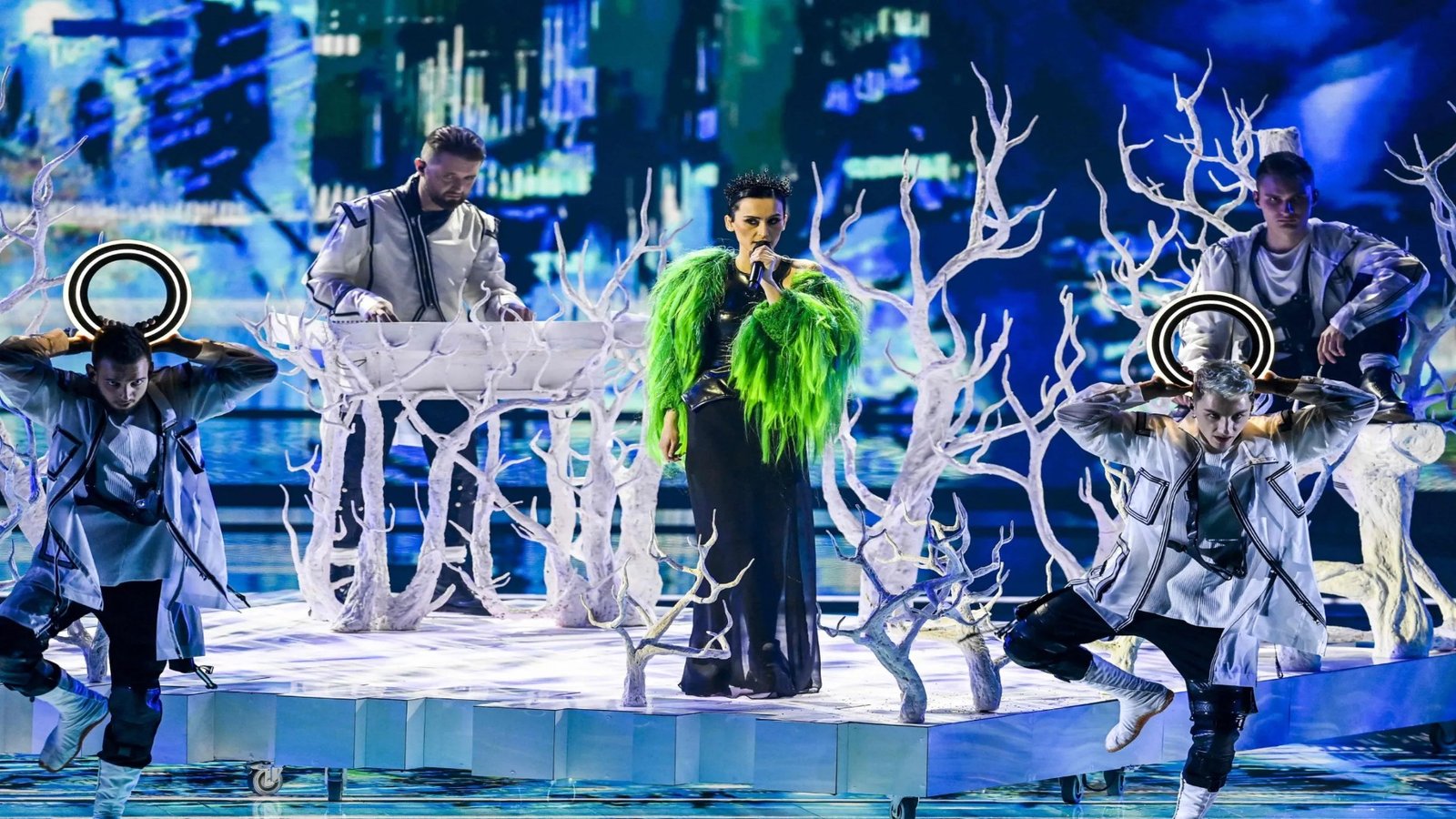
    Eurovision has never been short on spectacle. Each year, our screens erupt in glitter cannons, epileptic lighting and the occasional prop that leaves viewers questioning both physics and artistic intent. Yet beneath the theatrics, almost every entry tells a story condensed into a 3-minute performance with themes ranging from stoic narratives, cultural substance, social commentary or just pure ESC nonsense.  In 2026, two such entries stand out amongst a plethora of those entries that are noted for their lyrical depth: Lithuania and Czechia. Lithuania’s Lion Ceccah with Sólo quiero más and Czechia’s Daniel Žižka with Crossroads arrive at Eurovision 2026 not merely as pop anthems, but as dispatches from the human condition tackling highly existential themes leaving you in an internal state of Socratic questioning. With both entries being artist-led (written and conceptualised exclusively by the artist), this article analytically compares the lyrics of each entry across three interconnected existential ideas: fracture choice, the role of authority and the pursuit of nothingness.

    The Fracture of Choice: Tangled Strings, Shrouded in Fog

    Both songs fundamentally tackle the same existential theme, the crushing weight of human choice, but in their own divergent ways.

    Žižka’s Crossroads is the more anxious of the two songs, its imagery deliberately paints an unstable yet quiet landscape – a hollow jar that cannot reach the “ocean floor”, “tangled strings” and a”vicious spider web”. These metaphors do not converge to a unified image and that is precisely the song’s literary contribution regrading the nature of choices in shaping our exercise of freedom in an otherwise absurd world. Jean-Paul Sartre, a renowned existential philosopher, famously coined the idea of Anguish – because objective moral rules are hard to define, every choice we make is a solitary act of creation that carries the weight of total responsibility. This idea is well-encapsulated within the lyrics of Crossroads, putting forward the proposition that choices do not simplify reality as we are made to believe – they fracture it. Every decision doesn’t close a door; it splinters the path further, revealing new strings, new spiderwebs and new crossroads.  Žižka’s lyrics also appear relevant in a day an age where the world appears more absurd than ever: His plea to his own mother or mother nature itself reflects this empathetically –  “Mother, I’ll get lost without a map”  is the emotional hinge of the song, a son reaching back toward certainty in a world that no longer offers any.

    In contrast, Lion Ceccah begins from a place that might seem superficially simpler but proves on closer reading to be philosophically advanced. While Žižka stands paralysed at the crossroads, Ceccah seems to have already passed through it and emerged on the other side, not with answers but with a deeper, more troubling question that is likely to lead to another wave of fractured choices. The opening verse of Sólo quiero más (Based on an official translation from Lithuanian to English) is quietly devastating: “It frightens me, haunts me everywhere I am / Those who dare, ask: why do I live?”. The second verse compounds this: “I keep spinning again and again, the shores of truth are shrouded in fog”. Universally, across philosophical traditions, humans are urged to look inward to derive meaning. Yet time and again, the stories of great thinkers—from Socrates to the Buddha to the mystics of every era—suggest that introspection rarely delivers the neat clarity we expect. Instead, it often exposes deeper contradictions, more unsettling questions, and a sense that meaning is something we must continually reconstruct rather than discover. Ceccah’s lyrics sit squarely in this lineage: not the voice of someone beginning an existential journey, but of someone who has already walked through the fire of self‑interrogation and realised that the search itself may be the only constant. Through this lens, the song’s titular plea – “I want more” – is not an expression of greed but the cry of a humanity dissatisfied with the hollow answers its own choices have produced.

    The Role of Authority: Mad World and Golden Cages

    If the first theme questions the nature of choice, the second asks what we choose to submit to and both songs arrive at a partial verdict on the structures humans erect to escape the burden of the world. 

    Žižka is startlingly direct. “We try our best to operate on pure love and rage / Ungrateful child in a golden cage”. This is one of the most arresting images in his lyrical story: love and rage reimagined as humanity’s most primal forces (energies we like to frame as liberating, yet which ultimately power the very machinery of human existence). The golden cage is an equally vivid symbol: it represents a life shaped by expectations, comforts and identities we never consciously chose and it these structures that glitter from the outside yet constrict us from within. Once again, Sartre’s ideas, especially his notion of bad faith, feel very relevant here. Bad faith is the act of convincing oneself that one’s situation is fixed and externally determined; it is often seen as the surrender of freedom disguised as necessity. Žižka’s “ungrateful child” inhabits precisely this condition, dimly aware of the bars yet unable, or perhaps unwilling, to name them. The most haunting lyric that closes the bridge of Crossroads before the high notes start to rise is the moment the song finally admits its most blunt truth – “Man cannot change”. In Žižka’s framing, this statement reflects that humanity keeps living in bad faith, avoiding the big questions and surrendering to the pull of authorities, systems, and inherited structures. We stay in the golden cage not because we must, but because we accept it—mistaking constraint for comfort and choosing the familiar over the terrifying work of change.

    Sólo quiero más approaches the same trap but lists this traps and achieves a conclusion regarding their role in the creation of meaning. In the chorus, Lion Ceccah creates a powerful image and subsequently a thought experiment: “Even if there’re no more gods to pray for / Even if we’re standing as the sky falls” — in two lines he dismantles both religious and cosmic authority as possible sources of meaning. This is not nihilism but something closer to what Sartre meant by radical freedom: the moment one accepts that no higher order will hand down purpose, one is finally, terrifyingly, at liberty to create it. The absence of gods is not a catastrophe in Ceccah’s universe but a clearing — a space in which the bigger questions about human meaning can finally be asked. And crucially, he doesn’t replace God with ideology, institution, or romantic love, the usual substitutes humans reach for when one golden cage collapses. He replaces nothing. He simply continues wanting. In this sense, Sólo quiero más becomes the more philosophically consistent position: if the cage is a form of bad faith, the only honest alternative is to refuse all cages and remain in the uncertainty of open water. It is a posture that accepts meaning as something to be made, not inherited, and recognises that the search itself may be the only stable ground we ever stand on.r.

    The Pursuit of Nothingness: Man Cannot Change

    At the end of both journeys, the songs converge on the same uncomfortable truth – Humanity, in these two visions, is a condition that exists and at its universal core we are unlikely to change. 

    Žižka delivers his verdict in the song’s final line: “Man cannot change”. It lands with almost flatness with no drama or consolation. Read within the framework of the song, the line carries a kind of Stoic weight. Marcus Aurelius returned again and again to the distinction between what lies within our control and what does not. The external world, other people, the direction of history — none of these can be mastered. What remains is the quality of our response. Žižka’s conclusion follows this logic. The human tendency to fracture reality through choice, to step into golden cages, to search for maps in a world that cannot be mapped — these are not errors to be fixed. They are part of what it means to be human. The final word of the song is not a solution but a position: Crossroads. It marks a loop rather than an ending.

    Lion Ceccah arrives at the same destination, but by a longer and more troubled route. “Pain and joy, that is life / like an old film, pain creates music that connects without words” — here the song reaches its most reflective point, suggesting that suffering is not separate from meaning but one of its sources. This aligns closely with Nietzsche’s idea of amor fati: accepting the whole of existence, including its difficulty, as the ground on which a real life is built. Towards the end of the song, the title (originally in Latin) is repeated across seven different languages. Similar to Žižka’s universal declaration that “Man cannot change”, this is Ceccah’s way of expressing the universality of the human condition: we will never be fully satisfied with our answers to the big question, and we will keep building systems, structures, and cages that hold us in place. They offer only a brief sense of meaning, just enough to carry us forward, but never enough to resolve the deeper uncertainty that follows us through life.

    We are caged and lost animals, and instead of resolving our deep‑seated need to draw meaning from life, we keep building new cages to create small, personalised versions of meaning. These structures only multiply the choices available to us, leaving us caught in fractured webs of paths that never lead to lasting satisfaction. We keep wanting, keep searching, and keep falling short of the “enough” we imagine exists somewhere ahead. In the Eurovision world of three‑minute pop songs, that is not a small claim — which makes Lithuania’s and Czechia’s entries unusually bold contributions to the contest’s artistry and certainly to existential philosophy.

    Continue reading
    Written by: Mineka
    Critique Corner My Writing Corner

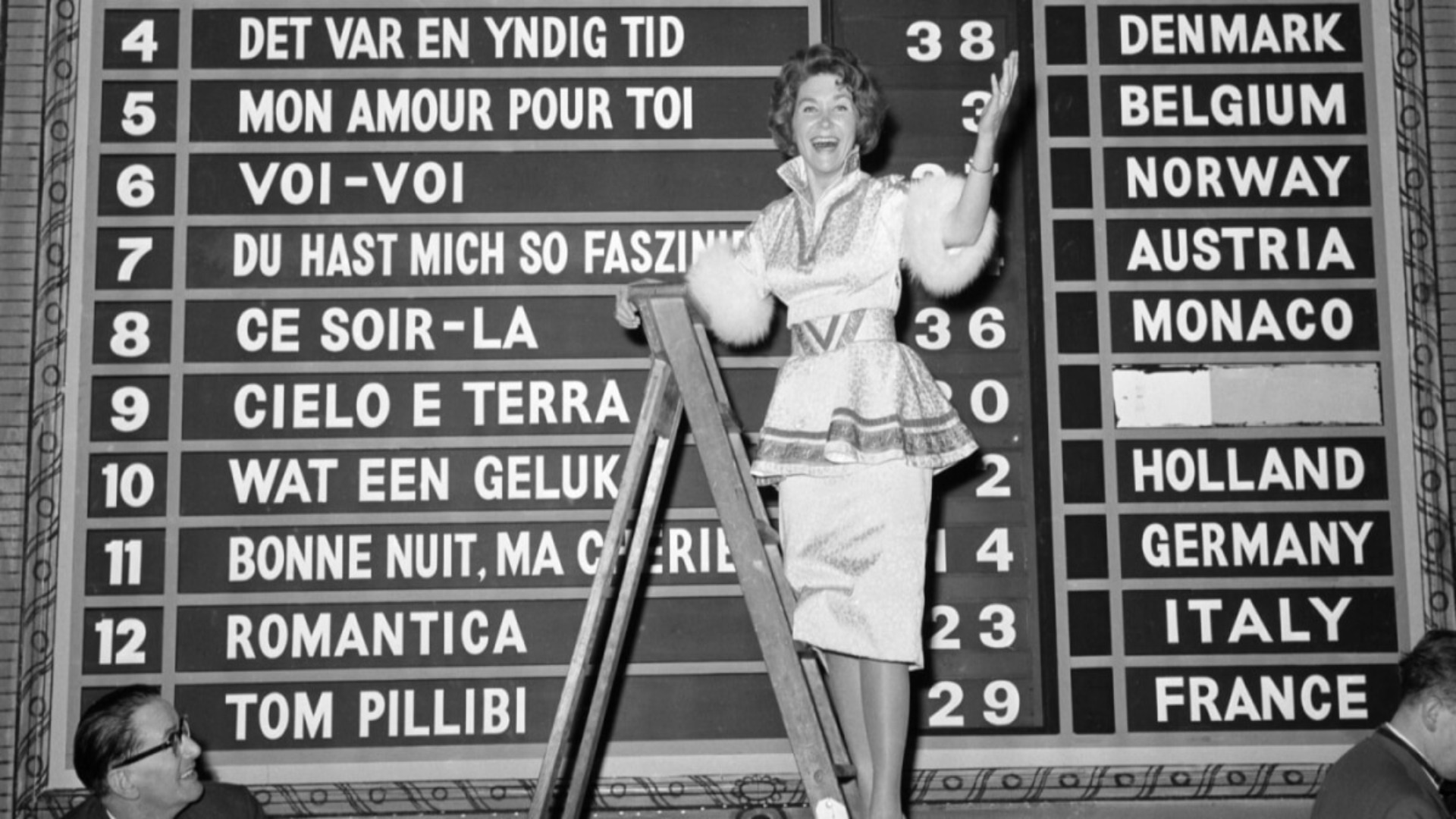
    Collapsed Regimes, Nuclear Disarmament and EU Solidarity: The Hidden Politics behind 5 Eurovision Classics

    No Comments

    Collapsed Regimes, Nuclear Disarmament and EU Solidarity: The Hidden Politics behind 5 Early Eurovision Entries

    At Eurovision, the word “political” is almost impossible to define and articulate on the spot. It is indisputable that a contest built on nations competing under their own flag cannot be free from political influence. Yet what counts as “political influence” remains a grey area – one that is rarely defined by broadcasters, organisers, or even the fan community. Politics manifests in Eurovision in numerous ways (some helpful, some harmful): through voting blocs and regional alliances, through the stories countries choose to present on stage and through the diplomatic tensions that shape who participates and how their entries are marketed and received. In this article we focus on the second dimensions looking where a single three-minute performance can shape the distribution of power and challenge social issues. In the last decade, political songs have often dominated headlines, but the politics have always been there; they simply wore different masks. This article looks back before the 2020s, at five entries that quietly but decisively engaged with power: from sexual violence to unity, from shattered regimes to the right to a nuclear-free future.

    France 1968 – “La Source” by Isabelle Aubret
    France’s 1968 entry, “La Source,” was released in the same year as the May 1968 uprising, when the streets of Paris overflowed with demands for freedom, equality and the dismantling of authoritarian structures. Although the song appears as a gentle lyrical ballad about emotional purity and vulnerability, in later readings it was shockingly discovered to be a subtle yet brutal commentary on sexual violence and the violation of consent. What reads like a fairytale is actually the story of a young, innocent girl being sexually assaulted by three men in a forest, and her subsequent transformation into a spring.  Consequently, the spring (“la source”) becomes a metaphor for the body: something natural, sacred and ideally protected, yet repeatedly contaminated by force. Since an ordinance in 1945, the general age of sexual majority in France was set at 15 and was loosely enforced. Against the 1968 protests, what was also brewing was an intellectual debate regarding consent laws and sexual assault which was regularly battled in court rooms and the legislature. However, the push to strictly protect minors didn’t gain real political and social momentum until the late 2010s, culminating in a landmark legal change in 2021. In this reading, the politics of ‘La Source’ emerges in a very quiet and almost prophetic sense: it mourns violation without naming it directly and implicitly asks the citizens of her nation to reassess what constitutes a decent age of consent. 

    Israel 1974 – “Natali La Khaya” by Poogy
    Israel’s 1974 entry, “Natati La Khayay,” like many Eurovision songs, can be read as a break‑up anthem, but it is better understood as a layered act of pacifism and national dissent.  Unlike recent entries from Israel, which often frame the nation as either threatened by terrorism or committed to maintaining peace, the band Poogy used their ticket to Eurovision to do something completely brave: criticise its own government and advocate for a two-state solution to tackle the Israeli-Palestinian conflict Specifically, band member Danny Sanderson confirmed that the song was a protest against Israel’s then prime minister, Golda Meir further noting that the lyric “Kshe’yesh maspik avir limdina o shtayim” (when there is enough air for a country or two) was a subtle, early nod in support of a two-state solution to the Israeli-Palestinian conflict. The song resonated deeply in Israel, where public anger over the government’s mishandling of wars and treatment of Palestinians was gaining negative attention amongst young Israelis. Interestingly, just five days after Poogy performed this song in Brighton, Golda Meir announced her resignation. This song is a strong example of how Eurovision can function as a platform for gentle and indirect political critique, including critique directed at the very nation an artist represents. When handled with subtlety, a performance can open space for reflection rather than confrontation, allowing audiences to recognise social or political tensions without feeling attacked.

    Portugal 1974 – “E Depois do Adeus” by Paulo de Carvalho
    Portugal’s 1974 entry, “E Depois do Adeus,” was initially heard as a haunting ballad, a slow, melancholic farewell. However, viewed from today, it may be one of the most politically impactful Eurovision songs ever performed — a striking outcome for an entry that finished last with only three points, the same year ABBA had won and started its own revolution. By 1974, Portugal had been under the Estado Novo, an authoritarian dictatorship, for 48 years. The nation was fighting draining colonial wars, struggling with deep poverty and isolation and living under the constant repression of the secret police, which kept free speech and public dissent effectively impossible. This changed following the 1974 Eurovision Song Contest when this seemingly un-political song was use as a military signal to launch the Carnation Revolution across various parts of the country that led to the overthrow of Estado distatorshi[ effectively ending the longest-running authoritarian regime in Western Europe. In this way, the entry shows how a song’s politics can lie not in explicit protest, but in the emotional atmosphere it assembles and how it is used: a song can become a sound cue for the end of a regime. It represents one of the best cases of tactical thinking in its use of the performing arts in shaping the trajectory of a nation’s political history. 

    Finland 1981 – “Nuku Pommiin” by Koivistolaiset
    Finland’s 1982 entry, “Nuku Pommiin” (“Sleep into a Bomb”), is one of the contest’s most explicitly political songs, even if it arrived in a lighter, almost folk‑pop guise. Sung in Finnish by the band Koivistolaiset, the track uses lullaby‑like melodies to describe a child being told to “sleep into a bomb,” a chilling metaphor for the fear of nuclear warfare. This song was written at the height of Cold War tensions, with its lyrics suggesting that if a nuclear crisis were to hit Europe, the best way to handle it is simply to stay asleep and not wake up at all. The song was notoriously poorly received by the international juries, finishing in last place with zero points. Some analysts believe the song’s failure was partly due to its aggressive tone and lyrics that were perhaps “too real” or misunderstood by audiences in the host country (the UK), which was experiencing its own heightened fears of nuclear conflict at the time. The band later revealed that the song was indisputably an anti-war anthem and was seen as an early anthem endorsing the nuclear disarmament movement. Although the song got lost in either translation or musical composition, Finland using Eurovision to voice a pacifist warning about nuclear annihilation was a brave choice and still remains a source of significant geopolitical anxiety in much of the world.

    Italy 1990 – “Insieme: 1992” by Toto Cutugno
    Italy’s 1990 entry, “Insieme: 1992” offers a break from anthems dedicated to specific issues and calls on unity. 1990 was a packed year for Europe: the contest took place in Zagreb as Yugoslavia briefly opened itself to the West, Germany was moving rapidly toward reunification after the fall of the Berlin Wall, the European Economic Community was preparing the treaty that would become the European Union and the Balkans were approaching the political fractures that would soon erupt into war. Moreover, the title refers to the year the Maastricht Treaty was scheduled to take effect, which would officially form the European Union and the single market. This song that ultimately won the contest was unanimously perceived as a erceived as a political anthem for the “New Europe” that was emerging from the ashes of the Cold War and building a bridge between the East and West. While Eurovision often tries to distance itself from overt politics, “Insieme: 1992” leaned into it so heavily that it was seen as the The Unofficial EU Anthem. The song’s politics are in its insistence that the “political” is not only about borders and power, but about the shared imagination of a collection united as though they are one.

    Conclusion

    Collectively, these songs show that Eurovision’s political history is far richer and more varied than the headlines of the 2020s suggest. So before calling the contest “political” it’s worth asking which politics we mean – the harmful kind shaped by state agendas and voting blocs, or the helpful kind where artists use the stage to voice difficult truths and imagine fairer futures. The entries discussed here illustrate how music can carry bold ideas, challenge power, and connect artistic expression with social and political change. At the same time, Eurovision has also seen songs used for soft‑power branding or pulled into geopolitical voting patterns. At the end of the day, the line between art and politics is never fixed, but these cases remind us that music remains one of the most enduring ways to speak, to dissent and to hope.

     
    Continue reading
    Written by: Mineka
    My Writing Corner Critique Corner Photoshootings

    Understanding Contemporary Digital Folklore: The Case of Backrooms, Cores and Liminal Spaces

    April 26, 2026 No Comments

    Understanding Contemporary Digital Folklore: The Case of Backrooms, Cores and Liminal Spaces 

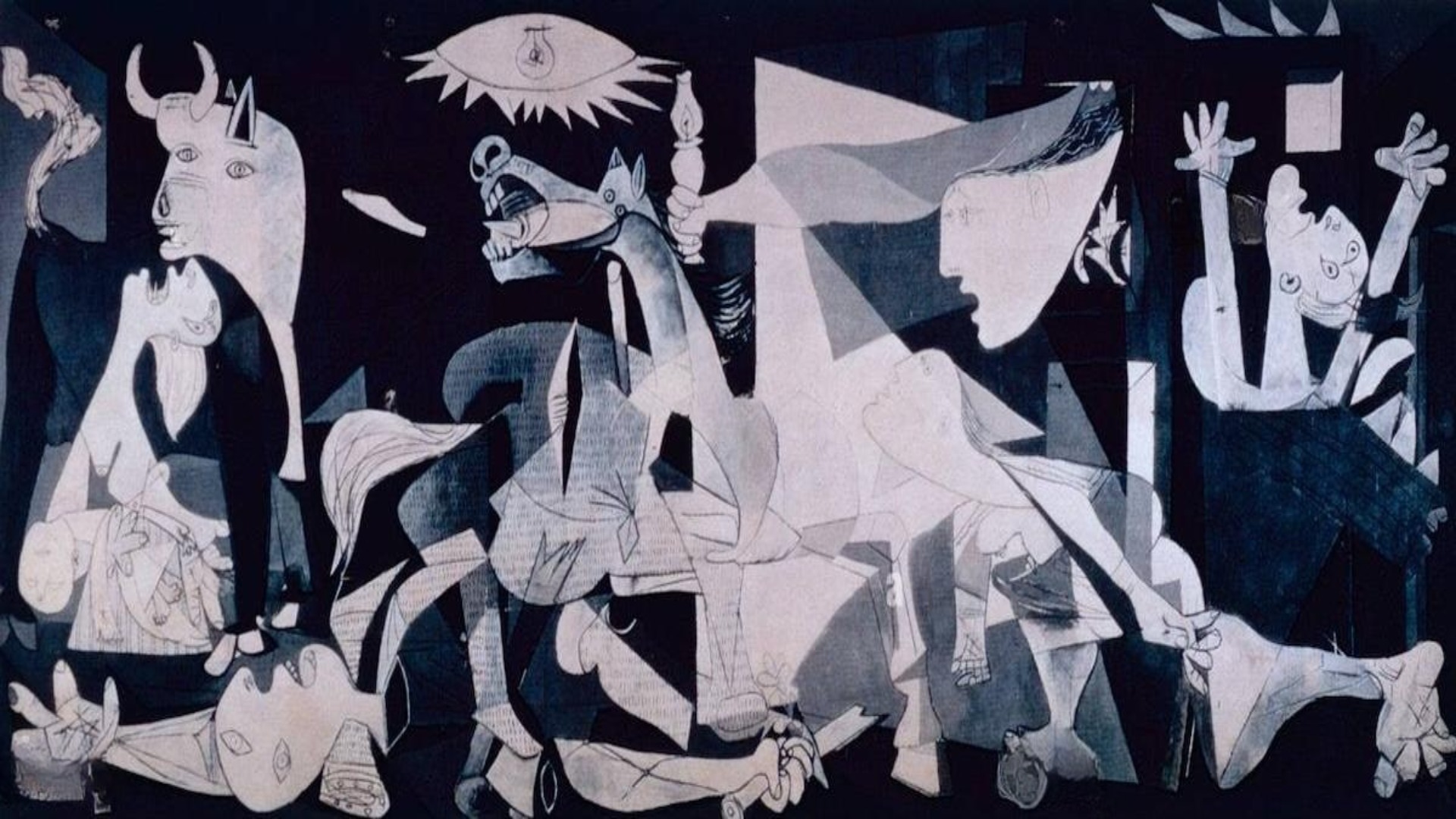
    The Backrooms originated from a 2019 anonymous 4chan paranormal thread, where an unsettling image of an empty, yellow-wallpapered office space was posted, invited users to share more “unsettling images that just feel off'” creating a viral surge of similar online content. The concept hinges on the idea of ‘no-clipping’ (a term in the world of video games for walking through solid walls), allowing a person to accidentally exit reality into this enigmatic void drawing on further concepts such as liminal spaces, entities and levels. What should have been a fleeting anonymous message on 4chan instead transformed into a sprawling internet urban legend, giving rise to a uniquely modern form of digital folklore that continues to fascinate netizens. In facts, it is now the central theme of an upcoming A24 horror thriller set to be released in May 2026. The Backrooms offer a striking contemporary case study: a digital space whose uncanny architecture invites us to uncover the underlying essence of the phenomenon and understand why it evokes such specific, visceral feelings. This article provides two key perspectives from my understanding of this case study.

    Psychological and Philosophical Emptiness

    Liminal spaces, a core tenet within this urban legend, are commonly defined as transitional spaces or periods set between where you were and where you are going. In architecture, these space often come in the form of physical areas like empty hallways, walkways and buffer zones. While they serve many purposes practically, their role within the backrooms analogy is quite psychologically multifaceted. Liminal spaces evoke a vague, elusive dread from the tension between the known and unknown, as we carry a preconscious expectation that spaces like these should bustle with life. When these expectations are disrupted, they violate the “social contract of architecture” amplifying isolation and wrongness. In this spaces, we are philosophically confronted with the “big question” – Those that deal with the emptiness of life, purpose and search for meaning which itself becomes the driving force of horror and terror.

    Loneliness, Anemoia and Depression

    Phenomenologically, the Backrooms become more disturbing the more we think about them. In real life, liminal spaces — like an empty office at dawn or a school hallway after hours—can create the same creeping dread because they feel familiar yet wrong, embedding unease into everyday environments instead of letting it fade like typical horror. An iHorror article describes this feeling as grief‑like: these spaces look prepared for people who are no longer there, making the horror feel lingering and inescapable. Another article published on Slashfilm adds another layer by linking this to millennial and Gen‑Z anemoia, a nostalgia for times we never lived through, which intensifies the tension between comfort and fear. In other words, the Backrooms unsettle us not because they are fantastical, but because they mirror emotional states we already know — loneliness, nostalgia and the uncanny sense of being “out of place”. This makes the horror feel personal, ambient, and strangely intimate.

    Beyond psychological emptiness and anemoia, the Backrooms can also be understood through several other interpretive lenses that reveal why this digital myth resonates so strongly today. One approach is media archaeology, which situates the Backrooms within a lineage of horror, early‑internet creepypasta, and liminal photography showing how the aesthetic draws from decades of cultural memory embedded in low‑resolution images, abandoned malls and corporate interiors. Another is a sociotechnical and netnographic perspective, examining how collaborative world‑building platforms like Reddit, YouTube and Discord allow thousands of users to co‑create this myth, a new form of digital folklore. A third angle is cultural critique, where the Backrooms become a metaphor for modern alienation: the endless beige corridors echoing the monotony of office culture, late‑capitalist architecture and the emotional flatness of digital life. 

    Continue reading
    Written by: Mineka
    Page 1 of 61234»...Last »

    ABOUT ME

    Welcome, curious wanderer! I'm Mineka, a student living in Melbourne, and this is your window to explore the depths of my intellectual journey. Delve into the realms of philosophy's timeless questions, immerse yourself in the rich tapestry of global literature, and uncover the strategies shaping modern business innovation. Join me on this intellectual odyssey as we navigate the pathways of knowledge that inspire my growth and passion. Welcome aboard!

    Popular Posts

    The Pretty Petty Ironies of Life!

    The Pretty Petty Ironies of Life!

    July 22, 2024
    Economic Intuitions behind Australia’s Right to Disconnect

    Economic Intuitions behind Australia’s Right to Disconnect

    Dynamic Pricing, “Hydration” Breaks and Market Control: The Influence of US Commercial Practices in the 2026 FIFA World Cup

    Dynamic Pricing, “Hydration” Breaks and Market Control: The Influence of US Commercial Practices in the 2026 FIFA World Cup

    June 17, 2026
    Sergio Leone’s Desert of Absurdity: Extracting the Existential Philosophy of “The Good, The Bad & The Ugly”

    Sergio Leone’s Desert of Absurdity: Extracting the Existential Philosophy of “The Good, The Bad & The Ugly”

    July 22, 2024
    The Saviour From Hell? Psychological Personality Analysis Of Sienna Brooks (Inferno, 2016)

    The Saviour From Hell? Psychological Personality Analysis Of Sienna Brooks (Inferno, 2016)

    MY WRITING CORNER – CATEGORIES

    • Pulse of the World
    • Critique Corner
    • Research Desk
    • Philosophy Symposium
    • Creative Chronicles

    Open Mic – Categories

    • Current Affairs
    • History, Arts & Humanities
    • Science & Technology
    • Philosophy & Stoicism

    Lifestyle Collective – Categories

    • IN-CAFÉ CINEMA
    • IN-CAFÉ JUKEBOX
    • IN-CAFÉ LIBRARY
    • IN-CAFÉ MAP

    Recent Posts

    Dynamic Pricing, “Hydration” Breaks and Market Control: The Influence of US Commercial Practices in the 2026 FIFA World Cup

    Dynamic Pricing, “Hydration” Breaks and Market Control: The Influence of US Commercial Practices in the 2026 FIFA World Cup

    June 17, 2026
    Meaning Under Pressure: The Existential Lyrics Driving ESC 2026’s Lithuania & Czechia

    Meaning Under Pressure: The Existential Lyrics Driving ESC 2026’s Lithuania & Czechia

    May 10, 2026
    Collapsed Regimes, Nuclear Disarmament and EU Solidarity: The Hidden Politics behind 5 Eurovision Classics

    Collapsed Regimes, Nuclear Disarmament and EU Solidarity: The Hidden Politics behind 5 Eurovision Classics

    Understanding Contemporary Digital Folklore: The Case of Backrooms, Cores and Liminal Spaces

    Understanding Contemporary Digital Folklore: The Case of Backrooms, Cores and Liminal Spaces

    April 26, 2026
    The Mind Beyond the Brain: The Radical Science Behind Dan Brown’s Latest Thriller

    The Mind Beyond the Brain: The Radical Science Behind Dan Brown’s Latest Thriller

    This error message is only visible to WordPress admins

    Error: No feed found.

    Please go to the Instagram Feed settings page to create a feed.

    © 2025 copyright MINEKA'STHOUGHTTAPESTRY // All rights reserved
    Designed by LI Studio