Instagram Pinterest Linkedin-in Envelope
    • Home
    • My Writing Corner
      • Pulse of the World
      • Critique Corner
      • Research Desk
      • Philosophy Symposium
      • Creative Chronicles
    • Lifestyle Collective
      • IN-CAFÉ CINEMA
      • IN-CAFÉ JUKEBOX
      • IN-CAFÉ LIBRARY
      • IN-CAFÉ MAP
    • Open Mic
      • Current Affairs
      • History, Arts & Humanities
      • Science & Technology
      • Philosophy & Stoicism
    • About Me
    • Home
    • My Writing Corner
      • Pulse of the World
      • Critique Corner
      • Research Desk
      • Philosophy Symposium
      • Creative Chronicles
    • Lifestyle Collective
      • IN-CAFÉ CINEMA
      • IN-CAFÉ JUKEBOX
      • IN-CAFÉ LIBRARY
      • IN-CAFÉ MAP
    • Open Mic
      • Current Affairs
      • History, Arts & Humanities
      • Science & Technology
      • Philosophy & Stoicism
    • About Me

    Home » My Writing Corner » Critique Corner » Page 4

    Browsing Category
    Critique Corner
    Critique Corner My Writing Corner

    Ryanair, Duolingo and More: Is there a business case for Unhinged Social Media Marketing?

    June 24, 2025 No Comments

    Ryanair, Duolingo and More: What are the Principles of Unhinged Social Media Marketing?

    Among the many evolving dimensions of modern-day marketing, social media engagement continues to reinvent itself as brands reshape their strategies, tools and narratives in response to the fiercely competitive global marketplace. Today, social media engagement has transcended traditional broadcasting to become an interactive, real-time dialogue – one that demands authenticity, agility and an intuitive grasp of the human experience behind the its many metrics. Within the seemingly congested space of social media engagement, a few brands have boldly rejected conventional norms, giving rise to a new, audacious genre of marketing known affectionately as “unhinged” or “chaotic” marketing. While this emerging approach still remains largely under-theorised within the world of academia, its presence is both conspicuous and compelling as brands like Ryanair, Duolingo and Scrub Daddy storm the internet with their ingenious tactics. What is Unhinged Marketing? And what seems to be its principles? In this article, I aim to demystify the phenomenon of unhinged marketing and propose what I believe are the five defining principles that underpin its practice.

    Principle 1: Speak the Language of the Internet 

    One unifying trait amongst the brands that do excel at unhinged social media campaigns is their fluency in the language of the internet. To some, this phrase is synonymous to Gen Z slang but to a brand it should mean more than just a dictionary of trendy vocabulary. While slang is certainly a core tenet, the language of the internet is something more holistic – It is a cultural pulse constituting a shared rhythm of humour, references and tones evolving daily across online communities. It is having an intuitive grasp of this intricate language that enables brands to communicate in a way that feels digitally native and appropriate to engage in further unhinged campaigns. But what does it mean to have an intuitive grasp of such an abstract language? It means proactively acting on trendy internet phenomena and seeking a creative pathways to insert your brand into it. Ryanair, the infamous Irish airline previously known cheap flights and reckless landings, is now among the favourites of unhinged marketing. Using platforms like TikTok, Ryanair exemplifies its digital fluency by leveraging greenscreens and face filter tools to personify its planes into snarky, meme-ready characters that deliver sarcastic commentary on delays, customer complaints and prices. Consequently, engaging audiences with native platform features like filters, greenscreens, and viral sounds has become a common entry point for many brands breaking into the unhinged marketing space—serving as a digital handshake that signals relevance, humour and cultural fluency. 

    Principle 1: Speaking the Language of the Internet (Ryanair capitalised on the trendy nature of greenscreen filters and inserted its brand to create an unhinged tool that has become the face of the airline)
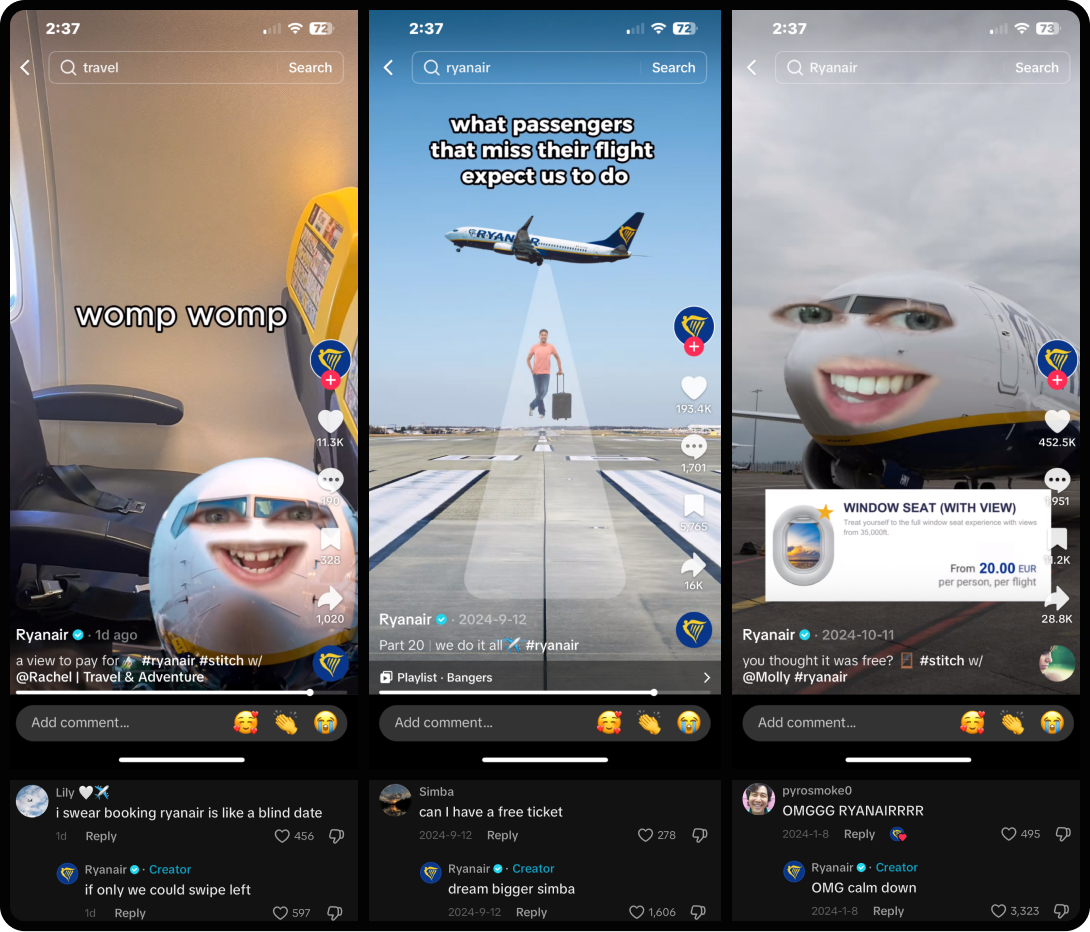
    Screenshots of Ryanair's TikToks

    Principle 2: Prioritise Entertainment over Promotion

    Once a brand becomes fluent in the language of the internet, its social media strategy shifts from promotion to pure entertainment. It is observed that traditional social media campaigns often systematically manipulate elements of AIDA formula leading to polished visuals, reels and interactive media designed to convert passive viewers into active consumers.  In contrast, unhinged  campaigns subvert this logic entirely by curating entertaining content that cultivates a cult-like following that propagates brand awareness organically across digital platforms. Notably, each brand pursues this goal differently plethora of unique tactics. For example, Scrub Daddy, the smiley-faced sponge brand born from Shark Tank brilliantly leverages anthropomorphism by giving its sponges exuberant personalities that play out in quirky, offbeat skits. These skits often depict humorous, relatable scenarios that resonate with audience who are on the desperate lookout for lighthearted distractions during their scrolling sessions. In essence, Principle 2 states that unhinged content isn’t about pushing a product—it’s about pulling in an audience by carving out a distinct, entertaining niche in the digital landscape that ultimately becomes synonymous with the brand.

    Principle 2: Prioritise Entertainment over Promotion (Scrub Daddy exploits the power of anthropomorphism by featuring its sponges as vibrant characters dramatised in a quirky skit)

    Let him retire please @Scrub Daddy #scrubdaddy #tired #funny #crusty | TikTokHow to Revive A Scrub Daddy | TikTok

    Scrub Daddy Funny Video | TikTok


    Principle 3: Embrace Absurdity 

    One of the more philosophical tenets underpinning unhinged marketing is its wholehearted embrace of absurdity in all its existential glory. But what does absurdity really mean? In the metaphysical realm of philosophy, absurdism refers to the  dissonance experienced by humans in their fundamental search for meaning within a universe deprived of rationality. Distilling this complex concept to the realm of marketing, absurdism translates to brands abandoning rigid logic in favour of embracing the bizarre, the surreal and the wildly unpredictable facets of human experience. While this principle isn’t always explicitly acknowledged, it lies at the core of many unhinged campaigns, fuelling their offbeat charm and chaotic allure. Few brands embody this better than Nutter Butter – This American cookie brand has become notorious for its unfiltered absurdist content ranging from distorted, high-contrast videos to anthropomorphised cookies in deeply unsettling scenarios. With erratic dancing, disjointed humour and a tone that bridges the line between comedy and chaos, Nutter Butter invites both confusion and curiosity. Its content is deliberately deranged to not just explain or persuade but to mesmerise and mystify earning its viral traction across platforms like Instagram and twitter.

    Principle 3: Embrace Absurdity (Nutter Butter used anthropomorphised cookies in unsettling, unpredictable and absurd scenarios to create shock value and draw in netizens)

    Nutter Butter's TikTok Account is Freaking The Internet Out

    Principle 4: Transform Failures into Humour Narratives

    One of the primary anxieties for brands operating within the social media space is the lurking threat of reputational damage following single negative interaction. It is empirical that a single negative review, viral complaint or misunderstood message can easily spiral into a full-blown PR crisis. However with an established space of unhinged marketing offers a surprising escape route. By leaning into controversy and reframing service flaws as punchlines rather than problems, brands can defuse criticism and turn potential backlash into viral engagement. Ryanair exemplifies this brilliantly. Where customers once associated the airline with windowless seats, a basket case of mini charges, rough landings and questionably dry Irish butter sandwiches with a strand of lettuce, Ryanair has instead rebranded these pain points into comedic assets. Through self-deprecating humour and meme-worthy content, the airline owns its flaws and uses them as fuel for engagement. One standout example involved widespread social media complaints about a particular windowless seat—famously known as Seat 11A. Rather than ignoring or defending the issue, Ryanair doubled down by launching a cheeky podcast using its creative filters featuring “Seat 11A” as a fictional guest, discussing its “experience” of being a “window seat without a view.” By acknowledging criticism through satire, Ryanair not only humanised the brand but cleverly diverted the narrative, turning frustration into an entertaining spectacle for netizens to laugh to.

    Principle 4: Transforming Failures into Humour Narratives (Ryanair capitalised on the trendy nature of greenscreen filters and inserting its brand to create an unhinged tool that has become the persona of this brand)

    How Ryanair's Most Hated Seat 11A Went Viral After Air India Miracle Survivor | Viral News - News18

    Principle 5: Respond, Engage and Respond!

    Finally, the defining principle of unhinged marketing is indisputably the commitment by such brands to relentless engagement. Brands must continuously respond not just for customer service, but for spectacle. Unlike traditional brands that treat comments as transactional, unhinged brands dive headfirst into the comment section, using it as a stage to further their clever tactics. This is especially evident in Duolingo’s approach. Rather than dodging criticism or hiding behind polished PR language, Duolingo embraces every opportunity to respond with humour, menace or absurdity – often turning a simple comment into viral content. For instance, users who admit to skipping language lessons are met with cheeky threats like “Your streak ends, your life ends,” or “We’re outside your house.” These replies, while clearly exaggerated, contribute to the brand’s unhinged, ever-watchful mascot persona. Duolingo also frequently responds to comments from other brands, continuing the chaos with perfectly timed roasts or surreal humour.  Each response reinforces its identity and deepens the sense of community among followers, who now engage not just to consume, but to provoke a reaction. Through this principle, unhinged marketing becomes a two-way act — reactive, responsive and always ready to turn any interaction into entertainment.

    Principle 5: Respond, Engage and Respond! (Duolingo is infamous for its humorous and regular replies to comments on Instagram and TikTok)

    How the Comment Section became Duolingo's new Push Notification

    Conclusion: Is Unhinged Social Media Engagement for everyone?

    Although this article has not thoroughly explore the success of unhinged social media marketing, it is still not a one-size-fits-all strategy. As we have explored through our 5 principles, unhinged social media marketing demands a brand to understand the language of the internet and entertain netizens by embracing absurdity amidst flaws and frequently responding and engaging it followership. Whether unhinged marketing is technique for every brand is a question that returns to basic marketing fundamentals – value propositions, segments and targets. Brands like Duolingo, Ryanair, and Nutter Butter thrive because they understand their audience and fully commit to the bit. But for more conservative or highly regulated industries, such tactics can easily backfire. Unhinged marketing is high-reward, but also high-risk strategy – a misstep can appear tone-deaf or damage credibility. In a complex world like todays, it is difficult to picture a major petrol brand or designer brand embrace the concept of unhinged marketing. Nevertheless, unhinged engagement works best for those bold enough to abandon polish and embrace the unpredictable nature of online communities.


     
     
    Continue reading
    Written by: Mineka
    Critique Corner My Writing Corner

    5 Notes of Nationhood: Reimagining Eurovision as a Canvas for National Branding

    May 14, 2025 No Comments

    5 Notes of Nationhood: Reimagining Eurovision as a Canvas for National Branding

    Switzerland’s triumphant return to the Eurovision spotlight in 2024, marked by Nemo’s genre-bending and emotionally charged performance of “The Code,” has set the stage for what promises to be a nostalgic yet electrifying 2025 contest. Hosted in the vibrant cultural metropolis of Basel, 37 countries will compete for the coveted win, reigniting the unifying magic that has long defined Eurovision’s legacy. As the glittering lights, flamboyant costumes, and pyrotechnic spectacles return to centre stage, it is worth pausing to reflect on the deeper forces at play beneath the sequins and smoke. More than a mere musical contest, Eurovision has evolved into a powerful site of cultural diplomacy – a strategic platform where nations craft and communicate their identities to a global audience. Every entry is more than just a song; it’s a performative expression of nationhood, often woven with historical memory, regional pride, political messaging, and soft power aspirations. These performances blend tradition with modernity, artistry with ideology — shaping how countries want to be seen and remembered. Through the following blog, I aim to explore five standout Eurovision performances that exemplify how states have harnessed the contest as a machine for national branding. Each performance is a case that reveals a distinct approach to soft power, offering insight into the evolving choreography of identity and diplomacy at play in this uniquely global spectacle.

    Ukraine – “1944” by Jamala (2016) – Embodying Pacifism

    Despite initially coming across as a haunting ballad, Jamala’s “1944”  encapsulates a pacifistic message by delving into the historical trauma of the Crimean Tatars’ deportation under Stalin’s regime.  Sung in both English and Crimean Tatar, the song intertwines personal and collective memory, as Jamala’s great-grandmother was among those forcibly displaced. The minimalist staging and emotive delivery emphasised the song’s gravity, allowing Ukraine to project a narrative of resilience and a commitment to peace. This performance not only secured Ukraine’s second Eurovision victory but also served as a poignant reminder of historical injustices, enhancing Ukraine’s international image by embodying pacifism as its central message. 


    Portugal – “Amar Pelos Dois” by Salvador Sobral (2017) – Embodying Difference

    “Amar Pelos Dois,” written by Luísa Sobral and performed by her brother Salvador, is a gentle waltz ballad that stood in stark contrast to the typical Eurovision fare. It was during the time in which large-scale productions and flashy performances were gaining traction on the Eurovision stages differentiating Salvadar’s performance miles against his competitors. Performed in Portuguese with understated instrumentation, the song’s simplicity and emotional depth captivated audiences. Sobral’s heartfelt delivery and the song’s timeless quality highlighted Portugal’s rich musical heritage and commitment to authenticity. This entry not only brought Portugal its first Eurovision win but also reinforced Portugal’s message to the European stage, a message embodying the nation’s resilience to return to its roots and not follow flashy trends thereby embodying a spirit of difference.


    Finland – “Hard Rock Hallelujah” by Lordi (2006) – Embodying Defiance

    Similar to national branding by difference is national branding by defiance. Lordi’s “Hard Rock Hallelujah” broke Eurovision conventions with its heavy metal sound and theatrical monster costumes. The song’s fusion of hard rock with catchy choruses challenged the contest’s pop-centric norms, showcasing Finland’s unique music scene. This bold performance not only secured Finland’s first Eurovision victory but also positioned the country as a nation unafraid to defy expectations and embrace its distinct cultural expressions.


    Israel – “Diva” by Dana International (1998) – Embodying Progressivism

    Dana International’s “Diva” is an upbeat anthem celebrating powerful women from history and mythology. As the first openly transgender artist to win Eurovision, Dana’s victory was a landmark moment for LGBTQ+ representation. Her performance, combining catchy melodies with glamorous visuals, allowed Israel to project progressive values and engage in cultural diplomacy. This win not only brought Israel its third Eurovision title but also sparked conversations about diversity and inclusion across Europe. 


    Ukraine – “Shum” by Go_A (2021) – Embodying Identity

    “Shum,” performed by Go_A, is a high-energy track that blends traditional Ukrainian folk motifs with contemporary electronic beats. Sung entirely in Ukrainian, the song draws inspiration from ancient rituals and springtime celebrations. Its modern arrangement and dynamic staging showcased Ukraine’s ability to innovate while honoring its cultural roots. Finishing in fifth place, “Shum” resonated with audiences and reinforced Ukraine’s national identity through a fusion of the old and the new.

    Continue reading
    Written by: Mineka
    Critique Corner My Writing Corner

    Sacred Power and Secular Parallels: How Conclave (2024) Reveals the Political Struggles Within the Church and Society

    April 28, 2025 No Comments

    Sacred Power and Secular Parallels: How Conclave (2024) Reveals the Political Factionalism Within the Church and Society

    Directed by Edward Berger, Conclave competed for awards against the most critically acclaimed films of 2024, celebrated for its star-studded cast, masterful screenplay, and immaculate production design. Inside the hallowed walls of the Vatican, cardinals from across the globe gather to elect a new pope, but beneath the rituals and prayers simmers a fierce battle of ideology, ambition, and secrecy. The film thus becomes a revelation, exposing how even the most sacred institutions are not immune to the forces of ideological rifts and division. These very forces are set to unfold once more within the Sistine Chapel in the coming weeks, as the election of “God’s Greatest Servant,” as the late Pope Francis once put it, takes shape. In such turbulent times, it is wise to recognise that Conclave’s portrayal of internal power struggles is not just  confined to the walls of the Vatican but extends across contemporary society where political polarisation fractures the fabric of our society. It is therefore my objective in this piece to explore four arguments linked to Conclave that mirror the growing polarisation that defines modern society.

    The Power of Swing Politics 

    Informally, swing politics refers to drastic shifts in voter sentiment, where electoral strongholds that once reliably supported a particular ideology or political party drift toward an entirely new one. One of the most commonly observed swings occurs along the broad axis of left and right ideals, while another – often more deeply felt – is the swing between liberal and conservative worldviews. The Liberal-Conservative spectrum is a structural impediment within political rhetoric and electoral discourse that is indisputably part and parcel of the battle to select a new pope. In Conclave, this spectrum is explored through the various political factions that make up the college of cardinals, who through secretive agreements and deals, manipulate the ideological currents that dictate the election of a new pope. These distinct factions predominantly include the Conservative and Liberal factions whose underlying political ideologies serve as the rifts through which electoral sentiments swing across the Conclave. 

    • The Liberal Faction (Led by Cardinal Bellini) – Early in the conclave, Cardinal Bellini emerges as a potential candidate, who backs the support of Cardinal Lawrence and a few other liberal-leaning candidates (The Dean of the College of Cardinals). He symbolises the liberal, reformist faction of the College of Cardinals that pushes for the modernisation of religious scriptures through soft stance on issues such as sexuality, women and race. However, his position weakens significantly after a devastating terrorist attack on the Sistine Chapel. The attack heightens fear among the cardinals, creating a mood where conservative, security-focused ideals gain traction, and Bellini’s softer, reformist agenda begins to seem dangerously naïve to many electors. 

    • The Conservative Faction (Led by Cardinal Tedesco) – The conservatives, led by the  Cardinal Tedesco, represent a traditionalist perspective with values and ideals that are more or less congruent to the dominant views that have held Catholic Change for over a millennium. Despite being an early favourite, he astutely capitalises on the climate of fear after the attack, advocating for a strong, unyielding return to Church orthodoxy and authority. However, their momentum falters when Cardinal Vincent Benítez emerges as a moral counterpoint. Benítez’s message of peace, forgiveness, and inclusivity undercuts the fear-driven rhetoric of the traditionalists, offering the conclave a vision of strength through compassion rather than force. This shift reflects how new voices, emphasizing empathy over fear, can unexpectedly realign political landscapes. 

    This dynamic within Conclave closely mirrors contemporary political landscapes, where crises – whether acts of terror, economic collapses, or pandemics – often trigger  a sharp swing towards conservative, security-driven politics. Similarly, periods of stability or instability under a conservative leaderships tends to favour progressive movements advocating for reform and inclusion. The film captures how ideological swings are less about coherent visions for the future and more reactive to fear, uncertainty, and the human desire for stability. In today’s society, we witness the same phenomena: moments of crisis fortify traditionalist forces, while emerging voices championing empathy and global solidarity struggle to find footing, only to eventually reshape the political conversation when the appetite for fear wanes. While exogeneous, like an act of terrorism, in the film could easily catalyse and expedite such a swing in ideology, the underlying force that powers swing politics is not exogenous nor endogenous shocks. Ultimately, it is a powerful group of undecided centrists that dictate ideological shifts whose uncertainty is what drives the forces of society as it did in Conclave.  

    Political Centrism as a Parameter of Uncertainty 

    In political theory, centrism advocates for gradual change through a diplomatic stance that resists both the right’s adherence to the status quo and the left’s pursuit of radical transformation. Unlike the liberal and conservative factions, which are hallmarked by clear leaders and ideological markers, the centrist faction within Conclave remains elusive, lacking both defined leadership and explicit values in the papal context. Although the film intentionally refrains from spotlighting any figures as explicitly centrist, it is indisputable that they collectively form the greatest majority within the College of Cardinals. This is evidenced by the repeated ideological shifts across each ballot and the ultimate twist that sees Cardinal Benítez secure the papacy. These fluid shifts mirror the cognitive and emotional volatility often seen among centrist voters, suggesting that centrism in the Vatican is less a coherent ideology than a void. Paradoxically, it is this very lack of ideological rigidity that propels the Conclave towards consensus, with the majority’s uncertainty ultimately determining the course of the Church’s future.

    In this way, political centrism, with no definite definition, serves as a parameter of uncertainty – a force that can either stabilise or paralyse institutional decision-making depending on the pressures at play. Applied to broader society, centrism offers the virtue of moderation: the ability to cool down extremism, seek compromise and adapt to complex realities without resorting to ideological purism. However, its vice lies in its inherent ambiguity; in moments of profound moral or political crisis, the centrist impulse toward caution can devolve into indecision, allowing more extreme forces to set the terms of debate. In Conclave, as in the real world, the centrists’ reluctance to commit to bold positions prolongs instability, but ultimately their quiet, collective shift determines the course of history – illustrating how the “middle ground” often holds more power than either side realises, for better or for worse.

    The Curse of The Populism

    Beyond the liberal, conservative and centrists faction, is another faction that we are indirectly exposed to in the form of populism. In political rhetoric, populism is political philosophy that strives to appeal to ordinary people when their needs are disregarded by dominant and elite groups within society. It is an aspect of politics we witness daily as politicians carefully craft their image to represent the needs of the common man promising policies that work towards the utilitarian good of broader society. In Conclave the populist faction is primarily led by Cardinal Tremblay who positions himself as a man of the people, using simple slogans and emotional appeals rather than complex theological arguments to gain support.  Yet, as the conclave progresses, his opportunism becomes apparent, and his shallow rhetoric is exposed through an event that represents the cursed hypocrisy of populism as the next paragraph illustrates. 

    Working with Sister Agnes, the head housekeeper, Cardinal Lawrence discovers that Cardinal Tremblay arranged for the sudden transfer of a servant to create issues with anotehr candiate and  conceal evidence of the electoral corruption he had taken part in. Breaking into the late pope’s sealed apartments, Cardinal Lawrence uncovers documents revealing that Tremblay had bribed cardinals to secure his votes, a revelation that shakes the integrity of the conclave. . This sequence embodies The unwritten Curse of Populism: Tremblay, who rose on promises of humility and service to the people and College of Cardinals, is unmasked as a self-serving opportunist, demonstrating how populist rhetoric often cloaks corruption and ambition, ultimately deepening public distrust in institutions that claim to represent moral authority. It is a trap that ordinary citizen could easily fall to as they are swayed by politicians choosing to represent their interests by antagonising the existence of elites through an image that hides their corrupt ambitions. 

    Does Political Pragmatism win at the end of the day?  

    Ultimately, all factions — liberal, conservative, centrist, and populist — fail to secure the papacy due to their inability to unify the College of Cardinals and form a majority. It is Cardinal Benítez’s nuanced response to the terrorist attack that allows him to transcend these fractured ideologies and emerge as the true figure of political pragmatism. While the liberal faction falters with its idealistic calls for reform and the conservatives cling to fear-driven orthodoxy, Benítez’s approach stands out by focusing on reconciliation, peace, and unity. His pacifist stance not only addresses the immediate crisis but also offers a broader, more inclusive vision for the Church’s future, healing divisions and bridging gaps between the conflicting factions. By recognizing that the true challenge lies in overcoming fear and division, rather than perpetuating it, Benítez successfully shifts the ideological battleground away from rigid politics to a more humanitarian and pragmatic vision. His election illustrates that, in times of great crisis, political pragmatism — the ability to adapt, heal, and unify — proves to be the most effective and enduring ideology.

    Continue reading
    Written by: Mineka
    Critique Corner My Writing Corner

    Contemplating Contrapposto: The Symbolisms and Existential Depths of Structural Art

    March 25, 2025 No Comments

    Contemplating Contrapposto: The Symbolisms and Existential Depths of Structural Art


    The classical contrapposto is a fascinating feature of the sculpture and style of classical antiquity that traces its origins to the foundations of Western art in Ancient Greece. Known for celebrating the male physique as a naturalistic representation of athleticism, Ancient Greece’s adoration of masculine virility has been keenly depicted through its many artistic endeavours, including literature, pottery, and sculpture. Muscular Greek statues, in particular, with their chiselled torsos, rippling forms, and sensuous curves, exude an alluring and timeless eroticism, capturing the essence of divine perfection and human desire in every sculpted detail.

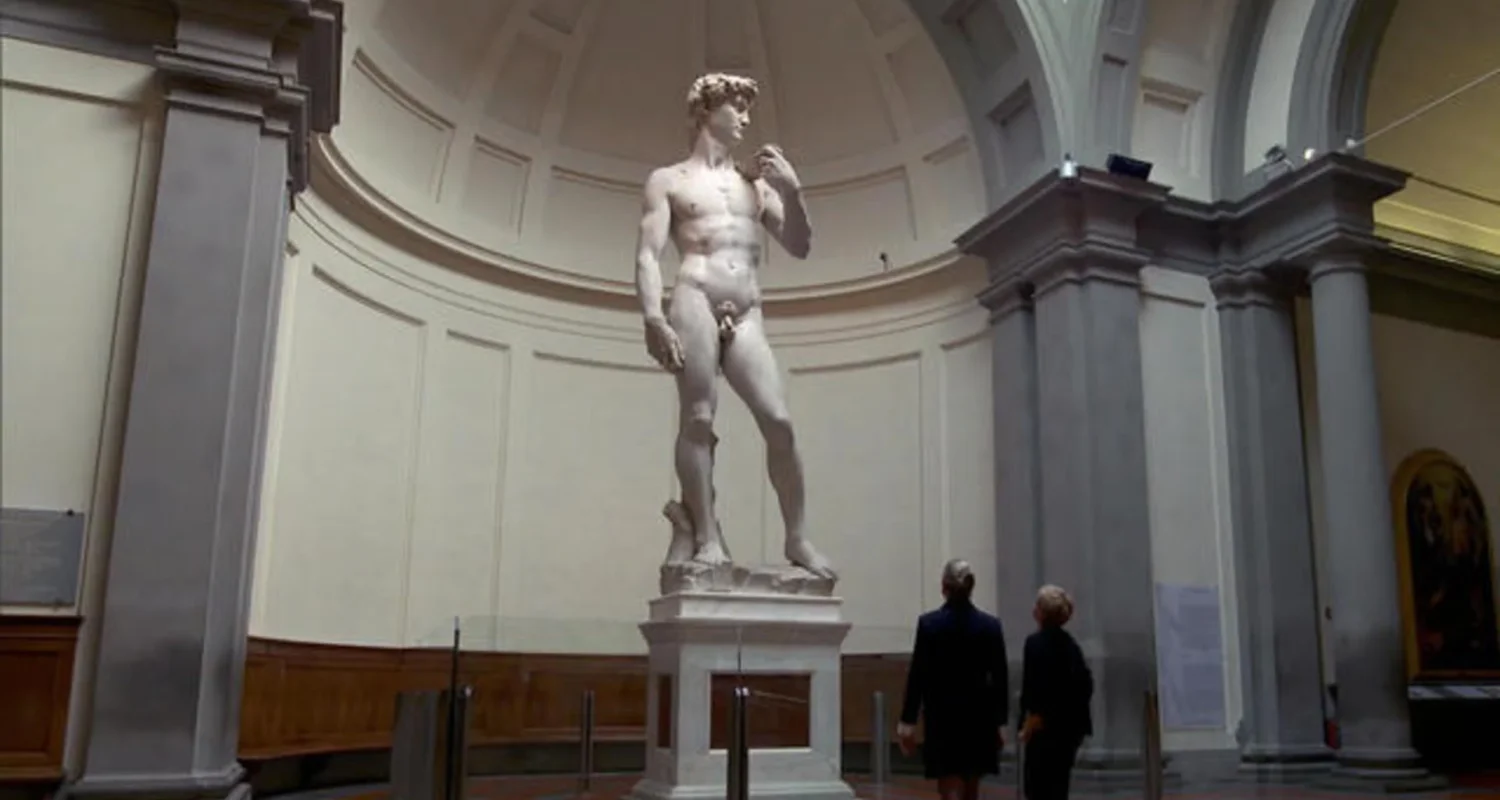
    The contrapposto, which bears a certain anatomical specificity, is one of the many features that adorn the mystical yet luring statues and statuettes of Ancient Greece. It can be defined as a sculptural scheme in which a standing human figure is poised such that its weight rests on a single leg (called the engaged leg), which subsequently frees the other leg, which is bent at the knee. As time progressed and the Ancient World swept into slumber, resurrections of the classical contrapposto saw itself reappearing in the timeless sculptures of the European Renaissance, such as Michelangelo’s infamous David in 1501. Although this structural scheme frequently appears across the grand plethora of classical sculpture, little is known as to why this scheme may be significant or for what purpose it stands in the broader philosophical sphere of existential thought.

    Those whose minds are predisposed to inquisitiveness, may gaze for hours upon a sculpture, naturally pondering the multitude of questions that interrogate the purpose, depth, and hidden motives behind the sculptor’s choices. Staring at the sculpture of Donatello’s David, our inquisitive drive demands that we understand and rationalize every distinct and precise feature of the sculptural opus through the artistic motives that have driven Donatello to construct his sculptural masterpiece. Why does he place his weight on a singular leg? Why are his eyes directed towards the earth? Why do his fingers bend in a circular motion while he places his left hand towards the starting point of his pelvic muscles? These questions seek to derive meaning from sculptural choices and in turn question the artist’s anatomical choices, which may be undiscovered through mere historical or contextualised understanding.

    As humans, demystifying the world is complemented by further mystifying its secrets, which at the end of the day is what strikes the complex beauty of humanity. Hence, we would also want to contemplate contrapposto as a philosophical endeavour more than an artistic one by aiming to resurrect its metaphysical secrets by understanding the sculptural schemes in the broader context of mind’s complexity. Extending this to the analogy of Donatello’s David, we may be propelled to understand whether the circular motion of his fingers is a hidden symbol for the anxiety of stepping into conflict, whether the direction of his eyes towards the ground is a motif that suggests an inner existential conflict, or whether the general lack of balance between the sculpture’s limbs is a physiological expression of David’s epistemic dissonance in partaking in war.

    The contrapposto, among many other sculptural schemes and choices, is one such feature that triggers this depth of questioning and may be imperative to unravelling the shades of meaning from an entire sculpture and demystifying its philosophical undertones. As illustrated earlier, the contrapposto seeks to focus the weight of a statue onto a single leg while the other is kept free but bent at the knee. This position is generally associated with free-standing male figures and is one that posits grace and masculine poise in a statue. Previously it was entailed that the posture is natural and relaxed, although present-day humans may reject this claim upon forcibly attempting the contrapposto, which subsequently obscures further levels of questioning. However, what humans fail to recognise is that the contrapposto is indeed a natural pose that is involuntarily achieved through the anatomical interaction between our biology and environment and is therefore harder to achieve when done forcibly. The contrapposto emerges as we take our final step in a dignified stride, our weight centred on one leg while the other remains free and bent, poised to move forward. This naturalistic stance suggests that each sculpted figure engaging in this pose has recently walked or is about to set foot decisively. For David, this could symbolise the rock from which he plans to confront the Philistine giant Goliath and lead his army. It represents a midpoint between action and anticipation, conveying a sense of the impending incompleteness inherent in the contrapposto. This pose hints at hidden doubts and uncertainties within the character, whether it is the unarmed David facing a formidable enemy or the contemplative gaze of a deity surveying the world from the heavens. This juxtaposition of doubt alongside the bold projection of the sculpted figure creates a dynamic tension that resonates with viewers, inviting empathy and shared introspection. The contrapposto thus serves not only as a physical stance but also as a metaphysical window into the inner turmoil of its subjects, offering viewers a deeper connection to the complexities of the human mind as it is hindered by the power of doubt.

    Another interpretation of contrapposto, merging physiology with phenomenology, maybe the nature of epistemic dissonance. In the philosophical tradition, weight is viewed as a focus of energies that, when evenly distributed across our physiological systems, keeps us alive and human. While contrapposto may be naturally achieved between anticipation and action, as signified in the previous interpretation, when one tries to forcibly strike this pose, the previous argument is no longer valid, signifying greater philosophical questioning regarding the nature of mental balance. Although metaphysical forces tend to keep our minds in balance, there are always instances where this may be unpresented, thereby compelling us to struggle and strive in order to seek balance between our minds and subsequently our organs and organ systems.

    The characters that engage in the contrapposto, by this inferential point, are undergoing some inner form of existential questioning or epistemic dissonance, as there may be an imbalance between their thoughts, feelings, and behaviour, as resonant with the physical imbalance between the distribution of their weight. This imbalance is caused by the character engaging in behaviour that confounds or is in flux with the affective and cognitive facets of the character’s attitude, leading to an unpleasant sense of anxiety. This is easily evident through images of David where he is on the verge of undertaking a war which misaligns with his value system and underlying attitudes.

    Conclusively, analytical minds that value art and its expression are not just appreciators, as they seek to go into depths behind the significance of the artistic choices that drive an artwork’s meaning. In the case of sculptural works, it is the anatomical features of the statue and how they correlate with story, context, or philosophy through which that statue was constructed. The contrapposto, as natural and simple as it might seem, is a symbol of the incompleteness we experience as humans every day as we ebb and flow through cycles of hope between moments of anticipation and action. In addition to that, the imbalance caused by the pose may be a physio-psychological expression of the epistemic dissonance we undergo when our value systems and actions misalign, thus triggering a series of existential questions that ponder in the abyss of our minds. Therefore, The contrapposto as passed from the Ancient Greeks to Renaissance sculptors, is not a mere structural choice but one that deconstructs a myriad of truths about the human experience that shall never lose their inherent relevance.

    Continue reading
    Written by: Mineka
    Page 4 of 6« First...«3456»

    ABOUT ME

    Welcome, curious wanderer! I'm Mineka, a student living in Melbourne, and this is your window to explore the depths of my intellectual journey. Delve into the realms of philosophy's timeless questions, immerse yourself in the rich tapestry of global literature, and uncover the strategies shaping modern business innovation. Join me on this intellectual odyssey as we navigate the pathways of knowledge that inspire my growth and passion. Welcome aboard!

    Popular Posts

    The Pretty Petty Ironies of Life!

    The Pretty Petty Ironies of Life!

    July 22, 2024
    Economic Intuitions behind Australia’s Right to Disconnect

    Economic Intuitions behind Australia’s Right to Disconnect

    Dynamic Pricing, “Hydration” Breaks and Market Control: The Influence of US Commercial Practices in the 2026 FIFA World Cup

    Dynamic Pricing, “Hydration” Breaks and Market Control: The Influence of US Commercial Practices in the 2026 FIFA World Cup

    June 17, 2026
    Sergio Leone’s Desert of Absurdity: Extracting the Existential Philosophy of “The Good, The Bad & The Ugly”

    Sergio Leone’s Desert of Absurdity: Extracting the Existential Philosophy of “The Good, The Bad & The Ugly”

    July 22, 2024
    The Saviour From Hell? Psychological Personality Analysis Of Sienna Brooks (Inferno, 2016)

    The Saviour From Hell? Psychological Personality Analysis Of Sienna Brooks (Inferno, 2016)

    MY WRITING CORNER – CATEGORIES

    • Pulse of the World
    • Critique Corner
    • Research Desk
    • Philosophy Symposium
    • Creative Chronicles

    Open Mic – Categories

    • Current Affairs
    • History, Arts & Humanities
    • Science & Technology
    • Philosophy & Stoicism

    Lifestyle Collective – Categories

    • IN-CAFÉ CINEMA
    • IN-CAFÉ JUKEBOX
    • IN-CAFÉ LIBRARY
    • IN-CAFÉ MAP

    Recent Posts

    Dynamic Pricing, “Hydration” Breaks and Market Control: The Influence of US Commercial Practices in the 2026 FIFA World Cup

    Dynamic Pricing, “Hydration” Breaks and Market Control: The Influence of US Commercial Practices in the 2026 FIFA World Cup

    June 17, 2026
    Meaning Under Pressure: The Existential Lyrics Driving ESC 2026’s Lithuania & Czechia

    Meaning Under Pressure: The Existential Lyrics Driving ESC 2026’s Lithuania & Czechia

    May 10, 2026
    Collapsed Regimes, Nuclear Disarmament and EU Solidarity: The Hidden Politics behind 5 Eurovision Classics

    Collapsed Regimes, Nuclear Disarmament and EU Solidarity: The Hidden Politics behind 5 Eurovision Classics

    Understanding Contemporary Digital Folklore: The Case of Backrooms, Cores and Liminal Spaces

    Understanding Contemporary Digital Folklore: The Case of Backrooms, Cores and Liminal Spaces

    April 26, 2026
    The Mind Beyond the Brain: The Radical Science Behind Dan Brown’s Latest Thriller

    The Mind Beyond the Brain: The Radical Science Behind Dan Brown’s Latest Thriller

    This error message is only visible to WordPress admins

    Error: No feed found.

    Please go to the Instagram Feed settings page to create a feed.

    © 2025 copyright MINEKA'STHOUGHTTAPESTRY // All rights reserved
    Designed by LI Studio