
The Mind Beyond the Brain: The Radical Science Behind Dan Brown’s Latest Thriller
The Mind Beyond the Brain: The Radical Science Behind Dan Brown’s Latest Thriller
Dan Brown has always had the gifted ability to spark intellectual debates through novels that blend high‑stakes controversies with the most provocative scientific, religious or historic ideas. Whether it’s the supressed knowledge that hides within the Vatican Archives or the radical growth of transhumanist gene editing technologies, his novels have never stopped us to question, wonder and bridge the gap between fact and fiction. In The Secret of Secrets, he turns the lens on noetic science – the emerging study of how inner knowing, intention and consciousness might shape physical reality – and wraps it in this kind of globe-trotting thriller with endless twists and turns that makes you google things every second or two. I did exactly that. What I found was the actual scientific debate around noetic science is stranger, more contested and more consequential than how Dan Brown puts it. The paper that kept me up was a meticulous academic review by Michael Daw and Chris Roe of the University of Northampton – a very academic attempt to survey eleven prominent theories of non-local consciousness and ask the primary question: are these theories representative of what is “good” science? Their conclusion is both hopeful and humbling. Here some takeaways from this paper that I found the most exciting (probably as an outsider with no academic background but an emerging interest in non-materialist views of science”)
Before venturing into this unique albeit unsettling world of science here are some quick definitions:
- Noetic Science The scientific study of how inner knowing, intuition and consciousness might extend beyond the individual mind to influence physical reality.
- Institute of Noetic Sciences (IONS) Founded by Apollo 14 astronaut Edgar Mitchell after a profound experience in space, IONS is the world’s leading research organisation dedicated to studying consciousness scientifically.
- Materialist View of Consciousness The mainstream scientific position that consciousness is nothing more than the product of brain activity — Let’s say you everything you do, think and feel is explained by the network of neurons in your body.
- Non-Materialist View of Consciousness The competing scientific position that consciousness cannot be fully explained by brain activity alone, and may be something more fundamental – perhaps even primary to the nature of reality itself.
- Consciousness (As Known Today) Simply put, your first-person subjective awareness (the felt experience of being you)
- Non-Local Consciousness The idea that consciousness is not confined to the brain but extends beyond the brain and body, potentially transcending the usual boundaries of space and time – the scientific backbone of what Brown fictionalises.
- Link to Academic Paper: Click Here
1. Nobody Can Explain Why You Feel Anything At All
This appears to be one of the cornerstones and driving forces of motivation in consciousness research, and Daw and Roe directly call it out in their academic paper. In fact, it is not a new idea – David Chalmers, a renowned Australian philosopher and cognitive scientist, is famed for coining this the “hard” problem. In simple terms, it is the question of why and how physical brain processes produce subjective, first-person experiences (qualia). While materialist scientists explain these using brain mechanics, the hard problem asks why these mechanisms are accompanied by an inner mental life. Most mainstream theories of consciousness can tell you which brain regions light up when you taste coffee or feel a glass wall. None of them can tell you why tasting coffee feels like anything at all. As one researcher quoted in the paper: “as of now, no physicalist theory can explain a single specific conscious experience”. Brown’s thriller instincts are verified here. The gap at the heart of consciousness science is genuinely dramatic.
2. Science Engages Less With “Inexplicable” Phenomena
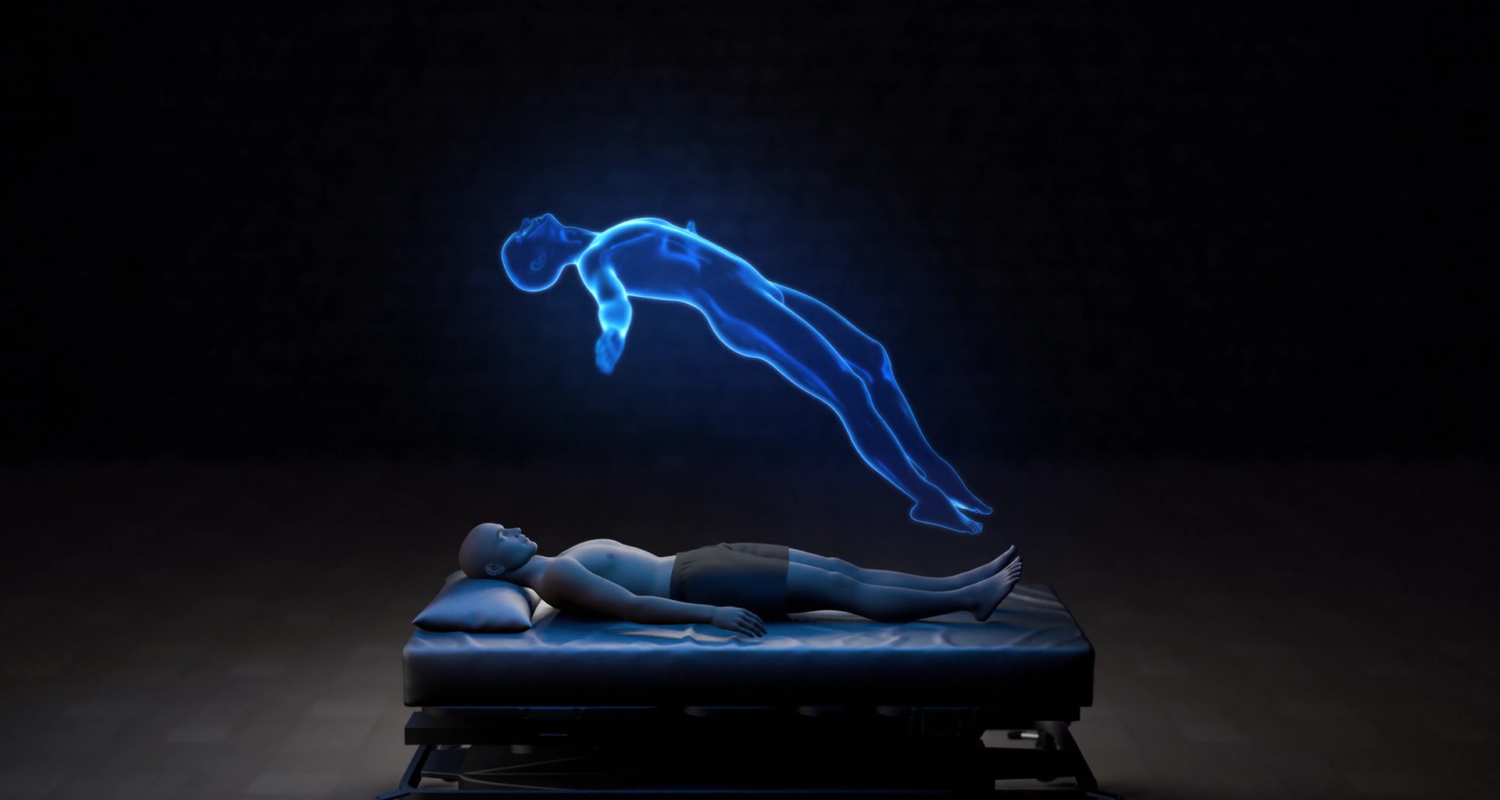
Alan Turing, the father of theoretical computer science, once noted that the statistical evidence for telepathy was “overwhelming” and called such phenomena “disturbing” because they threaten to upend everything. Daw and Roe bring to a life a new body of literature that sheds light of Turing’s statements. The paper catalogues a body of evidence that mainstream science largely refuses to engage with: near-death experiences in which patients accurately report events they could not have witnessed; children who describe verifiable details of past lives including birthmarks matching fatal wounds; controlled laboratory experiments on telepathy and precognition that produce statistically significant results replicated across independent research groups; and most unsettling of all, cases of “terminal lucidity” in which patients with severe, irreversible brain damage suddenly recover full coherent consciousness hours before death. In the world of Noetics and Non-Materialist science, if these phenomena exist they are very much real although they cannot be accommodated within any brain-based theory of mind. The paper’s point is not that we must believe everything but that the evidence behind such out-of-body experiences is substantial enough to demand serious theoretical engagement, and that engagement is largely absent in the scientific world
3. The Alternative Theories Are Fascinating – But Not Yet Science
Here is where the paper’s intellectual honesty becomes genuinely valuable. Non-local theories of consciousness – the scientific backbone of Dan Brown’s thriller – proposes that mind is not produced by the brain but instead extends beyond it, perhaps through quantum effects, higher dimensions, morphic fields or a fundamental cosmic consciousness of which individual minds are temporary expressions. Some of these ideas come from credentialed physicists and philosophers while others come from a broader enigmatic world of ancient religions, cultures and early philosophy across both western and eastern traditions. Daw and Roe apply the same criteria to these theories that science applies to anything else: are they genuine, comprehensive, falsifiable and generative of testable predictions? And here, with respect, most of them fall short. They tend to be philosophically rich but empirically thin. They make grand claims about the nature of reality (metaphysics as its known in philosophy) while producing few concrete predictions that could distinguish them from competing ideas. The authors note this not to dismiss non-local theories but to challenge their proponents to do better. The notable exception is Donald Hoffman’s work, which uses advanced mathematical and computational techniques to test the hypothesis that the fundamental substrate of the universe is not atoms or energy, but a network of conscious agents. In this view, space and time are not the stage where life happens; they are data structures created by consciousness.
4. Is the Brain a Filter or Generator of Consciousness?
One concept woven through the paper stopped me completely. It is the idea, associated with Aldous Huxley, the famed writer of the dystopian novel ‘Brave New World’. He proposes the idea that the brain is not the generator of consciousness but its filter. On this view, something like a universal or cosmic consciousness is the underlying reality, and the brain’s function is to narrow it down to the sliver of experience useful for biological survival, aligning partially with one of Hoffman’s ideas around the relationship between evolution and our perception of reality. This is an aspect that Dan Brown thoroughly explores through the novel: reframing the neurotransmitter, GABA, as that filter which manipulates our perception of reality so we do not see the ‘other’ world. The implications if such a finding were to be sufficiently proven are radical. It would mean that states of expanded consciousness achieved through meditation, psychedelic drugs, near-death experiences or even severe brain damage are not hallucinations or malfunctions. They are what happens when the filter loosens. Researchers have begun testing this neurologically, finding that inhibiting specific frontal lobe regions appears to facilitate measurable psychic effects. This is exactly the kind of falsifiable hypothesis the paper is calling for more of.
5. The Field Is Stuck in a Standoff — And Needs Academic Attention
The image Daw and Roe invoke towards the end of the Discussion section is that of Lord Kelvin’s lecture, a renowned Scottish figure in physics, mathematics and engineering. In 1900, he created an analogy of two clouds representing the two fundamental issues of modern physics: Relativity and Quantum Mechanics (Avoiding the heavier details). These two frameworks have overturned three centuries of scientific certainty within a generation. Consciousness research may be in a structurally similar moment. Physicalist theories are methodologically rigorous but cannot address the phenomena that matter most. Non-local theories address those phenomena but lack the methodological rigour to advance. The paper argues for something that sounds simple but would be genuinely revolutionary: theorists and experimenters working together, building falsifiable predictions, submitting them to adversarial testing and being willing to be wrong.
Conclusion
Dan Brown gave us a thriller and ironically the contents of this novel feel more real and tangible than his previous work in history and religion. The paper this book led me to gave me something more unsettling: the sense that one of the most fundamental questions in science – what is consciousness, and where does it live? – is genuinely open in ways that most educated people do not realise. The hard problem is harder than advertised. The disturbing phenomena are more documented than dismissed. And the best theories we have, on both sides of the debate, both have trade-offs that can only be consolidated through a collaborative effort from the academic world.
Inspired by Dan Brown’s The Secret of Secrets and the review paper “Theories of Non-local Consciousness: A Review and Framework for Building Rigour” by Michael Daw and Chris Roe, University of Northampton (2024 Linda G. O’Bryant Noetic Sciences Research Prize).









Leave a Comment