Instagram Pinterest Linkedin-in Envelope
    • Home
    • My Writing Corner
      • Pulse of the World
      • Critique Corner
      • Research Desk
      • Philosophy Symposium
      • Creative Chronicles
    • Lifestyle Collective
      • IN-CAFÉ CINEMA
      • IN-CAFÉ JUKEBOX
      • IN-CAFÉ LIBRARY
      • IN-CAFÉ MAP
    • Open Mic
      • Current Affairs
      • History, Arts & Humanities
      • Science & Technology
      • Philosophy & Stoicism
    • About Me
    • Home
    • My Writing Corner
      • Pulse of the World
      • Critique Corner
      • Research Desk
      • Philosophy Symposium
      • Creative Chronicles
    • Lifestyle Collective
      • IN-CAFÉ CINEMA
      • IN-CAFÉ JUKEBOX
      • IN-CAFÉ LIBRARY
      • IN-CAFÉ MAP
    • Open Mic
      • Current Affairs
      • History, Arts & Humanities
      • Science & Technology
      • Philosophy & Stoicism
    • About Me

    Home » My Writing Corner » Page 7

    Browsing Category
    My Writing Corner
    Creative Chronicles My Writing Corner

    The Bishop’s Letter of Change

    July 22, 2024 No Comments

    THE BISHOP’S LETTER OF CHANGE

    Inspired by Oscar Wilde’s Young King

    115 Forst Cathedral

    Bremen Route, Lusatia.

    112 Archangel Cathedral

    Forst route, Bremen.

    12th January 1668

    Dear Archbishop Schneider,

    As thou wot, the coronation of the king went quite aberrant this morrow when he refus’d to wear the pearl spectre, jewel crown and golden tunic but rather wore a flower spectre, rose crown and leaf coat thus baffling the kingdom’s citizenry.  As I stood befuddl’d by his uncanny apparel, I beseech’d him to answer how men resembling goat herds were rightful kings. Alas, he rebelled back, saying he wouldn’t wear pearls, jewels and gold made from the hands of perpetual pain, blood and poverty at our realm of God.

    Thy excellency, thou and I wot that this orb is full of evil, notoriety and immoral deeds yet God hath forever promised us our orb will be engulf’d in his lief blessings.  The king quoth’d to me on how may I say this in sermons when our citizenry is still as poor as our church mice and struggle to eat their daily bread while they strive to serve the barons, royals and priests. ‘Twere that instant, the king broke protocols and swept into the realm of God where a ray of light scintillat’d through the colour’d stoup highlighting his majestic silhouette where his rose shone brighter than any jewel, white flowers beautiful than any pearl and leaves as gold as gold.  Thy excellency, he is the chosen one, our rightful king, he was chosen by the hands of God to rule our citizenry and changeth our unfair and corrupt caste system w’ere royalty and religion prevails.

    To see our King dazzle in an aurora of divinity was a sight I obsequiously observed realizing sooth in his words how evil we hath been.  Thy excellency, God hath promised us an orb of joy, justice and gen’rosity yet only once we set the path can we realise it.  Following the miracle that laid hither before my eyes this morrow and the king’s words of divinity I insist we changeth our system for the better.

    I plead thee we commence our reformations to respect the rights of the peasants by diminishing our tithes, granting more indulgence papers and warranting more sermons to our citizens of any race, class or age.  Furthermore, I crave that we maketh our practice more democratic permitting the peasants to share their word of wisdom to keep blossoming our kingdom. Finally, I plead thee, thy excellency that henceforth no man should’st weave another man’s gold hath he hath to strive for his daily bread while slaves die in the mighty seas to fetch the perfect pearl just as foresters search the spouting streams for jewels as they desiderate for a drop of water. 

    Thy excellency, this is purely what methinks after witnessing the miraculous act of both Kingship and God this morrow. Till thy consensus, God shall ne’r warrant us the orb we all summon; an orb of joy, justice and generosity and not cheerlessness, corruption and cruelty.

    Your Eminence,

    Bishop Shweigner – Forst Cathedral.


    Continue reading
    Written by: Mineka
    My Writing Corner Pulse of the World

    Project 2025: Economic Insights & Criticisms of the Conservative Promise

    No Comments

    Project 2025: Economic Insights & Criticisms of the Conservative Promise

    As the global spotlight intensifies on the impending US Presidential Elections of 2024, profound uncertainties loom over the potential transition from democratic to republican leadership, raising pivotal inquiries about its implications for the trajectory of the American economy, its social fabric and its geopolitical footprint amidst an era defined by pervasive global conflicts and economic downturns. Lodged by the Heritage foundation in 2022, The Mandate for Leadership or Project 2025, as its commonly called, is a 900-page document put together by more than 400 writers, that delivers some explicit insights on the implications of such a political transformation in 2025 and beyond. With elections inching closer, discussions and debates regarding the Project’s plans have erupted amongst academic communities with scepticism and cynicism being a common theme. In this article, I attempt to briefly summarise the essence of the project, it key controversies and criticisms and the top 10 insights I find the most intriguing from the project’s economics section.

    The Essence of Project 2025

    The Mandate for Leadership or Project 2025 is a 900-page document that entails a comprehensive compendium of conservative policies that thereby encapsulates the future implications of America under the new republican administration it expects to form in 2025.    Amalgamated, by a group of policy-makers, law-givers and economists tied to the Heritage Foundation, the documents resonate with the thinking tanks of conservative ideology and aims to propose policies, legislative changes and restructurings that are intended at advancing USA’s political structure to suits its growing economic and social needs that in their view have been disoriented by the current administration.

    Primarily, Project 2025 is structured on four fundamental pillars that helps streamline of the essence of its Writer’s agenda and have been summarised below:

    • Pillar I: Governance Framework – Establishes a consensus on how major federal agencies should be governed and identifies areas of disagreement for the incoming President to decide upon including key economic and social policy changes.
    • Pillar II: Personnel Database –Candidates create professional profiles for review by coalition members. Recommendations are collated and shared with the President-elect’s team to streamline appointments.
    • Pillar III: Presidential Administration Academy –Online educational system taught by coalition experts. Provides newcomers with an understanding of government operations and roles. Offers in-person seminars for advanced training of senior leadership.
    • Pillar IV: The 180-Day Playbook- Forms agency teams and drafts transition plans that the next republican president is expected to implement within the first 180 days held in office.

    While the pillars themselves are foundational to the purpose of Project 2025, they do not form the distinct sections of the document are only inferred upon its 30 chapters. These chapters lay out a myriad of clear and concrete policy recommendations for White House offices, Cabinet departments, Congress, and other federal agencies. These policy recommendations have been meticulously crafted to resonate with the ideological tenets of conservative politics. Moreover, they are underpinned by four overarching objectives that collectively embody the individuals promised that make up the ‘Conservative Promise,’ which have been declared with precision in the list below:

    • Restore the family as the centrepiece of American life and protect our children: Focus on policies and initiatives aimed at strengthening family units and ensuring the well-being and safety of children within society.
    • Dismantle the administrative state and return self-governance to the American people: Advocate for reducing bureaucratic control and empowering individuals and local communities to make decisions that affect their lives.
    • Defend our nation’s sovereignty, borders, and bounty against global threats: Prioritize national security measures to safeguard borders, protect American interests, and counteract external threats to sovereignty.
    • Secure our God-given individual rights to live freely—what our Constitution calls “the Blessings of Liberty”: Ensure that constitutional freedoms and liberties are protected, allowing individuals to live their lives without undue government interference.

    As the promises above underscores, much of the economic, social and governance polices detailed in the document are designed to streamline the President’s thought processes to focus firmly on the foundational moral and economic challenges that USA faces in its current day and age. It is their belief that by restoring America’s moral values, the success of conservative policies would blossom which they believe was resonant during the Reagan Era where right-wing politics saw its successful peak. Despite some of its ideas sounding affirming on paper, Project 2025 was heavily subjected to criticism and scepticism even amongst populists’ right voters triggering wide spread debate. Th followings sections detail the projects key controversies and criticisms.

    The Criticisms of Project 2025

    According to former US Secretary Robert Reich, a significant source of criticism surrounding Project 2025, widely shared among academics, stems from the constraints it imposes on American social policy as well as its plans to foster what seem like a Christian nationalistic democracy. For instance, the document outlines strategies aimed at gradually dismantling pro-abortion laws, reducing subsidies to medical institutions conducting abortion research and contraception, and advocating for the withdrawal of abortion pills from the US market. In the realm of Diversity, Equity, and Inclusion (DEI), the project proposes eliminating what it terms as “Woke Propaganda” from laws and federal regulations. This includes potentially penalizing the extensive use of terms like “sexual orientation,” “diversity, equity, and inclusion,” “gender equality,” and “reproductive rights” in educational settings and media. Additionally, Project 2025 advocates for expanding domestic oil drilling while terminating environmental agencies and withdrawing from international agreements such as the Paris Agreement and the UN’s 2030 Agenda for Sustainable Development. These social policies are indicative of Project 2025’s strong advocation to align the USA with the Judeo-Christian Ideals the conservatives form the foundation of the nations moral values. However, inherently rooted in these polices is the rejection of female reproductive wellbeing, restriction of freedom of speech and total disregard for the environmental and external costs caused by the economy on human wellbeing.

    Project 2025 opens a window onto how the modern American conservative movement would shape the nations future and the world it encircles. According to Senior Researcher, Emma Shortis, the proposal features frequent discussion on the restructuring and dismantling of several federal bodies and agencies including the CIA and Export-Import Bank. While these initiatives maybe consistent with right-wing ideology that seek to shrink the government, many seem to speculate that these recommendations are part of a broader plan to restore the Unitary Executive Theory which would ultimately disequilibrate the distribution of power between the 3 branches giving the president an unchecked degree of power and control that some critics argue is resonant with fascist principles. Critics of Project 2025 argue against this centralization of executive power, citing risks such as potential abuse of authority and reduced democratic representation. They contend that decentralized federal systems better uphold democratic principles by ensuring diverse regional input and maintaining checks and balances through transparent oversight. While centralization may streamline decision-making, it could compromise accountability and resilience in responding to diverse societal needs. Moreover, critics warn of the susceptibility to policy capture by special interests, potentially undermining public interest and democratic governance.

    Beyond debates over social policy and political governance lies the intriguing interaction between Project 2025 and Donald Trump’s 2024 presidential campaign. As the leading Republican candidate, Trump’s potential victory, supported by statistical evidence from electoral polls and surveys, positions him at the forefront of shaping future conservative agendas. One might assume Trump’s campaign would naturally align with the ideals and plans outlined in Project 2025, given his historical ties to the Heritage Foundation. However, Trump has consistently distanced himself from the project, a stance that has sparked controversy. In a post on Truth-Social following a presidential debate, Trump stated, “I have no idea who is behind it,” and criticized aspects of Project 2025 as “ridiculous and abysmal.” This denialism has fuelled speculation about whether Trump’s disavowal is a political tactic aimed at safeguarding his campaign against potential attacks from Democratic opponents who might paint Project 2025 as extremist right-wing politics. According to Washington Post reporter Patrick Svitech, Trump’s strategy appears to be a calculated move to protect his public image. By disavowing any association with Project 2025, he may mitigate criticism and maintain broader appeal among voters. However, whether Trump’s denials are genuine or strategic remains uncertain. Looking ahead, the question looms whether Trump’s potential victory would indeed see the implementation of Project 2025’s ambitious agenda starting from January 2025. Only time will reveal the extent of Trump’s actual involvement with Project 2025 and how it might shape future policy directions if he assumes office.

    The US Economy Under Project 2025: 3 Insights

    The economic section of Project 2025 outlines a comprehensive agenda focused on revitalising economic policies to benefit ordinary Americans and strengthen national sovereignty. It critiques decades of elite-driven governance that neglected securing borders, outsourced manufacturing and mismanaged the federal budget. While aiming to correct these failure, Project 2025 seems to be emphasising a return to foundational principles of securing individual rights and fostering free enterprise through economic policy. The discussion spans diverse viewpoints on trade policy, advocating either for minimal government intervention to promote free trade and economic growth, as argued by Kent Lassman, or for a more protective stance to safeguard American manufacturing and defence capabilities against global competition, as advocated by Peter Navarro. Beyond trade, debates include the role of institutions like the Export-Import Bank and the Department of Commerce in shaping economic strategy, reflecting broader concerns about regulatory efficiency, strategic economic planning, and defending against international economic threats.

    Based on my personal analyses and engagement of the pages dedicated to this section of the document, there are certain economic proposal and policies that are of particular interest which I believe would be of most use for debate and discussion by the wider academic community. To simplify my findings, I have based my analysis on the assumption that three key functions of economic management for any federal administration are as follows:

    1. Provision of Public Services – Providing essential services and other public as well as merit good that maybe under-provided or disincentivised by the private sector. It also concerns decisions regarding privatisation, nationalisation, mergers and acquisitional s well as strategic choices to dismantle, distribution or diversify public sector service between the private sector.
    2. Regulation and Oversight – Designing and Intervening in markets when they fail to align with direct and indirect regulation as well as implementing new regulation and oversight measure to prevent market failures and unfair outcomes. This extends to regulating foreign investments opportunities, both inward and outwards, and aligning them with national security interests as well as economic interests.
    3. Economic Growth & Stabilisation – Leveraging the use monetary and fiscal polices to stimulate economic growth and stabilise parts of the economy like prices and exchange rates as well as dynamically responding exogenous and internal shocks within the business cycle.

    I have presented case that aligns with each function mostly of beneficial used with a brief description and evaluation of its implication on the fulfilment of USA’s macroeconomic objectives.

    Provision of Public Services: The Case of the NOAA

    Right-wing politics, viewed through an economic lens, places a strong emphasis on reducing the government’s role in the provision of services, often favouring the privatisation of these services. The concept of shrinking the government, which aligns with Republican policies, ensures that privatization proposals are a recurring theme in Project 2025. One of the most ambitious of these plans involves restructuring and reallocating the functions of the National Oceanic and Atmospheric Administration (NOAA), a federal institution comprising six offices dedicated to oceanic, atmospheric, satellite, and meteorological data analysis and research. These, offices not only conduct research but also provide structured information to promote environmental stewardship within the private sector. However, the authors of Project 2025 argue that this represents an inefficient use of federal funds, consuming over 50% of the Department of Commerce’s budget without delivering observable improvements in environmental efficiency.

    Rather than dismantling NOAA entirely, Project 2025 proposes a comprehensive review and redistribution of its functions between the private and public sectors. For example, it has been suggested that meteorological services be fully privatised, atmospheric research be downsized, and the environmental surveying functions be transferred to the U.S. Coast Guard. Once most services in the field are privatized, the project also focuses on plans to enhance competition by introducing innovation prizes and encouraging the entry of small businesses into the research industry. This approach to commercialize NOAA and its functions, rather than completely dismantling it, aims to enhance efficiency by leveraging private sector capabilities for environmental research services and reallocating environmental stewardship roles to a more suitable public agency. In the long run, through further privatization and responsibility transfer, not only will the cost-efficiency and economic sustainability of these organizations be maintained, but greater environmental sustainability is also expected. This will be encouraged through the innovative and competitive environment fostered by the NOAA.

    Regulation & Oversight: The Case of Chinese FDI

    Project 2025 proposes a strategic realignment of the Committee on Foreign Investment in the United States (CFIUS) to address current geopolitical threats, particularly from China. Key initiatives include developing a transparent mitigation monitoring program, publishing a penalty schedule for CFIUS violations, and advocating for legislative amendments to cover Chinese greenfield investments. Additionally, the plan suggests making the Department of Defence (DOD) a co-chair of CFIUS alongside the Treasury to balance corporate and national security interests. There is also a recommendation for creating a joint school of financial warfare with DOD to enhance the U.S.’s ability to use financial strategies and instruments against geopolitical threats although the details of this have not been specified. Lastly, Treasury is urged to scrutinize U.S. outward foreign direct investment in China, particularly those enhance China’s technology, research innovation and partnerships with state-sector organisation that could be exploited against the USA’s economic interests.

    Despite the ambiguity of the proposed measures, it is certain that the implementation of these plans aims to strategically enhance the U.S.’s national security by ensuring a more balanced and transparent CFIUS process that prioritizes security over corporate interests. The proposed penalties and monitoring would deter violations and ensure compliance, while closing the greenfield investment loophole that would protect critical U.S. assets from Chinese state control. Elevating the DOD’s role in CFIUS would ensure national security concerns are adequately represented while the financial warfare school would prepare the U.S. to effectively use financial tools in geopolitical conflicts. Despite the expected impact the Project proposes, it fails to consider what maybe the global response to these measures especially considering increased FDI screening and the development of financial warfare. Undoubtedly countries could retaliate against these measures by implanting similar controls on outward US FDI exacerbating further international disputes. The Project would have to consider the contingency plans that would be set in place in the event the reception of its security plans is unfavourable among international investors. Nevertheless, these changes are expected to bolster economic and national security, reduce vulnerabilities to Chinese economic statecraft, and promote a more secure and resilient economic environment.

    Economic Growth & Stabilisation: The Case of Tax Policy

    Project 2025 recognises the powerful impacts of tax policy on economic outcomes and has therefore emphasises the Treasury to reform tax legislation centred around the promotion of prosperity defined by greater work, savings and investment incentives. Primarily, Project 2025’s proposal to achieve a simplified tax system that reduces marginal tax rates and corporate costs of capital while enlarging the tax base in order to tax-induced economic distortions. Furthermore, the document defines the principles of an idea tax policy as one that prioritises revenue for a limited government while minimising its impact on the family and core institutions of US civil society. It also recognises the importance of consistent policy which additionally involved ensuring that special privileges are less likely to be granted. Current US Tax policies are inconsistent with the Project’s principles and therefore in order to reform tax policy effectively, The Treasury has been advised to start implementing tax reforms immediately once the new administration takes office. It is expected that the new tax reforms would be of benefit to most economic participants with businesses and families being at the centre of policy-making. The following list is an exhaust summary of the technical specificities Project 2025 proposes with regards to Tax reformation:

    Simplified Two-Rate Individual Tax System:

    • 15% and 30% tax brackets.
    • Eliminate most deductions, credits, and exclusions.
    • 30% bracket starts near the Social Security wage base for a nearly flat tax on wage income beyond the standard deduction.

    Corporate Income Tax Reduction:

    • Reduce corporate tax rate to 18%.
    • Tax capital gains and qualified dividends at 15%.
    • Immediate expensing for capital expenditures.
    • Index capital gains taxes for inflation.

    Repeal Tax Increases from Inflation Reduction Act:

    • Remove book minimum tax, stock buyback excise tax, coal excise tax, reinstated Superfund tax, and excise taxes on drug manufacturers.

    Eliminate Recent Subsidies and Tax Breaks:

    • Repeal credits and tax breaks for green energy companies from Subtitle D of the Inflation Reduction Act.

    CONLCUSION

    In summary, Project 2025 presents a comprehensive and ambitious plan to reshape American governance, social policy, and economic strategy under a new Republican administration. The project’s four pillars provide a structured approach to governance, personnel management, education, and policy implementation. While the proposed policies aim to address perceived shortcomings of the current administration and restore conservative values, they have sparked significant debate and criticism. Critics highlight concerns about the potential rollback of social policies, the centralization of executive power, and the implications for international relations and environmental sustainability. The economic section, with its focus on tax reform, regulation of foreign investments, and privatization of public services, offers thought-provoking insights but also raises questions about the broader impacts on American society and the global economy. As the 2024 elections approach, the implementation and reception of Project 2025’s proposals will be closely watched, determining their actual influence on the future of the United States.

    REFERENCES

    Reich, R. (2024, July 8). We should all be terrified of Trump’s Project 2025. The Guardian. https://www.theguardian.com/commentisfree/article/2024/jul/06/trump-project-2025-robert-reich

    Svitek, P. (2024) Trump tries to distance himself from project 2025 plan – The Washington Post, Trump tries to distance himself from Project 2025 plan. Available at: https://www.washingtonpost.com/politics/2024/07/05/trump-project-2025-disavowal

    Svitek, P. (2024) Trump tries to distance himself from project 2025 plan – The Washington Post, Trump tries to distance himself from Project 2025 plan. Available at: https://www.washingtonpost.com/politics/2024/07/05/trump-project-2025-disavowal/ (Accessed: 17 July 2024).

    Roberts, K. and Dans, P. (2024) Mandate for leadership: The conservative promise, Mandate for leadership: The Conservative Promise. Available at: https://static.project2025.org/2025_MandateForLeadership_FULL.pdf (Accessed: 17 July 2024).


    Continue reading
    Written by: Mineka
    My Writing Corner Pulse of the World

    Capital Clash: Theorising the Impact of the 2024 Presidential Elections on the US Stock Market

    No Comments

    Capital Clash: Theorising the Impact of the 2024 Presidential Elections on the US Stock Market

    As the 2024 US presidential election looms, the nation’s stock market faces a turbulent landscape of economic policy promises and electoral uncertainties. With the date set for the 5th of November with Joe Biden and Donald Trump emerging as the top candidates, investors navigate an uncertain terrain where each policy announcement and political shift can sway market dynamics dramatically. The market’s reactions mirror the electorate’s anticipation, with eyes fixed on each candidates’ economic agendas, regulatory plans and their potential impact on economic sectors whose effects are magnified against the vast differences in economic and political philosophy between Democratic and Republican parties.  Amidst this volatility, the stock market’s resilience and sensitivity underscore its pivotal role in reflecting and reacting to the evolving political and economic narrative leading up to the election day. The following article deconstructs the theorised public and expert opinions regarding how the US Stock market would shape its volatile response in the days leading up to the 5th of November when the presidential battle would be won and lost and markets would resolve.

    Current Insights from the 2024 Presidential Elections

    The 2024 elections were officially initiated in mid-January across states such as Iowa, New Hampshire and Nevada where early contests were held up until the 5th of March on which a great number of states held their preliminary elections. The results of these primary elections concluded in determination of the key candidates of the 2024 presidential elections with Donal Trump emerging from the Republican Party and Joe Biden emerging from the Democratic Party.  While their campaigns are already underway, it is not until mid-summer after the Presidential Debates during which each party will hold their national conventions and officially nominate its candidates for both presidential and vice-presidential candidates. It is between the national convention and the 5th of November in which campaigning is expected to be at its highest rigour with financial markets reacting dramatically to policy proposal and electoral creating an environment of uncertainty until all results are officially casted and counted and the new administration is inaugurated from the 20th of January 2025 onwards.

    The above paragraph only provides a summarised snapshot of the key dates that define the 2024 US presidential election and is devoid of further electoral complexities. Nevertheless, this general overview is key to building our understanding on the current performance on the US stock market using the S&P500 as our proxy. According to LPL Financial analytics, since 1952, the S&P 500 has typically seen average returns of 7% during presidential election years and when the incumbent president seeks re-election, this average usually jumps to 12.2%. This year, however, the index has exceeded these historical averages significantly. The S&P 500 is up 14.6% year-to-date, marking its strongest start to an election year ever recorded by Goldman Sachs which represents a 31% surge from its low point in October 2023. These astronomic returns however are a product of narrow scope of player including firms like NVIDIA and Vistra whose technology blooms have significantly shaped the US stock markets. Nonetheless, equity research analysts the S&P 500 to sustain its bullish behaviour as investors rally in market devoid of the economic uncertainty and geopolitical tensions that loom the US stock market. This optimism is not limitless however given that a high degree of volatility soi expected in October in which analysts predict dramatic changes especially amongst industry-specific indices as each candidate campaigns their sectorial plans for fiscal spending.

    Theory 1: The Election-Market Irrelevance Hypothesis

    One view that seems to be shared among a minority of analysts is what we coin as the Election-Market Irrelevance Hypothesis. As implied by the name, this theory argues that the performance of US stocks is less likely to vigorously react in response to each candidates’ economic plans. This theory specifically posits that while volatility is expected, stocks are less likely to reach dramatic lows or astronomical highs which has been evinced through the historical performance of US stocks. It has been noted that the S&P 500 has performed well under both administrations during election years, averaging a 10% return since 1957 showing no correlation against proposed election outcomes other than in 2008 in which the US underwent a stagflationary recession.

    This theory is also underpinned by the assumption that neither political party has the power to influence stock markets through fiscal propositions. With spending frequently surpassing tax revenues, the US Federal budget has always been at a historic deficit which is often overshadowed by the USA’s growth prospects, international trade and geopolitical disputes. As election campaigns predominantly focus on such fiscal plans, investors are less likely to react vigorously to fresh campaign announcements given that the general expectation is that all plans, irrespective of political party, are expansionary in nature. Alternatively, as of 2024, it is the Federal Bank and its monetary policies that can have a greater impact on the S&P’s behaviours which remains crucial at a time in which several stakeholders are counting on an expansionary monetary policy. In sum, the Federal Reserve’s monetary policy would have a more significant role in influencing stock market performance in 2024 and broader economic conditions than specific fiscal policies that are pitched and enacted by presidential candidates.

    Overall, this theory encapsulates some of the essence of the Efficient Market Hypothesis that claims the irrelevance of certain exogenous factors in determining market outcomes entailing that US stock prices are likely to follow a volatile random walk in the days leading up to the 2024 Presidential Elections. According to corporate strategist, Brian Levitt, investors should be less interested in political affaires and more interested in private-sector plans and strategies that are pitched in by corporate leaders such as leveraging AI and proposed mergers and acquisitions which when responded to would yield positive effects on both financial markets and social wellbeing.  One of the assumptions that maybe underpinning Levitt’s philosophy is the intuition that the private sector boasts more economic potential that governing bodies in determining economic and social outcomes. However, if investors are to disregard the 2024 Presidential elections and balance their portfolios and investments in accordance to private sector information, we would also have to believe that corporate too are behaving accordingly which is unlikely to be the case in the real world. The theories that follow synchronise more with reality and reflect how the US stock market’s performance maybe indeed relevant to election outcomes and expectations.

    Theory 2: The Election-Market Relevance Hypothesis

    Despite the logical validity of the Election-Market Irrelevance Hypothesis, some analysts propose a nuanced perspective suggesting that electoral campaigns, polls, and policy proposals do influence investor behaviour and subsequently impact market performance. Psychologically, the media’s role is pivotal; expert analyses of economic plans from presidential candidates like Biden and Trump dominate headlines post-debate, prompting investors to adjust and rebalance portfolios based on which candidate’s policies promise greater economic stimulation. Historically right-wing capitalistic candidates like Donald Trump whose policies centre on business growth, trade and corporate profitability are more likely to yield consistently strong returns through-out the election with some volatility if the probability of his victory is relatively high. Moreover, left-wing democratic candidates like Joe Biden tend to focus on wellbeing-oriented polices that cater less to the interests of corporates leading to poorer or more ambivalent stock market performance during the lections. However, these propositions would only hold true in theory and assumed that every investor perceive each candidate’s fiscal plans to yield the same economic outcome. Pragmatically this is not possible and it is due to this variance in investor opinions about polices that create the volatility of stock markets during election months. A better way to approach the theory would be to trace how stock market behaviour may influence election outcomes that vice versa.

    It has been suggested by experts that stock markets behave in a manner that predicts the presidential candidate thus forming a relevant link between elections and market behaviour. The evidence for this claim stems from a Forbes Report that stock market returns have remained an accurate proxy in predicting the presidential winner of an election as illustrated in 87% of the cases since 1928. The main behavioural indication is that a declining stock market signals an incumbent party’s defeat while a rising stock market predict a new candidate’s victory or an incumbent party’s re-election. Interestingly, more specific insights from a T. Rowe Price report found that the year following a Democratic win sees an average market gain of 11.3%, compared to 6.6% after a Republican victory. Applying these general insights to the current S&P performance yields ambiguous results predicting both the victory of Biden and Trump given its all-time strong performance. It is important to note while the empirical findings that support the theory maybe true, the S&P 500 as of now is yet to activate its prediction for the 2024 elections and it would be more relevant to draw such conclusions in October when markets are set to be the most volatile and most indicative of future outcomes. In sum strong performance could predict the victory of challenger, Donald Trump if his prospects and the opposite case if his prospects are low.

    Conclusion – Guiding your Election-year Investment Strategy

    As the 2024 US presidential election approaches, investors face a landscape of economic uncertainty shaped by policy promises and electoral dynamics. The theories discussed offer contrasting views on the impact of elections on stock market behaviour: the Election-Market Irrelevance Hypothesis suggests that market movements are largely independent of election outcomes, driven more by broader economic factors and monetary policy, while the Election-Market Relevance Hypothesis argues that campaigns and policies can sway investor sentiment and influence market performance.

    Given the complexity and unpredictability of electoral cycles, investors are advised to maintain a balanced and diversified portfolio that considers both short-term volatility and long-term growth prospects. While political developments may create market fluctuations, focusing solely on electoral outcomes may overlook fundamental economic drivers and sector-specific opportunities.

    In practice, prudent investment strategies should prioritize thorough research into corporate fundamentals, technological innovations, and global economic trends. This approach helps mitigate risks associated with political uncertainty and positions portfolios to capitalize on broader market trends regardless of electoral outcomes.

    Ultimately, while elections can introduce short-term market volatility, successful investment strategies rely on a disciplined approach that integrates both macroeconomic analysis and company-specific insights. By navigating these complexities with a focus on long-term value and resilience, investors can navigate election-year uncertainties and pursue sustainable growth in their portfolios.

    REFERENCES

    Goodkind, N. and Egan, M. (2024) Analysis: The stock market is having its best election year ever | CNN business. Available at: https://edition.cnn.com/2024/06/24/investing/premarket-stocks-trading/index.html (Accessed: 18 July 2024).

    2024 election insights (2024) 2024 Election Insights. Available at:https://am.jpmorgan.com/us/en/asset-management/adv/insights/market-themes/us-elections/ (Accessed: 18 July 2024).

    Hooper, K. et al. (2024) Could the 2024 US presidential election affect market performance? Available at: https://www.invesco.com/emea/en/insights/market-performance-2024 presidential-election.html (Accessed: 18 July 2024).

    Saglimbene, A. (2024) 2024 U.S. elections: What investors need to know. Available at: https://www.ameriprise.com/financial-news-research/insights/2024-presidential-election-market-impact (Accessed: 18 July 2024).

    Lampe, A. (2024) What will the stock market do as election nears?, Kiplinger.com. Available at: https://www.kiplinger.com/investing/what-will-stock-market-do-as-election-nears (Accessed: 18 July 2024).

    Poullaouec, T. (2024) How do U.S. elections affect stock market performance?: T. Rowe Price, How do U.S. elections affect stock market performance? | T. Rowe Price. Available at: https://www.troweprice.com/financial-intermediary/us/en/insights/articles/2024/q2/how-do-us-elections-affect-stock-market-performance.html (Accessed: 18 July 2024).

    Continue reading
    Written by: Mineka
    My Writing Corner Pulse of the World

    An Analysis Into The Reasonings Behind The Macroeconomic Fluctuations In Sri Lanka’s Post Covid Economy

    No Comments

    An Analysis Into The Reasonings Behind The Macroeconomic Fluctuations In Sri Lanka’s Post Covid Economy

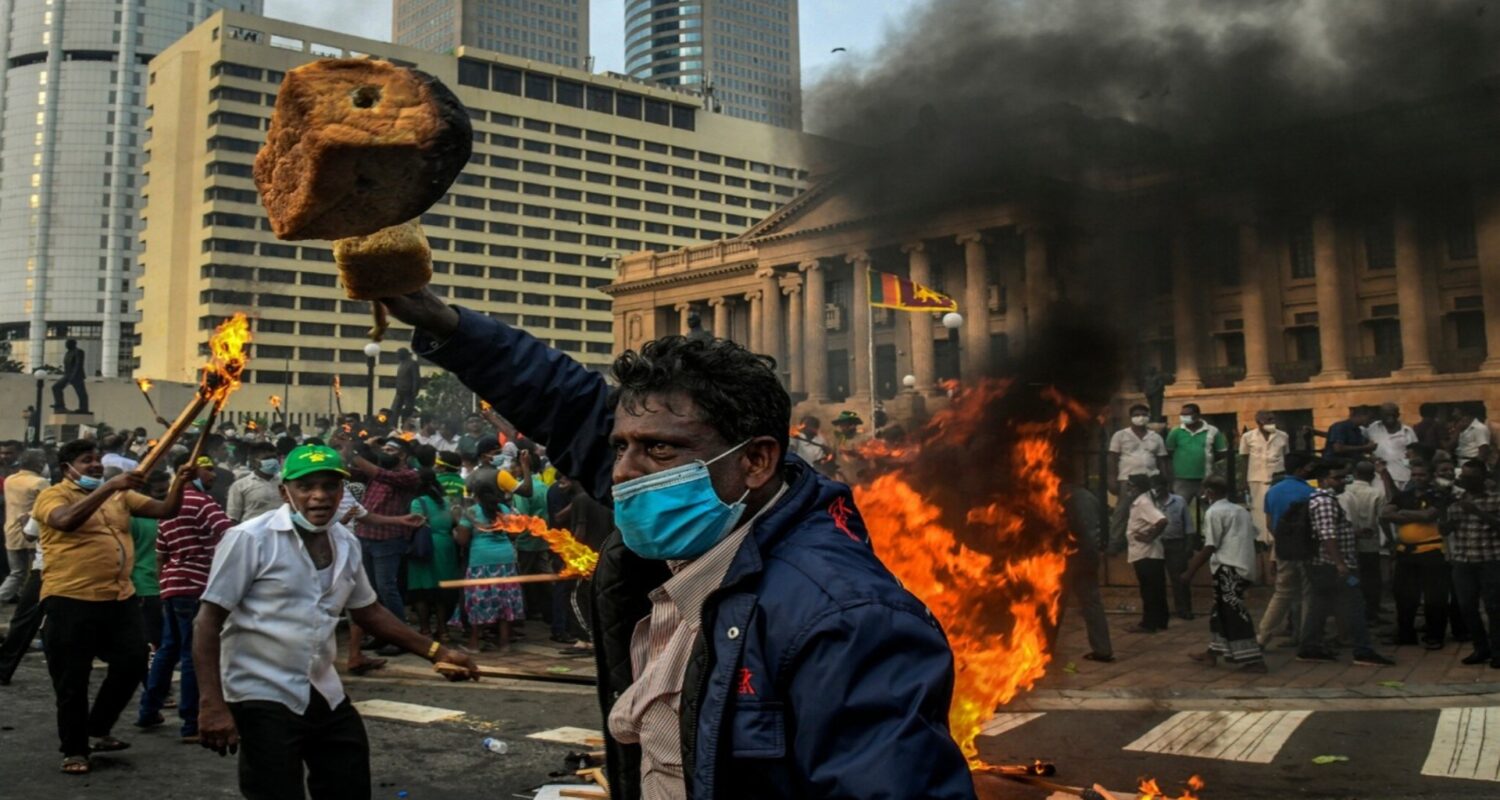
    The post-Covid Era signals the period that follows the socioeconomic turmoil caused by the COVID-19 pandemic during which economies start to recover and life sets into pre-Covid normalities (WHO, 2021). In Sri Lanka this period is evident following the last economic quarter of 2021 during which the nation unfortunately faced its deepest economic and political crisis triggered mostly by federal economic mismanagement. The following report is therefore centred on economically examining the gravity of this crisis in terms of fluctuating macroeconomic indicators and have their reasons expressed using hypothetical economic models. The report ends with a statistically-proven argument on which macroeconomic objective could have been prioritised in order to optimise success and circumvent calamity.

    EVIDENCE OF CHANGES

    ANALYSIS OF CHANGES

    The fluctuations between the quarters for each indicator can be understood through autonomous reasonings illustrated through hypothetical shifts in aggregate supply or demand.

    The post-Covid era has seen severe variability in the unemployment rate with more individuals being laid-off than the natural rate. Industrial experts suggests that post-Covid unemployment is linked with the high prices of imported production inputs due to the high taxes levied on them by the government to battle foreign-exchange shortages. In-fact, this is evident in the national construction industry where 90% of projects are kept on standstill due to insufficient raw materials.

    The AD-AS model can aid our understanding of this scenario as government restrictions and taxes have increased production costs thus shifting the SRAS curve to the left causing more workers to get unemployed due to the reduction in production activities by firms as the Real GDP level (Y1) inches further away from full employment at YF.

    Economic growth on the other hand has continued to decline and set the nation on a prolonged recession. The government has stated that this contraction was stimulated by high unemployment combined with inflationary pressure that reduced real incomes and curtailed consumer spending. Furthermore, higher interest rates raised borrowing costs and thus dwindled investments by firms and governments to spend more cautiously. As a result, overall spending decreases shrinking financial returns on firms and creating a cyclical cycle of economic declines.

    Once again, the AS-AD model vividly exemplifies this scenario with the AD curve shirking to the left representing the reduction in consumer, investment and government spending resulting in an indisputable decrease in Real GDP. This is equivalent to an economic downturn on the economic cycle as it approaches a trough.

    Inflation has played a significant role in Sri Lanka’s economic turmoil and has continually increased during the post-Covid era. At a glance, the reasonings behind this can be exemplified by the disruptions caused in global supply chains due to the energy and food crisis caused by the Ukrainian conflict causing import restrictions and higher tax rates. One key change took place with a policy change in 2021 to shift from chemical to organic fertilizers overnight due to forex shortages that entirely disrupted Sri Lanka’s food supply.

    According to AS-AD model this policy created a supply shock in the agricultural industry that resulted in essential food products like fresh produce being extremely scarce thus raising their prices. This is an application of cost push inflation but paired with the effect of reduced unemployment this could be classified as stagflation. As a result, the entire aggregate-supply curve would have shifted to the left resulting in the severe inflationary pressures Sri Lanka saw in 2022.

    Poor external stability is at the core of Sri Lanka’s economic turmoil with foreign debt accumulating a great share of GDP. This is because Sri Lanka has historically imported and borrowed more than what it has earned through exports with tourism revenue greatly falling due to the pandemic. In addition, the poor expansionary policies of the government back in 2019 which included low interest rates and taxes would have further pushed import spendings and drained more foreign reserves. Gradually as Sri Lanka hit the economic turmoil of 2022, foreign reserves were at an absolute minimum causing countless other decisions to be made so the government can pay its current and past debt obligations and spend on essential imports reducing Sri Lanka’s external stability. While in-crisis, the government chose to borrow more in the form of currency swaps and loans from neighbouring countries which further increase the debt-to-GDP ratio.

    STATISTICAL INTERCONNECTEDNESS BETWEEN INIDATORS AND CONCLUSION

    A recurring reason behind the economic calamity that Sri Lanka faced in 2022 as mentioned multiple times in this analysis is the falling forex reserves which shows a sharp decline over the post-Covid period correlating well with the worsening trends of other indicators like economic growth, unemployment and inflation. Forex reserves like debt ratios signify a nation’s external stability as it acts as a liquid asset representing the confidence and ease at which a nation can repay its debt obligations and procure essential imports and raw materials for production and consumption activities.

    Due to mismanagement and faulty policies, Sri Lanka has indisputably grappled a forex shortage throughout this period which is why firms had to close down production processes due to insufficient inputs contracting the economy with a variation of 78.8% explicable through this phenomenon as evident through regression analysis.

    Economic contraction (GDP Degrowth) and falling production levels have simultaneously led to high unemployment with 70.4% of the variation in unemployment explicable through the variation in GDP degrowth. This was because as aggregate supply fell alongside lower spending levels meaning firms had to lay-off workers to compensate the loss in production requirements.

    Finally, as the effect of reducing aggregate supply outweighed the decline aggregate demand and workers were laid-off a stagflation like situation was created with a strong 98% of the variation in inflation rates explicable by the economic contraction meaning as the economy contracted, workers were laid-off while firms struggled to produce further prices were put up by firms in order to battles the shortage of goods the country faced.

    The above visualisations as reported through the outcomes of regression analysis narrates the story of Sri Lanka’s post covid economic disaster met further with political instability, civilian unrest and increased relative poverty and interconnectedness of various macroeconomic indicators with the initial core reason centred on falling forex reserves. This highlights how Sri Lanka’s inability to manage its external stability is what drove the economic crisis and could have been prioritised form the start in order to avoid this economic calamity.

    To counter argue, if Sri Lanka were to prioritise on another objective, say economic growth and reducing unemployment by introducing progressive expansionary policies, firms and consumers would further spend their pockets on imported goods and raw-materials further plummeting forex reserves until they are drained to the extent Sri Lanka may have to declare a full bankruptcy and loose its capability of being a full-functional country.

    Therefore, it is indisputable that prioritising external stability as a macroeconomic objective particularly with the availability of forex reserves is crucial particularly in countries like Sri Lanka which depend heavily on foreign debt and essential imports as any shortage can results in essential goods being unavailable within the economy that leads to economic contraction, higher unemployment and poor price stability as illustrated in the case of Sri Lanka.

    References

    Macroeconomic Chart Pack: Central Bank of Sri Lanka (no date) Macroeconomic Chart Pack | Central Bank of Sri Lanka. Economics Research Department. Available at: https://www.cbsl.gov.lk/en/statistics/economic-indicators/macro-economic-chart-pack (Accessed: April 2, 2023).

    What is post-covid-19 era (no date) IGI Global. Available at: https://www.igi-global.com/dictionary/post-covid-19-era/99484 (Accessed: April 1, 2023).

    Sri Lanka Foreign Exchange reserves march 2023 data – 2004-2022 historical (no date) Sri Lanka Foreign Exchange Reserves – March 2023 Data – 2004-2022 Historical. Central Bank of Sri Lanka. Available at: https://tradingeconomics.com/sri-lanka/foreign-exchange-reserves?embed%2Fforecast (Accessed: April 2, 2023).

    What is post-covid-19 era? – WHO (no date) IGI Global. Available at: https://www.igi-global.com/dictionary/post-covid-19-era/99484 (Accessed: March 29, 2023).

    Continue reading
    Written by: Mineka
    Page 7 of 11« First...«6789»10...Last »

    ABOUT ME

    Welcome, curious wanderer! I'm Mineka, a student living in Melbourne, and this is your window to explore the depths of my intellectual journey. Delve into the realms of philosophy's timeless questions, immerse yourself in the rich tapestry of global literature, and uncover the strategies shaping modern business innovation. Join me on this intellectual odyssey as we navigate the pathways of knowledge that inspire my growth and passion. Welcome aboard!

    Popular Posts

    The Pretty Petty Ironies of Life!

    The Pretty Petty Ironies of Life!

    Economic Intuitions behind Australia’s Right to Disconnect

    Economic Intuitions behind Australia’s Right to Disconnect

    The Lost Word: On Etterath and the Silence That Follows Meaning

    The Lost Word: On Etterath and the Silence That Follows Meaning

    January 10, 2026
    Sergio Leone’s Desert of Absurdity: Extracting the Existential Philosophy of “The Good, The Bad & The Ugly”

    Sergio Leone’s Desert of Absurdity: Extracting the Existential Philosophy of “The Good, The Bad & The Ugly”

    July 22, 2024
    The Saviour From Hell? Psychological Personality Analysis Of Sienna Brooks (Inferno, 2016)

    The Saviour From Hell? Psychological Personality Analysis Of Sienna Brooks (Inferno, 2016)

    MY WRITING CORNER – CATEGORIES

    • Pulse of the World
    • Critique Corner
    • Research Desk
    • Philosophy Symposium
    • Creative Chronicles

    Open Mic – Categories

    • Current Affairs
    • History, Arts & Humanities
    • Science & Technology
    • Philosophy & Stoicism

    Lifestyle Collective – Categories

    • IN-CAFÉ CINEMA
    • IN-CAFÉ JUKEBOX
    • IN-CAFÉ LIBRARY
    • IN-CAFÉ MAP

    Recent Posts

    The Lost Word: On Etterath and the Silence That Follows Meaning

    The Lost Word: On Etterath and the Silence That Follows Meaning

    January 10, 2026
    Guernica (1937): The Pursuit of Pacifism in a Cubist Masterpiece

    Guernica (1937): The Pursuit of Pacifism in a Cubist Masterpiece

    January 4, 2026
    The Netflix, Warner Bros & Paramount Clash: Hollywood’s Surrender to Streaming Supremacy?

    The Netflix, Warner Bros & Paramount Clash: Hollywood’s Surrender to Streaming Supremacy?

    December 4, 2025
    The Gen Z Risk Profile: What Drives Decisions Across Life Domains

    The Gen Z Risk Profile: What Drives Decisions Across Life Domains

    December 3, 2025
    Is this a Religious Portrait or An Image  of Conformist Commercial Exploitation?

    Is this a Religious Portrait or An Image  of Conformist Commercial Exploitation?

    July 28, 2025
    This error message is only visible to WordPress admins

    Error: No feed found.

    Please go to the Instagram Feed settings page to create a feed.

    © 2025 copyright MINEKA'STHOUGHTTAPESTRY // All rights reserved
    Designed by LI Studio