Instagram Pinterest Linkedin-in Envelope
    • Home
    • My Writing Corner
      • Pulse of the World
      • Critique Corner
      • Research Desk
      • Philosophy Symposium
      • Creative Chronicles
    • Lifestyle Collective
      • IN-CAFÉ CINEMA
      • IN-CAFÉ JUKEBOX
      • IN-CAFÉ LIBRARY
      • IN-CAFÉ MAP
    • Open Mic
      • Current Affairs
      • History, Arts & Humanities
      • Science & Technology
      • Philosophy & Stoicism
    • About Me
    • Home
    • My Writing Corner
      • Pulse of the World
      • Critique Corner
      • Research Desk
      • Philosophy Symposium
      • Creative Chronicles
    • Lifestyle Collective
      • IN-CAFÉ CINEMA
      • IN-CAFÉ JUKEBOX
      • IN-CAFÉ LIBRARY
      • IN-CAFÉ MAP
    • Open Mic
      • Current Affairs
      • History, Arts & Humanities
      • Science & Technology
      • Philosophy & Stoicism
    • About Me

    Home » My Writing Corner » Pulse of the World

    Browsing Category
    Pulse of the World
    My Writing Corner Photoshootings Pulse of the World

    Beyond the Border: Why Canada’s EBU Move is a Geopolitical Masterstroke

    July 17, 2026 No Comments

    Beyond the Border: Why Canada’s EBU Move is a Geopolitical Masterstroke

    Canada’s official entry into the European Broadcasting Union (EBU) as full member in June 2026, followed by the announcement of its 2027 Eurovision Song Contest debut in Bulgaria, marks a historic geopolitical and economic shift to the North American nation. For decades, Canada operated purely as an associate member. However, a major EBU statute revision granted full membership to CBC/Radio-Canada, creating a calculated transformation in Canadian soft power, trade diversification, and public diplomacy. Canada’s full membership in the European Broadcasting Union does more than secure its place in future editions of the Eurovision Song Contest. It signals a broader geopolitical realignment and opens new economic, creative, and cultural pathways for the country — developments that this article explores in depth.
     

    Fortifying Euro-Atlantic Ties

    Geopolitically, upgrading to full EBU membership reflects a deliberate move by Prime Minister Mark Carney’s government to deepen Euro-Atlantic ties. Historically bound to the economic and media structures of the United States, Canada is proactively hedging its global alliances. It is indisputable that US-Canada ties have deteriorated following Donald Trump’s re-election candidacy as a result of tariff threats, supply chain disputes and digital service tax disagreements. It is implied that this friction has prompted the Canadian Radio-television and Telecommunications Commission (CRTC) to aggressively enforce CanCon regulations, which historically required television stations to air at least 50% to 55% “Canadian content,” to shield domestic media from American dominance. By joining the EBU, Canada secures a permanent seat within a critical framework of European public service media. Access to the Eurovision News Exchange provides Canada with an independent pipeline for collaborative investigative journalism and digital verification tools, notably reducing long-term reliance on American media infrastructure. This positions Ottawa to bolster its role as a globally minded middle power, acting as a structural bridge between North American perspectives and a unified European front.
     

    Engineering Economic Opportunities

    Economically, this decision functions as a media engine designed to open new trade avenues. The Canadian government backed this vision with a $150 million funding injection for the CBC in its federal budget. This represents a calculated investment in the country’s multi-billion-dollar creative sector. Full membership grants Canadian television, film, and music industries direct access to an audience exceeding 160 million consumers. By aligning culturally with Europe, Canada strengthens the diplomatic foundations of the Canada-EU Comprehensive Economic and Trade Agreement (CETA), driving bilateral co-production infrastructure and opening international commercial markets for Canadian digital technology and entertainment exports. However, this institutional alignment provides Canada with unique diplomatic leverage that extends far beyond the creative arts. By deepening its presence in highly visible European forums, Canada builds a reservoir of cultural legitimacy and soft power that can be strategically converted into hard economic capital. Ultimately, this enhanced international profile strengthens Ottawa’s hand in broader trade negotiations, helping to advance critical Canadian exports like clean energy, critical minerals and agricultural goods across the European continent.
     

    Projecting a Pluralistic Cultural Future

    Finally, this move serves as a global projection of Canada’s evolving demographic identity. CBC/Radio-Canada broadcasts in English, French, and eight Indigenous languages. The EBU and Eurovision platforms offer an unprecedented global stage to showcase this pluralistic, dual-heritage narrative directly to European voters and broadcasters. Facing heavy domestic fragmentation and funding challenges, the CBC’s integration into European public media networks provides a great degree of resilience. Culturally, it positions Canada as a vibrant, open and forward-looking nation, helping to attract high-skill creative and tech talent from Europe. 
     
    Canada’s entry into the European Broadcasting Union is far more than a milestone for the country’s entertainment sector; it is a calculated geopolitical and economic pivot. By breaking away from its traditional reliance on American media infrastructure, Ottawa is intentionally utilising soft power to anchor itself within the European sphere. This institutional alignment establishes a powerful baseline of cultural legitimacy, providing Canada with the strategic leverage needed to diversify its global trade relationships and reinforce its independence on the world stage.
     
    As the nation prepares for its historic 2027 Eurovision debut in Bulgaria, global audiences can expect Canada to project a highly sophisticated, multi-layered identity. Rather than relying on generic pop tropes, CBC/Radio-Canada will likely leverage this massive platform to showcase its rich Francophone heritage and vibrant Indigenous artistry. It is expected that it will be a bold declaration of a forward-looking, pluralistic middle power stepping confidently into a new and shared future.
    Continue reading
    Written by: Mineka
    My Writing Corner Pulse of the World

    Recapping The 2026 FIFA World Cup Recap: The Good, The Bad and The Ugly

    No Comments

    Recapping The 2026 FIFA World Cup Recap: The Good, The Bad and The Ugly

    The 2026 FIFA World Cup brought to life the largest tournament in football history: 48 teams, 104 matches and a tri-nation stage set across Canada, USA and Mexico. From rising stars to departing greats and the collective joy exuberating across the fandom, it lived up to its expectations as a tournament that will be remembered for setting a new precedent in the history of football. However, when you throw 48 nations, billions of dollars, deep-seated geopolitical histories and raw human emotion into a single one-month tournament, the World Cup also creates a volatile environment where the highest peaks of human achievement and the lowest valleys of human flaw coexist. Football has always been a universal language — the undisputed beautiful game that unites the world — yet it remains vulnerable to the forces of corruption, greed and fanaticism. In this article, I recap the 2026 World Cup through a trichotomy of stories: The Good (inspiring narratives that capture the collective joy, unity and excellence that define the sport), The Bad (clear and consequential flaws that distance the game from its unified heart), and The Ugly (contested stories that fracture fan opinion and demand deeper nuance).

    The Good: Inspiring Stories, Enduring Memories

    It’s undoubted that the 2026 FIFA World Cup brought to life a multitude of inspiring narratives — stories that will endure far longer in our collective memory than any controversies, debates or flawed moments that surrounded the tournament. We can trace these narratives to two underlying sources. Firstly, football itself is a universal sport that almost functions as a living mythology, where unity is sparked at the intersection of fiery fortitude and collective passion. Secondly, these narratives emerge from the people who animate the game — the fans and the communities whose emotions and identities transform football from a mere sport into a shared human experience. Together, they generate stories that transcend the pitch, revealing football as a global stage where meaning, memory, and myth are continuously created. So what were these stories at the 2026 World Cup?

    • The Cabo Verde Fairytale: In one of the greatest underdog stories in football history, the African volcanic island nation of Cabo Verde — home to just over 500,000 people — became the smallest country ever to reach the knockout stage of the World Cup, crafting the ultimate fairytale narrative. At the heart of the story was 40-year-old veteran keeper Josimar Dias, famously known as Vozinha, who became a global viral sensation for his impeccable goal-keeping capabilities. Notably, he kept clean sheets against world-class attacks from Spain and Uruguay leading to consecutive draws and making 18 crucial tournament saves. Cabo Verde’s climax arrived at the Round of 32, facing the reigning champions, Argentina, whom they pushed to the absolute brink by twice equalising in a resilient display that left the global giants barely surviving until a cruel, extra-time own goal. Together, Cabo Verde’s story proves that micronations posses the power to turn impossible sporting dreams into reality, instilling hope to every underdog dreamer that they too could one day be present on the global stage.
    • The Passing Torch Prophecy (Lamine Yamal and Lionel Messi):  The 2026 World Cup Final has set up a poetic, full-circle narrative between Lionel Messi (39) and Lamine Yamal (19). The story goes that nearly two decades prior, a 20-year-old rising Lionel Messi participated in a 2007 UNICEF charity calendar photoshoot, where his family randomly won a neighbourhood raffle to have Messi hold and gently bathe a 5-month-old infant in a plastic tub. Nineteen years later, that exact baby has grown into Spain’s teenage talisman, Lamine Yamal, who is now wearing the same number 19 jersey Messi wore during his own World Cup debut. Today, the faced each other at the 2026 FIFA World Cup culminating in an epic coincidence that fits the narrative of an ultimate passing-of-the-torch prophecy. This story sheds light on the old adage that age is just a number, proving that greatness knows no generational bounds as a 39-year-old master and a 19-year-old prodigy met at opposite ends of their careers to contest the ultimate prize.
    • The Revival of The Vikings: Norway has never been known as a football powerhouse, historically failing to qualify for major tournaments despite producing individual talents. However, in 2026, they completely reversed that narrative by riding the generational brilliance of Erling Haaland and Martin Ødegaard to secure a historic, first-ever World Cup quarter final appearance. Beyond their historic success and fierce attack, they softened the game by bringing together a series of pop culture moments that made us chuckle, laugh and smile throughout the tournament. At its centre was the unique personality of Norway’s key striker Haaland, who captured hearts by celebrating goals with his iconic yoga meditation pose and delivering famously robotic, deadpan post-match interviews that quickly became viral memes. In addition to that was the sheer passion of the fandom, with thousands of traveling supporters famously turning stadium stands into giant longships to perform synchronized, thunderous “Viking rowing” chants. Ultimately, their light-hearted spirit proved that even the fiercest competitors can bring pure, contagious fun to the world’s biggest sporting stage.
    • Rise of New Stars and the Conclusion of Past Greats: The tournament has also balanced the sunset of an era with the dawning of another, serving as a poignant final chapter for aging icons like Cristiano Ronaldo and Neymar who gracefully passed the torch. This emotional farewell was also highlighted by Croatia’s Luka Modrić, whose legendary career felt monumentally poetic for a player who overcame the challenges of war and childhood displacement to define one of the best eras in Croatian football history. Simultaneously, a new generation of talent took the field with remarkable authority. Kylian Mbappé extended his relentless World Cup podium streak, while Erling Haaland delivered a goal‑scoring masterclass that defined Norway’s rise. Even younger stars — Lamine Yamal and the ever‑composed Jude Bellingham —  also played with a maturity far beyond their years, announcing themselves as the next custodians of the sport.
    • USA Embraces the Spirit of Football: Fears of a cold home reception in the United States were thoroughly dispelled, as mainstream American sports fans completely leaned into “soccer” culture. For many domestic supporters, the tournament became an intense crash course in global geography and heritage as they traded traditional NFL-style tailgates to learn international chants, history and customs directly from traveling foreign fans. Throughout the tournament, we witnessed some memorable moments with Americans learning the intricate lyrics of Argentine stadium anthems, dressing up in traditional Scottish kilts alongside traveling supporters and jumping into synchronised Viking rows with Norwegian fans. It proved that even the most insulated sports cultures can be swept up by a shared global rhythm, binding diverse people together – a testament to the unifying force of football.

    The Bad: Disrespect, Greed and Hooliganism 

    While football indisputably unites generations, it is important to recognise that the FIFA World Cup is still a by-product of the beautiful game colliding with massive global capitalism, geopolitical rivalries and shifting international alliances. Through this lens, the 2026 World Cup revealed its fair share of “Bad” stories — moments where athletic excellence, unity and sporting purity were undermined by political interests, commercial excess and hooliganism. Four stories stood out most clearly:

    • The Red Card Scandal: FIFA triggered a massive civil war within the football community after taking the unprecedented step to suspend the automatic one-match ban for USA forward Folarin Balogun following his red card against Bosnia and Herzegovina. Notably, this shocking decision was finalised just hours before the crucial Round of 16 clash against Belgium, coming as a direct response to a high-level phone call between the US President, Donald Trump and FIFA’s President, Gianni Infantino UEFA immediately condemned the intervention, accusing FIFA of crossing an ethical “red line” amidst swirling rumors of intense political and commercial pressure to keep the host nation alive in the tournament.  This dark episode raises serious new questions regarding the integrity of the sport, proving how easily a single executive phone call can bend the rules forcing FIFA to take considerable, transparent steps to repair its shattered credibility.
    • Disrespectful Attacks towards Players:  It is historically known that a footballer’s fate at a World Cup can be met with either a wave of grace or a barrage of hate. The latter remained true in the 2026 World Cup. Notably, France captain Kylian Mbappé faced abhorrent racial slurs from Paraguayan Senator Celeste Amarilla, who mocked his ancestry on social media after France eliminated Paraguay 1–0 in the Round of 16. Previously similar events conspired when blatant racism was targeted at the Dutch squad following their Round of 32 exit against Morocco and more recently deaths threats were directed at a Norwegian player following a critical mistake. This behaviour highlights a deeply troubling lack of perspective, serving as a reminder that football is ultimately just a game that should never be taken with such cut-throat solemnity that fans resort to racial attacks and violent threats when they are unable to handle a loss.
    • Corprorate Greed vs. Fan Experience:  The 2026 World Cup also saw FIFA take commercialism to an unprecedented level that portrayed the very limits of corporate greed. The heart of this issue was FIFA’s decision to leverage aggressive dynamic ticket pricing that locked out ordinary fans, alongside mandating artificial hydration breaks specifically engineered to insert extra television commercial slots that thoroughly destroyed the natural rhythm of the matches. This unchecked monetisation was further compounded by exorbitant concessions and strict crackdowns on independent local vendors, completely prioritising corporate sponsorship over tournament accessibility. While the games can never be truly non-commercial, organisations like FIFA must understand the difference between meaningful commercialism and commercialism that creates pain points within the fan experience. When a tournament like the FIFA World Cup sacrifices its own sporting soul to feed corporate appetites, football distances away from its core identity around being the common man’s game.
    • Endless VISA Scandals:  The tournament was also marred by severe geopolitical friction, heavily driven by hostile United States visa policies and controversial referee assignments. The Iranian national team was a frequent target of such hostility, enduring extensive security screening delays at the border and having to leave the US to Mexico following each match. This diplomatic friction also spilled onto the pitch through the appointment of politically sensitive referee crews, which sparked immediate accusations of systemic bias and unfair officiating. Ultimately, it raises question on what FIFA’s agenda really is and why they have not used their immense power to try and create a neutral space where geopolitical influence does not disrupt player welfare or compromise sporting fairness.
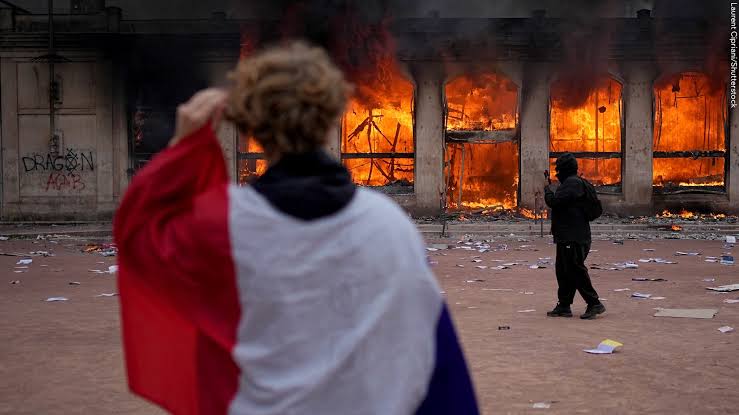
    • Football Hooliganism (Fan Clashes):  As always, the dark side of football was exposed by the resurgence of football hooliganism, a violent subculture originally dubbed  “the English Disease” (a now derogatory term) during its rise in the 1970s and 1980s when British fan riots plagued European stadiums. This modern manifestation of organised fan violence erupted into chaotic street clashes in Mexico City, where rival factions engaged in running brawls that overwhelmed local stadium security. The toxicity spilled over into targeted hostility when a mob of Argentina supporters physically harassed and racially abused American streaming personality IShowSpeed inside the stadium, while other Argentine fan groups sparked diplomatic fury by loudly drowning out the English national anthem with jeers. The unrest culminated across the Atlantic as massive riots erupted in several major European cities following Morocco’s elimination, with disappointed crowds clashing with riot police and damaging public infrastructure. These dangerous disruptions proved that despite decades of strict policing, the destructive legacy of stadium rioting still threatens to overshadow the sport’s greatest global celebration.

    The Ugly: Controversies and Debates

    So there is the Good and the Bad, so what is the Ugly? The “Ugly” captures the stories that split audiences and resist any stable interpretation. As the decisions made on the field are always prone to debate, these moments persist because they unsettle the viewer in ways the tournament cannot easily absorb.

    • Refereeing Consistency and VARgentina: Refereeing consistency has remained a significant issue throughout this World Cup year, culminating in controversial 2026 decisions involving soft penalties, erratic offside calls and a total blind eye turned toward severe fouls. “VARgentina” represents a digital phenomenon stemming from this deeply rooted issue, proposing that tournament officials systematically manipulate video reviews to clear a path of least resistance for Lionel Messi’s squad to reach the final. Believers in this theory point to a pattern of highly subjective penalty calls and lenient disciplinary breaks as proof of narrative-driven corruption, while defenders argue this outrage stems from pure confirmation bias.  Ultimately it can never be truly known whether it is sheer luck or systematic manipulate though it does not mitigate FIFA’s responsibility to restore refereeing consistency and officiating integrity. Notably, FIFA must enforce strict refereeing consistency by standardising the threshold for VAR interventions and making the live audio communication between referees and video officials completely transparent to the global public.
    • Political Symbology and Storytelling: Politics in the fields of Art and Sport can never be truly separated. The infectiously global nature of the game creates a multitude of opportunities for key players to utilise the pitch as a megaphone for political symbology. This multifaceted practice has historically been used to bring vital attention to urgent human rights issues, much like Germany’s powerful 2022 protest highlighting the exploitation embedded within Qatar’s kafala system. However, the 2026 tournament exposed the darker side of this weaponised activism when several Argentine players flashed nationalistic gestures referencing the contested Falkland Islands. Rather than fostering global solidarity, such specific displays deeply alienate audiences, reignites historic diplomatic tensions and threaten to destroy the tournament’s inherent sense of sporting disunity. Ultimately, while individual expression can be utilitarian, what and who decides the limits of political expression on global stages like the FIFA World Cup will always be a matter of fierce debate. 
    Continue reading
    Written by: Mineka
    My Writing Corner Pulse of the World

    Small Islands, Infinite Hearts: What Curaçao and World Cup Micro-Nations Teach the World About Collective Joy?

    June 27, 2026 No Comments

    Small Islands, Infinite Hearts: What does the FIFA 2026 World Cup Mean for Micro-Nations like Curaçao?

    When the final whistle blew at Kansas City Stadium on 20th June 2026, the scoreboard read Ecuador 0, Curaçao 0. For most football fans, it was an unexpected group-stage anomaly, but for the 158,000 citizens of a tiny island nation just 70 kilometres off the coast of Venezuela, it was a seismic psychological event. Having already shattered records just by qualifying as the smallest country in tournament history, Curaçao’s heroic single point against a South American powerhouse validated their presence on the pitch, proving they were never a token novelty. Their journey from being 150th in the world rankings over a decade ago to standing toe-to-toe with footballing giants highlights a fresh era of the sport. It proves that the expansion to a 48-team tournament has the potential to inject the global stage with communal joy and fresh talent as we have see with two stand-out nations this year.: Curaçao and Cabe Verde. This short  piece focuses on the story of Curaçao, presenting a universal narrative regarding the psychosocial value of the FIFA World Cup to micro-nations and sporting bodies can do to protect their representation on the global stage.

    The People of Curaçao: A Blue Wave of Belonging

    To truly understand Curaçao, you must look at a map of the Caribbean, find the coast of Venezuela, and look slightly north. There sits a Dutch Caribbean island spanning just 444 square kilometres with a population of 158,000 people. For decades, its football history was a quiet, domestic affair, tied up in the regional records of the Netherlands Antilles. But the expansion of the 2026 World Cup to 48 teams changed everything. Led by their 78-year-old manager Dick Advocaat, this tiny island went entirely undefeated in their qualifying run, punching their ticket to the biggest sporting event on earth. In doing so, they shattered records to become the smallest country by both population and geographic area ever to play in a Men’s World Cup.
     
    On the island itself, this historic entry transformed football from mere entertainment into a shared atmosphere. The local “Blue Wave” movement, which is simultaneously the title of the nation’s football team,  became a collective psychological state where everyday life briefly reorganised itself around the rhythm of the matches. For a micro-nation, this collective synchronisation matters deeply because it replaces a familiar feeling of geographic isolation with the almost visceral experience of being globally significant. This shift was felt most profoundly among the younger generations as evidenced by their engagement at both in-person matches and social media. Notably when children see their flag in stadiums broadcast to billions, an unspoken sensation of ambition cracks igniting a new wave of hope and optimism to the Curaçaoans of tomorrow.
     
    Furthermore, the actual composition of the squad introduces another beautifully complex layer to this national unity. Of the 26 players selected, most were born and raised in the Netherlands but come from Curaçaoan heritage. This implies that these players made a deliberate decision to leave behind the elite structures of European football to represent their ancestral home out of pure love. It is this diaspora dynamic that creates a fascinating psychological friction. While the island erupted in pride, it also sparked deep local conversations about what it truly means to belong. Seeing these players return to Willemstad was both a reminder of past migration and a powerful validation that identity is not confined to physical borders — rather it is shaped by who you feel at heart.

    How the World Sees Them?: From Underdogs to Role Models

    The world quickly fell in love with this dynamic, refusing to view them as a mere tournament novelty. While they suffered a heavy 7-1 opening defeat to Germany, they secured their place in football folklore during their second match in Kansas City. Facing a formidable Ecuador side, Curaçao ground out a heroic 0-0 draw, anchored by goalkeeper Eloy Room making crucial saves to win the nation its first-ever World Cup point. They were ultimately eliminated after a 2-0 loss to the Ivory Coast, but the scoreboard was secondary. By walking away with that single, hard-fought point, Curaçao proves that micro-nations are equally capable of performing well on the global stage powered through share passion, unity and resilience. 

    Online platforms exploded with affection for the Caribbean team, launching the trending hashtag #BlueWave to celebrate their distinct bright blue kits. Viral videos of Curaçaoan fans dancing in the stadium concourses captivated global audiences, alongside videos of new fans celebrating with them. This sudden football fame translated directly into a massive surge in travel search engine queries for flights and hotels on the island. Travel influencers and sports tourism boards capitalised on the moment, successfully rebranding the nation from a hidden holiday gem into a primary destination for adventurous football fans. Official Curaçaoan media channels strategically leveraged this viral momentum by sharing real-time content, transforming global online engagement into national successes. This coordinated digital push successfully boosted national team merchandise sales while simultaneously fostering an unprecedented sense of pride and unity across the global diaspora.

    While this is all good the visibility of micro-nations simultaneously exposes a contradiction within modern football. The global game is celebrated as inclusive, yet governed by institutions often criticised for political imbalance and commercial priorities. In that tension, stories like Curaçao’s become even more significant. They are reminders that despite its flaws, the World Cup still retains the ability to surface narratives of genuine human scale within an increasingly commercialised multi-billion dollar industry.

    Why Micro-Nations Matter and What Sport Institutions Should Protect?

    For micro-nations, participation is symbolic and carries immense economic and psycho-social value. Economically, global sports participation directly stimulates the domestic economy through future sporting development, increased tourism revenue and lucrative sponsorship opportunities. However what really sticks is the psychosocial value. When a small nation competes globally, it begins to imagine itself differently. Notably, it sparks both optimism and hope and ignites younger generations to pursue their ambitions on the global stage in the future.  Consequently, investment in youth development, community sport and national programmes becomes easier to justify when the population has already witnessed what is possible. This is where the governing bodies of sport carry real responsibility. Expanding tournament formats, protecting diaspora eligibility pathways and ensuring fair qualification systems are integral in shaping which identities are allowed to be seen. Inclusion in football’s biggest tournaments should not be reserved solely for economic or historical powerhouses. It should also reflect the global diversity of the sport itself. At its best, football functions as one of the few global systems where scale does not fully determine voice. A small nation can still speak loudly through performance, unity and resilience. When that happens, the effect extends far beyond sport. It feeds back into education, tourism, national confidence and cultural visibility. 

    Curaçao’s World Cup journey ultimately reminds us that football’s deepest impact is not always measured in wins or trophies. It is measured in recognition and the feelings it creates amongst fans, players and citizens alike  For micro-nations, the act of standing on the world stage is itself a form of victory — one that reshapes how they are seen by others and more importantly how they see themselves. In a world often dominated by scale, wealth and influence including the world of football itself, stories like that of Curacao reminds us the true purpose of the big beautiful game.

    Continue reading
    Written by: Mineka
    My Writing Corner Pulse of the World

    Dynamic Pricing, “Hydration” Breaks and Market Control: The Heavy Commercialisation of the 2026 FIFA World Cup

    No Comments

    Dynamic Pricing, “Hydration” Breaks and Market Control: The Heavy Commercialisation of the 2026 FIFA World Cup

    The 2026 FIFA World Cup arrives as the largest tournament in football history: 48 teams, 104 matches and a tri-nation stage set across Canada, USA and Mexico. It is being framed as a democratisation of the global game through a network‑effect logic in which more nations create more matches, more access, more fans and more money. Beneath this narrative of expansion sits a growing contradiction that has already been met with severe backlash from fans across the world. Rising ticket complaints, algorithmic pricing shocks and aggressive advertising campaigns suggest that access itself is being redefined as a premium product rather than a shared cultural right. This analytical piece argues that these shifts are not accidental missteps but planned strategies as a result of FIFA treating the 2026 World Cup as a laboratory for monetisation to pocket its anticipated $13 billion dollars in revenue in which global football meets the economics of US-Style commercialism.

    What constitutes US-Style Commercialism? 

    US-style commercialism could be defined as a specific institutional logic whereby various event aspects are re-engineered as extractable revenue systems drawn from the values, beliefs and tolerance levels of contemporary US consumers. Ritzer (1996) demonstrated  this through a different but related socioeconomic concept known as “McDonalidization”. In simple terms, “McDonalization” suggests that more and more parts of society are starting to work like a fast‑food chain — everything is made to be quick, standardised, predictable and tightly controlled. We can draw from Ritzer’s McDonaldization thesis and broader sports economic to show how FIFA’s 2026 World Cup strategy reflects a shift toward commercial optimisation. Notably, many of these decisions have been deliberately structured to capture the upside potential of commercial practices that dominate US sports and entertainment markets. These practices include but are not limited to:
    • Extracting value though high pricing tolerance: US sports and entertainment markets normalise extreme price stratification, where elite attendance functions as a status good rather than simple access. This is reflective of the notion of cultural capital: attending becomes less about watching sport and more about signalling exclusivity. In such a system, paying high prices is internalised amongst consumers as a badge of honour and is eventually heavily tolerated and reflected in their willingness to pay for a single ticket.
    • Navigating competition through threat elimination: US sports leagues and entertainment platforms systematically eliminate external competition through tight structural control, using closed franchise systems, exclusive broadcast rights and proprietary ticketing exchanges to extract value from the entire ecosystem rather than just the core event. Live Nation Entertainment shows this model in practice by promoting major stadium tours and funnelling all ticket purchases and resales through its Ticketmaster platform. Because it also stages many shows in venues it owns or operates, the company captures multiple layers of revenue from a single fan’s night out.
    • Monetising on advertising normalisation and attention span: Unlike football’s traditional continuous narrative, US sport normalises interruption as a revenue mechanism. The game becomes a sequence of monetisable attention windows through curated and predictable ad breaks. In the Superbowl alone, US fans can spend up to an hour watching ads — a practice that is deeply rooted and normalised within consumer culture as a sort of compromise or economic trade-off to access content.
    • Exploiting “car culture” as a revenue mechanism: US sport venues are usually built around car‑dependent infrastructure, enabling stadium economies to monetise not only tickets but access itself — parking, tolls, transport corridors, and surrounding commercial zones. These stadiums are often described in popular culture as ‘dystopian’ because, rather than functioning as integrated neighbourhood hubs, they operate like self‑contained entertainment fortresses. In practice, this allows these organisations to capture revenue at every stage of the fan journey, from the moment they enter the precinct to the moment they leave.

    How has FIFA applied US-Style Commercialism?

    Now faced with escalating revenue targets and a pressure to expand the tournament’s economic base, it appears evident that FIFA has effectively leveraged the core mechanisms of American sports capitalism including dynamic pricing and broadcast segmentation as tools to unlock new layers of value extraction in the 2026 World Cup. Compared to Qatar 2022’s subsidy-heavy access model and Brazil 2014’s relatively fixed pricing structure, the 2026 FIFA World Cup redefines commercialisation to a whole new level through numerous aspects of the tournament:

    • Dynamic Pricing: One of the most evident and contested changes in this year’s World Cup was the adoption of dynamic pricing for ticket sales. Whereas Qatar 2022 relied on fixed tiers (including subsidised local categories) and Brazil 2014 maintained largely static price bands, the 2026 model introduces continuous, algorithm‑driven repricing that responds instantly to demand intensity and perceived scarcity. This approach mirrors US airline and ride‑share revenue logic, where volatility itself becomes the mechanism for value extraction. Combined with the relatively high willingness to pay in the North American market, dynamic pricing enables FIFA to stretch the price spectrum dramatically with some seats clearing above $30,000 while others fall below $100. In practice, this has produced a mixed outcome: price volatility has helped FIFA surge toward its $3 billion ticket‑revenue target, yet reports indicate that around 180,000 seats sat temporarily unsold because baseline prices had climbed far beyond what regular match‑goers could afford in a high‑inflation environment. Overall, the systematic US culture around pricing act as effective point of leverage for FIFA to justify their pricing strategy and it’s likely the strategy would pay off.
    • Closed Resale Systems: In addition to the exorbitant prices created by dynamic pricing, FIFA has made a deliberate move to own and control the entire secondary market for ticket sales. The organisation built its own proprietary resale platform not simply to prevent unauthorised sales, but because the US sports market routinely tolerates platform‑controlled resale ecosystems with high fees and minimal regulatory scrutiny. As a result, FIFA can impose a combined 30% fee on every resale, allow prices to climb far beyond earlier public commitments, and release ticket batches in opaque patterns that many analysts interpret as engineered scarcity. These practices have already triggered investigations and legal complaints alleging monopolistic behaviour and misleading consumer conditions. Crucially, they mirror the commercial strategies widely accepted in US sport and entertainment, where eliminating external market threats enables a single operator to control pricing, distribution and value extraction across the entire ticketing ecosystem.
    • Extended Hydration Breaks: While hydration breaks have long existed within FIFA’s framework in the name of  player welfare, the 2026 tournament marks the first time they have been formalised into mandatory, scheduled stoppages with broadcasters encouraged to cut directly to commercial slots. If you were to watch a random match today, you would encounter eight 30‑second mid‑game ad slots created by the new hydration breaks — a sharp increase from the previous model, which offered zero commercial windows during active play. This shift directly mirrors US sporting events, where leagues like the NFL and NBA engineer artificial stoppages to create guaranteed, high‑value advertising pods throughout the game. This shift has drawn criticism from players and supporters including Netherlands captain Virgil van Dijk who argue that the interruptions disrupt competitive rhythm and edge football toward an American‑style, segmented match structure. The key change is not the presence of the breaks themselves, but their integration into a predictable broadcasting cadence that expands the volume of sellable advertising inventory. In effect, a welfare-based measure has been reframed as a commercial asset, aligning match flow more closely with US‑style media monetisation models.
    • Half-Time Style Entertainment: In earlier World Cups, including 2014 and 2022, half-time functioned as a protected sporting interval—tactical adjustment, fan recovery, and uninterrupted broadcast analysis. In 2026, FIFA integrates large-scale entertainment productions into key matches, particularly opening fixtures and the final, echoing the Super Bowl model. On one hand, this could be read as FIFA’s attempt to expand football’s cultural relevance in the United States by adopting a broadcast format that American audiences already recognise and reward. However, in doing so, FIFA breaks from long‑standing football culture by effectively prioritising the expectations of a single host nation over the global norms of the sport. This shift has triggered significant backlash from fans and broadcasters alike, with the BBC making a notable announcement that it would cut the halftime performance entirely and move straight into match analysis.
    • Driving culture and infrastructural extraction: Unlike Qatar 2022, where mobility functioned as a subsidised public utility through free metro access, and Brazil 2014, where transport systems were integrated into host‑city infrastructure, the 2026 model actively monetises mobility. Because most US host stadiums sit in car‑dependent metropolitan zones, simply reaching the venue becomes an additional revenue layer as fans face steep parking fees, toll‑based highway corridors and surge‑priced rideshare routes before they even enter the stadium. Nowhere is this clearer than MetLife Stadium, the site of the final, where the Meadowlands complex is almost entirely inaccessible by foot and deliberately engineered around private vehicle entry. International visitors report paying $98 or more for a peak‑day round‑trip train from Manhattan and over $300 for stadium parking, a pricing structure that effectively traps tourists into high‑margin transit options. These figures stand in stark contrast to the walkable, low‑cost or free mobility systems deployed at previous tournaments, revealing how FIFA’s 2026 design aligns with the broader American sports‑entertainment economy.

    What emerges from this transformation is not simply a more expensive World Cup, but a shift from football as a shared cultural ritual to a massive revenue engine. While profit maximisation clearly underpins every decision FIFA has taken this cycle, deeper structural pressures help explain why this moment is so pivotal. One theory suggests that FIFA is responding to an existential threat from elite European club football, whose competitions now dominate global attention and sponsorship for most of the year. To prevent the international game from slipping into cultural irrelevance, FIFA must generate unprecedented revenue to fund rival properties like the expanded Club World Cup. A second theory centres on Gianni Infantino’s political survival: his power depends on the “one nation, one vote” system, which he sustains through generous development grants to smaller associations. To keep this patronage loop funded, he relies heavily on the vast commercial upside of the American sports economy. There might be deeper political reasons behind the rapid commercialisation of the 2026 World Cup, but what is certain—and has been proven countless times before—is that irrespective of FIFA’s practices, it is the fans and the spirit of football that ultimately energise the tournament. From the thunder of collective chants to the joy of micro‑nations announcing themselves on the world stage, and from rising stars to ageing legends making one last run, the emotional core of the World Cup remains stubbornly intact.

    Continue reading
    Written by: Mineka
    Page 1 of 51234»...Last »

    ABOUT ME

    Welcome, curious wanderer! I'm Mineka, a student living in Melbourne, and this is your window to explore the depths of my intellectual journey. Delve into the realms of philosophy's timeless questions, immerse yourself in the rich tapestry of global literature, and uncover the strategies shaping modern business innovation. Join me on this intellectual odyssey as we navigate the pathways of knowledge that inspire my growth and passion. Welcome aboard!

    Popular Posts

    The Pretty Petty Ironies of Life!

    The Pretty Petty Ironies of Life!

    July 22, 2024
    Economic Intuitions behind Australia’s Right to Disconnect

    Economic Intuitions behind Australia’s Right to Disconnect

    Beyond the Border: Why Canada’s EBU Move is a Geopolitical Masterstroke

    Beyond the Border: Why Canada’s EBU Move is a Geopolitical Masterstroke

    July 17, 2026
    Sergio Leone’s Desert of Absurdity: Extracting the Existential Philosophy of “The Good, The Bad & The Ugly”

    Sergio Leone’s Desert of Absurdity: Extracting the Existential Philosophy of “The Good, The Bad & The Ugly”

    July 22, 2024
    The Saviour From Hell? Psychological Personality Analysis Of Sienna Brooks (Inferno, 2016)

    The Saviour From Hell? Psychological Personality Analysis Of Sienna Brooks (Inferno, 2016)

    MY WRITING CORNER – CATEGORIES

    • Pulse of the World
    • Critique Corner
    • Research Desk
    • Philosophy Symposium
    • Creative Chronicles

    Open Mic – Categories

    • Current Affairs
    • History, Arts & Humanities
    • Science & Technology
    • Philosophy & Stoicism

    Lifestyle Collective – Categories

    • IN-CAFÉ CINEMA
    • IN-CAFÉ JUKEBOX
    • IN-CAFÉ LIBRARY
    • IN-CAFÉ MAP

    Recent Posts

    Beyond the Border: Why Canada’s EBU Move is a Geopolitical Masterstroke

    Beyond the Border: Why Canada’s EBU Move is a Geopolitical Masterstroke

    July 17, 2026
    Recapping The 2026 FIFA World Cup Recap: The Good, The Bad and The Ugly

    Recapping The 2026 FIFA World Cup Recap: The Good, The Bad and The Ugly

    Small Islands, Infinite Hearts: What Curaçao and World Cup Micro-Nations Teach the World About Collective Joy?

    Small Islands, Infinite Hearts: What Curaçao and World Cup Micro-Nations Teach the World About Collective Joy?

    June 27, 2026
    Dynamic Pricing, “Hydration” Breaks and Market Control: The Heavy Commercialisation of the 2026 FIFA World Cup

    Dynamic Pricing, “Hydration” Breaks and Market Control: The Heavy Commercialisation of the 2026 FIFA World Cup

    Meaning Under Pressure: The Existential Lyrics Driving ESC 2026’s Lithuania & Czechia

    Meaning Under Pressure: The Existential Lyrics Driving ESC 2026’s Lithuania & Czechia

    May 10, 2026
    This error message is only visible to WordPress admins

    Error: No feed found.

    Please go to the Instagram Feed settings page to create a feed.

    © 2025 copyright MINEKA'STHOUGHTTAPESTRY // All rights reserved
    Designed by LI Studio