
Independence in an Age of Giants: What Armani’s Succession Reveals About Fashion’s Next Era
Independence in an Age of Giants: What Armani’s Succession Reveals About Fashion’s Next Era
Haute couture has long been anchored in its founding principles of exclusivity, scarcity and uncompromising craftsmanship. Yet this landscape has shifted dramatically with the rise of luxury conglomerates such as LVMH and Kering, whose scale, capital and global retail infrastructures have redefined what luxury looks like in practice. Since the 1990s, a wave of seismic M&A activity has consolidated once‑independent maisons into corporate portfolios, transforming couture from a craft‑driven cultural institution into a high‑growth asset class. Within this new order, Giorgio Armani stands as one of the last great independents, whose unfortunate demise in 2025, marks not only a pivotal moment in the story of Italian haute couture but also a profound question mark over the future trajectory of luxury fashion.
The Transformation of Luxury from Independent Foundations to Corporate Ecosystems
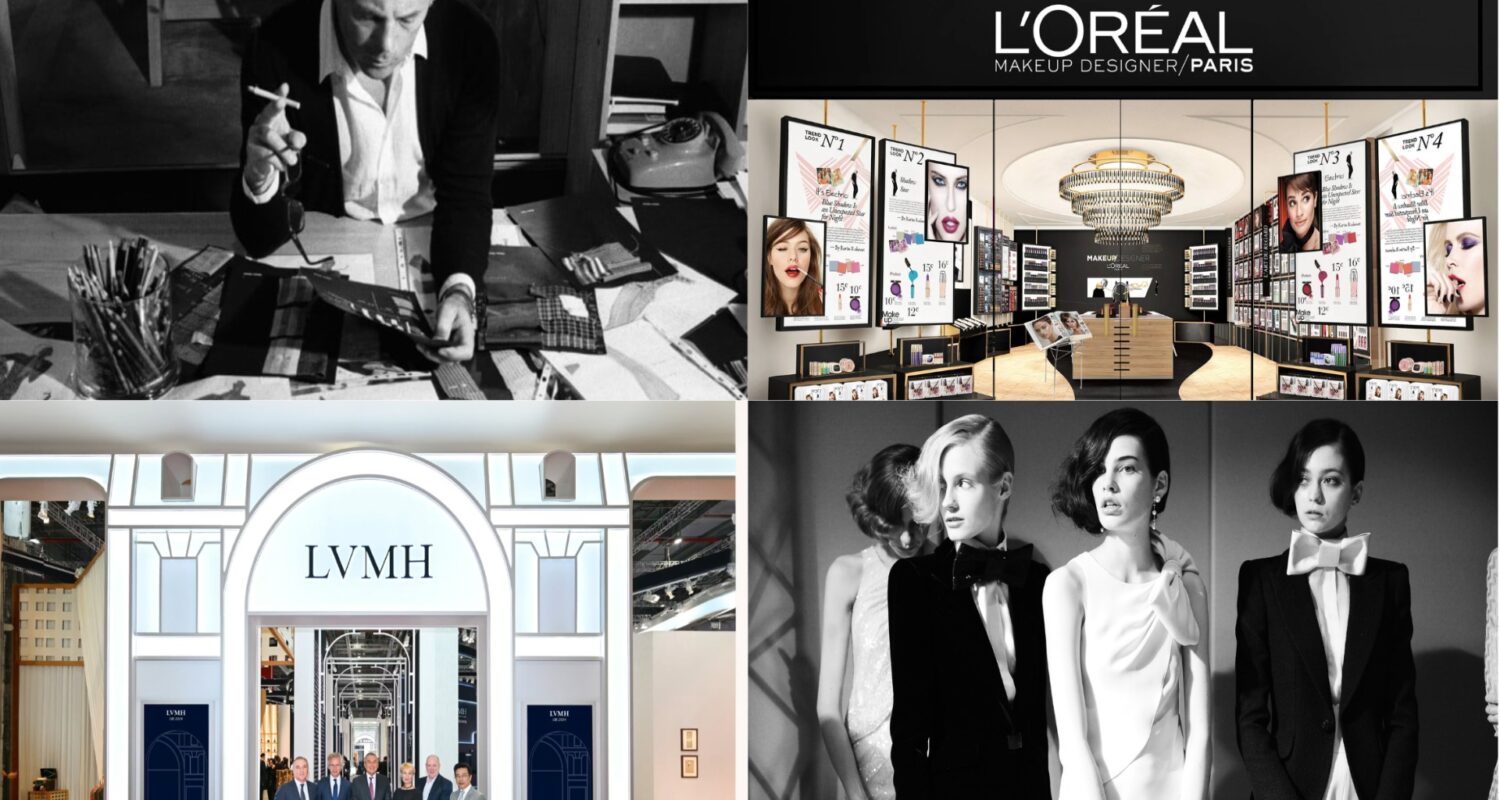
Giorgio Armani’s succession plan, revealed following his passing in September 2025, reveals a phased transition of ownership that protects the brand’s future within a new luxury landscape. The will instructs his heirs to sell a 15% stake in the Armani Group within 18 months, followed by a second sale of up to 54.9% within five years, with priority given to preferred luxury conglomerates like LVMH, L’Oréal and Essilor Luxottica. Simultaneously, he has instructed the Fondazione Giorgio Armani to maintain at least a 30% to ensure that the brand’s signature aesthetic and ethical values remain permanently preserved under any ownership structure. This article situates Armani’s succession plan within a luxury landscape that has shifted from standalone maisons to competing organisational systems. It asks whether the future of fashion will hinge less on a label’s “independence” and more on the system it aligns with — and, ultimately, on the deeper question of who truly owns and shapes this multifaceted industry.
The End of Independence as an Endpoint
For decades, luxury philosophy has treated independence as the ultimate badge of purity: the very idea of a free-spirited couturier standing apart from commercialised conglomerates, answering only to his muse and to a loyal clientele. Armani embodied that philosophy. Yet his will quietly challenges that, in a world of slowing growth, soaring marketing costs and global e‑commerce infrastructure, independence is no longer a sustainable endpoint but a transitional phase. By requiring a 15% stake sale within 18 months and allowing a path to 54.9% in 3-5 years, Armani’s plans demonstrate a timetable of ownership tranches rather than a binary “sell or not sell” moment. Independence becomes something to be phased out, not defended forever, and the founder himself is the one who writes the script for that phasing. The symbolism is stark: if even Armani anticipates an eventual partial takeover, it signals to the wider industry that stubborn independence is now more idealised than strategic.
Three Preferred Buyers, Three Models of Power
The most revealing part of the will is not that the company may be sold, but who is enlisted as potential buyers. Each preferred buyer embodies a different industrial model competing to shape luxury’s future:
L’Oréal – The Beauty Platform: L’Oréal’s long Armani beauty licence shows where the real money and visibility sit: in fragrance and cosmetics, not on the runway. Today, beauty companies use “Armani” as a label for mass‑produced, science‑driven products sold in duty‑free shops and Sephora, with fashion providing the story that helps move perfume and skincare at scale.
LVMH – The Portfolio Conglomerate: LVMH is the clearest example of a multi‑brand group: many maisons, each treated as a distinct brand but managed as assets inside one system. If Armani joined LVMH, it would shift from independence to a model where capital allocation, synergies and market share matter more than the idealisation of the lone atelier. In a world of economic uncertainty and shifting Chinese demand, diversification is the group’s safety net.
EssilorLuxottica – The Category Platform: EssilorLuxottica, Armani’s long‑time eyewear partner, shows a third path: a category‑focused industrial platform that controls design, manufacturing and retail for one product vertical. Fashion brands plug into this system through licences. In this setup, Armani becomes one brand among many in a hardware‑plus‑distribution machine where the real power sits in production and retail, not in fashion shows.
Taken together, these three suitors are a map of luxury’s new power structure: one where creative houses no longer sit at the centre and industrial platforms do. The future question for any brand becomes: which platform best monetises my name across beauty, accessories and lifestyle?
Foundations, Voting Rights and the New Compromise
Despite the presence of luxury conglomerates in Armani’s will, his insistence that his foundation and closest partners retain at least 30.1% of shares and 70% of voting rights appears to be the most redeeming part of the plan. At first glance, this seems like a last stand for artistic control but in reality, it is a blueprint for a new compromise between heritage and scale. Foundations and dual‑class voting structures allow founders’ values to outlive their biological tenure, ensuring that any acquirer becomes a powerful minority, and not an absolute ruler. This model provides numerous advantages:
Brand Maintenance: Conglomerates provide the “hard” infrastructure – That refers to the capital, logistics and digital networks required to run business operations. Meanwhile the foundation polices the “soft” elements of the brand including aesthetic direction, brand codes and philanthropic orientation.
Stronger Governance: The legal structure becomes a substitute for the physical presence of the founder in the studio. Instead of Armani himself vetoing an ill‑judged collaboration, voting rights and governance clauses are meant to do the work such that the brand does not compromise the client-facing appeal it has maintained throughout its years in operation.
National Identity: National and cultural identity are implicitly defended. By naming an Italian‑anchored industrial player (EssilorLuxottica) alongside French giants (LVMH, L’Oréal) and by keeping voting power in Italian hands, the will plays into broader anxieties about “Made in Italy” brands being controlled from abroad, even as their survival increasingly depends on transnational capital. However, this remains uncertain until a deal is actually struck. Right now, the most likely outcome is that a French conglomerate would absorb the brand and potentially strip away some of its national character.
Nevertheless, this is hybrid model – conglomerate money under foundation oversight – is likely to become more common among late‑stage founder houses. It is different from what we’ve seen in the past with brands like Yves Saint Laurent and Christian Dior, where control was largely ceded to corporate buyers once a deal was done. In contrast, this new governance setup acknowledges that the era of absolute independence is over while refusing to hand the keys entirely to the market, attempting instead to lock in a long‑term guardian for the brand’s identity even as ownership and capital structures evolve.
The Future: Luxury as Competing Operating Systems
So what, then, does Armani’s plan suggest about the long‑term direction of luxury fashion?
- Luxury Operating Systems: First, the centre of gravity will shift from individual maisons to what once could call “operating systems” of luxury: interconnected networks of brands, factories, licences, data and retail channels under a few mega‑platforms like LVMH. Fashion labels will be like apps running on these operating systems. The strategic question for a house will not just be “who owns us?” but “which system should we turn to when survival is threatened?” which in turn affects the partnerships a brand makes along its journey.
- ‘Quality’ Deals: Second, the independence narrative will be rewritten. Instead of glorifying independence as an absolute, success will be measured by the quality of the deal a brand can negotiate: the strength of veto rights, the durability of charters and the ability of foundations to enforce long‑term thinking against quick commercial pressures. Heritage will be less about who signs the pay cheques and more about who holds the long‑term vote.
- Slow Transitions: Third, consolidation will become more selective and slower. Armani’s staged path – minority stake first, majority later, IPO only if needed – reflects a more cautious M&A climate: higher rates, more volatile demand in China and the US and increasing political scrutiny of foreign takeovers. The era of fast, dramatic “rescue” takeovers is fading. Instead, brands will spend longer testing whether they can join a bigger system without losing themselves in the process.
Altogether this signals that creativity itself will adapt. Designers will not just respond to runway trends but to corporate giants: a creative director at an LVMH‑owned Armani would design with cross‑category synergies in mind; under L’Oréal’s influence, beauty storytelling might dominate; under EssilorLuxottica, eyewear could become the point of differentiation. The cut of a jacket and the shape of a shoe will soon be guided by spreadsheets as much as by sketchbooks. In that sense, Armani’s final legacy may not be a set of clothes, but a legal and strategic blueprint showing how a founder can face the age of conglomerates with clear eyes, choose the system that will eventually take over his name, and still try to stop that name from becoming just another logo in a grid.










Leave a Comment