Thought Tapestry - Welcome, curious wanderer! I'm Mineka, a student living in Melbourne,
  • Home
  • My Writing Corner
    • Pulse of the World
    • Critique Corner
    • Research Desk
    • Philosophy Symposium
    • Creative Chronicles
  • Lifestyle Collective
    • IN-CAFÉ CINEMA
    • IN-CAFÉ JUKEBOX
    • IN-CAFÉ LIBRARY
    • IN-CAFÉ MAP
  • Open Mic
    • Current Affairs
    • History, Arts & Humanities
    • Science & Technology
    • Philosophy & Stoicism
  • About Me
Home
My Writing Corner
    Pulse of the World
    Critique Corner
    Research Desk
    Philosophy Symposium
    Creative Chronicles
Lifestyle Collective
    IN-CAFÉ CINEMA
    IN-CAFÉ JUKEBOX
    IN-CAFÉ LIBRARY
    IN-CAFÉ MAP
Open Mic
    Current Affairs
    History, Arts & Humanities
    Science & Technology
    Philosophy & Stoicism
About Me
Thought Tapestry - Welcome, curious wanderer! I'm Mineka, a student living in Melbourne,
  • Home
  • My Writing Corner
    • Pulse of the World
    • Critique Corner
    • Research Desk
    • Philosophy Symposium
    • Creative Chronicles
  • Lifestyle Collective
    • IN-CAFÉ CINEMA
    • IN-CAFÉ JUKEBOX
    • IN-CAFÉ LIBRARY
    • IN-CAFÉ MAP
  • Open Mic
    • Current Affairs
    • History, Arts & Humanities
    • Science & Technology
    • Philosophy & Stoicism
  • About Me
Browsing Tag
analysis
Critique Corner My Writing Corner

Contemplating Contrapposto: The Symbolisms and Existential Depths of Structural Art

March 25, 2025 No Comments

Contemplating Contrapposto: The Symbolisms and Existential Depths of Structural Art


The classical contrapposto is a fascinating feature of the sculpture and style of classical antiquity that traces its origins to the foundations of Western art in Ancient Greece. Known for celebrating the male physique as a naturalistic representation of athleticism, Ancient Greece’s adoration of masculine virility has been keenly depicted through its many artistic endeavours, including literature, pottery, and sculpture. Muscular Greek statues, in particular, with their chiselled torsos, rippling forms, and sensuous curves, exude an alluring and timeless eroticism, capturing the essence of divine perfection and human desire in every sculpted detail.

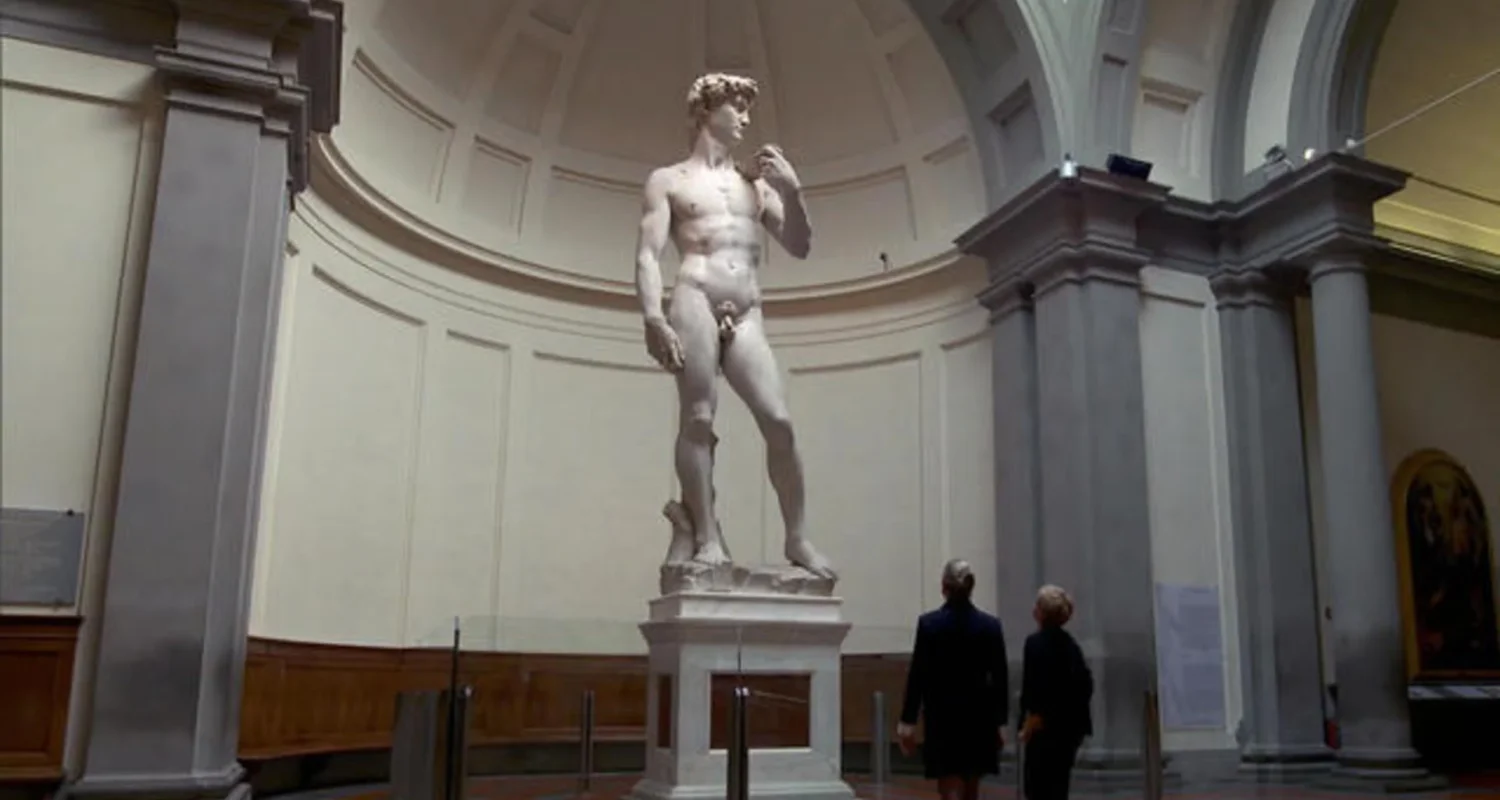
The contrapposto, which bears a certain anatomical specificity, is one of the many features that adorn the mystical yet luring statues and statuettes of Ancient Greece. It can be defined as a sculptural scheme in which a standing human figure is poised such that its weight rests on a single leg (called the engaged leg), which subsequently frees the other leg, which is bent at the knee. As time progressed and the Ancient World swept into slumber, resurrections of the classical contrapposto saw itself reappearing in the timeless sculptures of the European Renaissance, such as Michelangelo’s infamous David in 1501. Although this structural scheme frequently appears across the grand plethora of classical sculpture, little is known as to why this scheme may be significant or for what purpose it stands in the broader philosophical sphere of existential thought.

Those whose minds are predisposed to inquisitiveness, may gaze for hours upon a sculpture, naturally pondering the multitude of questions that interrogate the purpose, depth, and hidden motives behind the sculptor’s choices. Staring at the sculpture of Donatello’s David, our inquisitive drive demands that we understand and rationalize every distinct and precise feature of the sculptural opus through the artistic motives that have driven Donatello to construct his sculptural masterpiece. Why does he place his weight on a singular leg? Why are his eyes directed towards the earth? Why do his fingers bend in a circular motion while he places his left hand towards the starting point of his pelvic muscles? These questions seek to derive meaning from sculptural choices and in turn question the artist’s anatomical choices, which may be undiscovered through mere historical or contextualised understanding.

As humans, demystifying the world is complemented by further mystifying its secrets, which at the end of the day is what strikes the complex beauty of humanity. Hence, we would also want to contemplate contrapposto as a philosophical endeavour more than an artistic one by aiming to resurrect its metaphysical secrets by understanding the sculptural schemes in the broader context of mind’s complexity. Extending this to the analogy of Donatello’s David, we may be propelled to understand whether the circular motion of his fingers is a hidden symbol for the anxiety of stepping into conflict, whether the direction of his eyes towards the ground is a motif that suggests an inner existential conflict, or whether the general lack of balance between the sculpture’s limbs is a physiological expression of David’s epistemic dissonance in partaking in war.

The contrapposto, among many other sculptural schemes and choices, is one such feature that triggers this depth of questioning and may be imperative to unravelling the shades of meaning from an entire sculpture and demystifying its philosophical undertones. As illustrated earlier, the contrapposto seeks to focus the weight of a statue onto a single leg while the other is kept free but bent at the knee. This position is generally associated with free-standing male figures and is one that posits grace and masculine poise in a statue. Previously it was entailed that the posture is natural and relaxed, although present-day humans may reject this claim upon forcibly attempting the contrapposto, which subsequently obscures further levels of questioning. However, what humans fail to recognise is that the contrapposto is indeed a natural pose that is involuntarily achieved through the anatomical interaction between our biology and environment and is therefore harder to achieve when done forcibly. The contrapposto emerges as we take our final step in a dignified stride, our weight centred on one leg while the other remains free and bent, poised to move forward. This naturalistic stance suggests that each sculpted figure engaging in this pose has recently walked or is about to set foot decisively. For David, this could symbolise the rock from which he plans to confront the Philistine giant Goliath and lead his army. It represents a midpoint between action and anticipation, conveying a sense of the impending incompleteness inherent in the contrapposto. This pose hints at hidden doubts and uncertainties within the character, whether it is the unarmed David facing a formidable enemy or the contemplative gaze of a deity surveying the world from the heavens. This juxtaposition of doubt alongside the bold projection of the sculpted figure creates a dynamic tension that resonates with viewers, inviting empathy and shared introspection. The contrapposto thus serves not only as a physical stance but also as a metaphysical window into the inner turmoil of its subjects, offering viewers a deeper connection to the complexities of the human mind as it is hindered by the power of doubt.

Another interpretation of contrapposto, merging physiology with phenomenology, maybe the nature of epistemic dissonance. In the philosophical tradition, weight is viewed as a focus of energies that, when evenly distributed across our physiological systems, keeps us alive and human. While contrapposto may be naturally achieved between anticipation and action, as signified in the previous interpretation, when one tries to forcibly strike this pose, the previous argument is no longer valid, signifying greater philosophical questioning regarding the nature of mental balance. Although metaphysical forces tend to keep our minds in balance, there are always instances where this may be unpresented, thereby compelling us to struggle and strive in order to seek balance between our minds and subsequently our organs and organ systems.

The characters that engage in the contrapposto, by this inferential point, are undergoing some inner form of existential questioning or epistemic dissonance, as there may be an imbalance between their thoughts, feelings, and behaviour, as resonant with the physical imbalance between the distribution of their weight. This imbalance is caused by the character engaging in behaviour that confounds or is in flux with the affective and cognitive facets of the character’s attitude, leading to an unpleasant sense of anxiety. This is easily evident through images of David where he is on the verge of undertaking a war which misaligns with his value system and underlying attitudes.

Conclusively, analytical minds that value art and its expression are not just appreciators, as they seek to go into depths behind the significance of the artistic choices that drive an artwork’s meaning. In the case of sculptural works, it is the anatomical features of the statue and how they correlate with story, context, or philosophy through which that statue was constructed. The contrapposto, as natural and simple as it might seem, is a symbol of the incompleteness we experience as humans every day as we ebb and flow through cycles of hope between moments of anticipation and action. In addition to that, the imbalance caused by the pose may be a physio-psychological expression of the epistemic dissonance we undergo when our value systems and actions misalign, thus triggering a series of existential questions that ponder in the abyss of our minds. Therefore, The contrapposto as passed from the Ancient Greeks to Renaissance sculptors, is not a mere structural choice but one that deconstructs a myriad of truths about the human experience that shall never lose their inherent relevance.

Continue reading
Written by: Mineka
Critique Corner My Writing Corner Photoshootings

Unravelling the Philosophical Pantheon

January 1, 2025 No Comments


UNRAVELLING THE PHILOSOPHICAL PANTHEON

Analysing Raphael’s School of Athens Through His Depiction of His Philosophers

“The School of Athens” by Raphael (1509) stands as one of the pinnacle achievements in art and tapestry, proudly displayed in the upper reaches of the Vatican. This masterpiece resonates with the wisdom, knowledge, and intellectualism that permeated through Classical Antiquity from 500 BCE to 476 AD, immortalising a congregation of some of the greatest Greek philosophers whose ideas, predictions, and theories laid the foundation of Western civilization. These philosophers casually convene in a grand basilica with an arched lacunar ceiling inspired by the Byzantine-era churches built under Constantine.

The basilica’s backdrop, adorned with statues of Apollo and Athena on rectangular columns, not only echoes the architectural legacy of Hellenistic culture but also represents a synthesis of Renaissance and ancient architectural styles. This setting mirrors elements of St. Peter’s Basilica and other architectural landmarks of the Vatican, bridging Ancient Greece with the modern West. The inclusion of Apollo and Athena amplifies the message, as these deities symbolize various aspects central to the advancement of Western culture, including dance, war, music, and freedom.

At the exact centre of the basilica, framed by an arched Doric doorway, stand Aristotle and Plato engaged in conversation, dominating the congregation. Raphael likely cantered these figures to highlight what he perceived as the greatest thinkers of their time, who embody a dichotomy of thought. Their gestures divide the painting into two main schools of thought: Plato’s upward-pointing hand signifies his spiritual and metaphysical approach, suggesting a belief in higher powers and abstract forms. In contrast, Aristotle’s horizontally extended hand symbolizes his empirical and scientific approach grounded in observation and logic. This division underscores the duality of philosophical inquiry.

Analysing the gestures, actions, and positions of all the philosophers in the painting is complex. However, focusing on the most significant figures, we note the presence of Pythagoras, Hypatia, Archimedes, Diogenes, Euclid, and Alexander the Great. Art historians often debate their identities due to the intricacy of Raphael’s work, resulting in only educated guesses.

For instance, the figure reclining on the basilica steps is believed to be Diogenes. His posture and representation reflect his rejection of social conventions and luxury. Diogenes’ simple blue chiton robe and relaxed position contrast with the formality and attire of his fellow philosophers, signalling his disdain for material excess and social norms, embodying his quest for authenticity and simplicity.

Nearby, Pythagoras, the father of mathematics, is depicted surrounded by intrigued students. An image of the Pythagorean triangle is visible, while the text beneath emphasizes his harmonic theory of music, highlighting the sacredness of the number 10 in Western music and religion. Pythagorean mathematics is portrayed as a powerful language essential for understanding the universe’s patterns and mysteries.

To the right of Pythagoras sits Hypatia of Alexandria, a prominent female mathematician and philosopher. Hypatia, a proponent of Neoplatonism, explored the universe’s supreme goodness through mathematics and astronomy. Tragically, her work was deemed heretical by extreme Christian mobs, leading to her brutal murder. Raphael subtly hints at her tragic story through her attire and expression, alluding emotionally to her loss within the philosophical pantheon.

Opposite Hypatia and Pythagoras, Euclid is engaged in teaching geometry. Some modern sources suggest this figure could represent Archimedes, reflecting ongoing historical debate. Both philosophers were devoted to scientific inquiry as a means to enhance humanity’s understanding and control of the natural world. Archimedes, known for his inventions, exemplifies the practical application of science.

Above these figures, Socrates teaches the warrior Alcibiades, one of his infamous students who supposedly engaged in a pederastic relationship. Socrates’ focus on teaching, despite Alcibiades’ irritable expression, portrays him as patient and dedicated to imparting wisdom to his followers, regardless of emotional constraints.

Many other philosophers populate this artistic masterpiece, each contributing to its depth and complexity. Figures like Socrates, Anaximander, and Alexander the Great are depicted in natural poses, engaging with others. The vastness and intricacy of “The School of Athens” encapsulate the intellectual fervour and dynamism that originated in Classical Greece and Antiquity, ultimately shaping the Western world.

Despite its Church perspective, Raphael employs Renaissance colour palettes and subtle gestures to convey controversial narratives. This timeless artwork engages in a profound dialogue on philosophy, celebrating the enduring legacy of ancient thought. These are my preliminary ideas guided by factual evidence that encapsulate the essence of this tapestry.

Continue reading
Written by: Mineka
Page 5 of 5« First...«2345

ABOUT ME

Welcome, curious wanderer! I'm Mineka, a student living in Melbourne, and this is your window to explore the depths of my intellectual journey. Delve into the realms of philosophy's timeless questions, immerse yourself in the rich tapestry of global literature, and uncover the strategies shaping modern business innovation. Join me on this intellectual odyssey as we navigate the pathways of knowledge that inspire my growth and passion. Welcome aboard!

Popular Posts

The Pretty Petty Ironies of Life!

The Pretty Petty Ironies of Life!

July 22, 2024
Meaning Under Pressure: The Existential Lyrics Driving ESC 2026’s Lithuania & Czechia

Meaning Under Pressure: The Existential Lyrics Driving ESC 2026’s Lithuania & Czechia

May 10, 2026

Mobiel spelen bij Baloo Casino: wat zijn de mogelijkheden?

March 13, 2026

Tortuga Casino est-il une plateforme transparente pour les joueurs ?

January 28, 2026

Betspino Casino: Een kijkje achter de schermen

February 8, 2026

MY WRITING CORNER – CATEGORIES

  • Pulse of the World
  • Critique Corner
  • Research Desk
  • Philosophy Symposium
  • Creative Chronicles

Open Mic – Categories

  • Current Affairs
  • History, Arts & Humanities
  • Science & Technology
  • Philosophy & Stoicism

Lifestyle Collective – Categories

  • IN-CAFÉ CINEMA
  • IN-CAFÉ JUKEBOX
  • IN-CAFÉ LIBRARY
  • IN-CAFÉ MAP

Recent Posts

Meaning Under Pressure: The Existential Lyrics Driving ESC 2026’s Lithuania & Czechia

Meaning Under Pressure: The Existential Lyrics Driving ESC 2026’s Lithuania & Czechia

May 10, 2026
Collapsed Regimes, Nuclear Disarmament and EU Solidarity: The Hidden Politics behind 5 Eurovision Classics

Collapsed Regimes, Nuclear Disarmament and EU Solidarity: The Hidden Politics behind 5 Eurovision Classics

Understanding Contemporary Digital Folklore: The Case of Backrooms, Cores and Liminal Spaces

Understanding Contemporary Digital Folklore: The Case of Backrooms, Cores and Liminal Spaces

April 26, 2026
The Mind Beyond the Brain: The Radical Science Behind Dan Brown’s Latest Thriller

The Mind Beyond the Brain: The Radical Science Behind Dan Brown’s Latest Thriller

Mobiel spelen bij Baloo Casino: wat zijn de mogelijkheden?

March 13, 2026

© 2025 copyright MINEKA'STHOUGHTTAPESTRY // All rights reserved
Designed by LI Studio