Thought Tapestry - Welcome, curious wanderer! I'm Mineka, a student living in Melbourne,
  • Home
  • My Writing Corner
    • Pulse of the World
    • Critique Corner
    • Research Desk
    • Philosophy Symposium
    • Creative Chronicles
  • Lifestyle Collective
    • IN-CAFÉ CINEMA
    • IN-CAFÉ JUKEBOX
    • IN-CAFÉ LIBRARY
    • IN-CAFÉ MAP
  • Open Mic
    • Current Affairs
    • History, Arts & Humanities
    • Science & Technology
    • Philosophy & Stoicism
  • About Me
Home
My Writing Corner
    Pulse of the World
    Critique Corner
    Research Desk
    Philosophy Symposium
    Creative Chronicles
Lifestyle Collective
    IN-CAFÉ CINEMA
    IN-CAFÉ JUKEBOX
    IN-CAFÉ LIBRARY
    IN-CAFÉ MAP
Open Mic
    Current Affairs
    History, Arts & Humanities
    Science & Technology
    Philosophy & Stoicism
About Me
Thought Tapestry - Welcome, curious wanderer! I'm Mineka, a student living in Melbourne,
  • Home
  • My Writing Corner
    • Pulse of the World
    • Critique Corner
    • Research Desk
    • Philosophy Symposium
    • Creative Chronicles
  • Lifestyle Collective
    • IN-CAFÉ CINEMA
    • IN-CAFÉ JUKEBOX
    • IN-CAFÉ LIBRARY
    • IN-CAFÉ MAP
  • Open Mic
    • Current Affairs
    • History, Arts & Humanities
    • Science & Technology
    • Philosophy & Stoicism
  • About Me
Browsing Tag
structural art
Critique Corner My Writing Corner

Collapsed Regimes, Nuclear Disarmament and EU Solidarity: The Hidden Politics behind 5 Eurovision Classics

May 10, 2026 No Comments

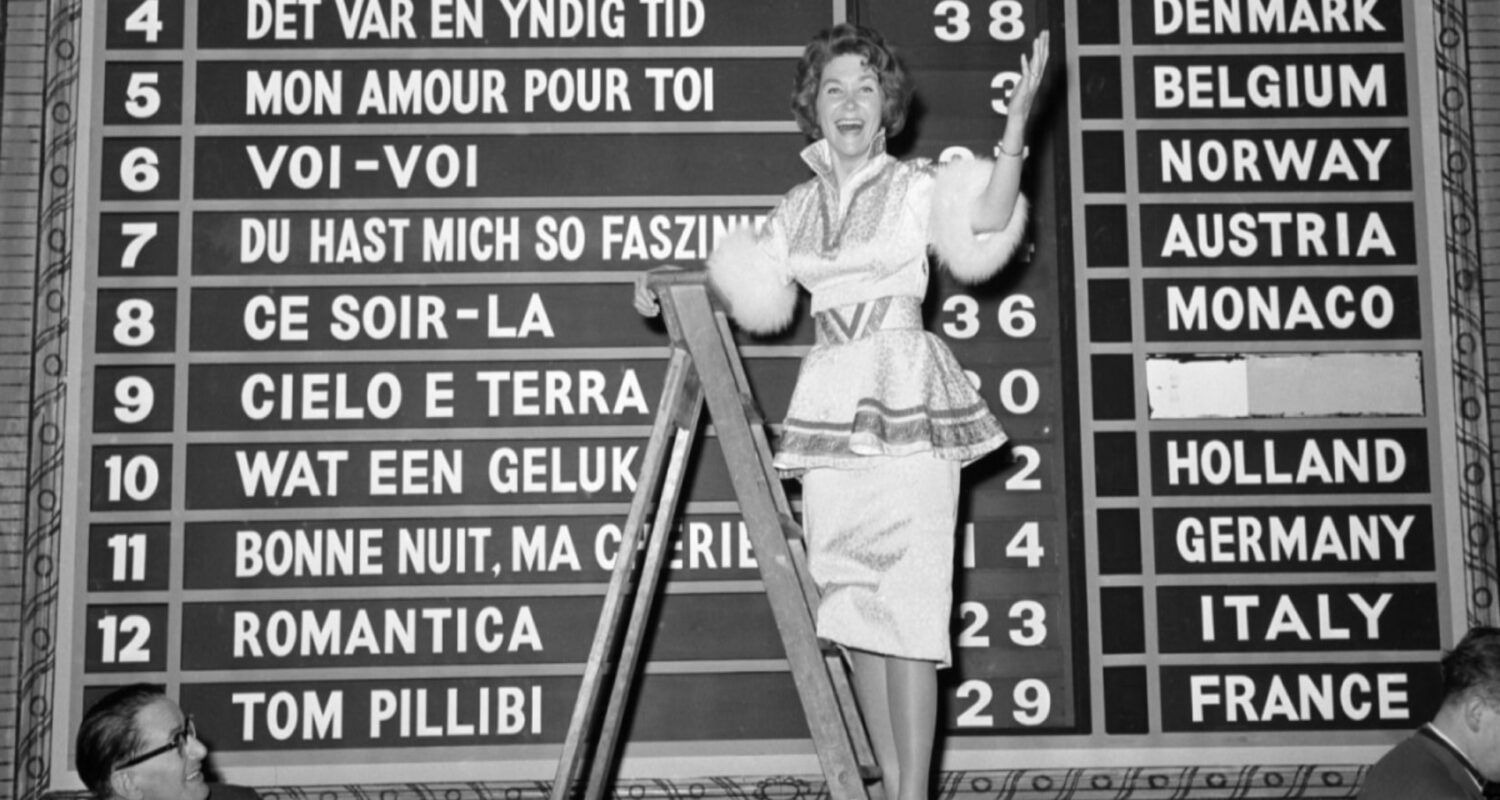
Collapsed Regimes, Nuclear Disarmament and EU Solidarity: The Hidden Politics behind 5 Early Eurovision Entries

At Eurovision, the word “political” is almost impossible to define and articulate on the spot. It is indisputable that a contest built on nations competing under their own flag cannot be free from political influence. Yet what counts as “political influence” remains a grey area – one that is rarely defined by broadcasters, organisers, or even the fan community. Politics manifests in Eurovision in numerous ways (some helpful, some harmful): through voting blocs and regional alliances, through the stories countries choose to present on stage and through the diplomatic tensions that shape who participates and how their entries are marketed and received. In this article we focus on the second dimensions looking where a single three-minute performance can shape the distribution of power and challenge social issues. In the last decade, political songs have often dominated headlines, but the politics have always been there; they simply wore different masks. This article looks back before the 2020s, at five entries that quietly but decisively engaged with power: from sexual violence to unity, from shattered regimes to the right to a nuclear-free future.

France 1968 – “La Source” by Isabelle Aubret
France’s 1968 entry, “La Source,” was released in the same year as the May 1968 uprising, when the streets of Paris overflowed with demands for freedom, equality and the dismantling of authoritarian structures. Although the song appears as a gentle lyrical ballad about emotional purity and vulnerability, in later readings it was shockingly discovered to be a subtle yet brutal commentary on sexual violence and the violation of consent. What reads like a fairytale is actually the story of a young, innocent girl being sexually assaulted by three men in a forest, and her subsequent transformation into a spring.  Consequently, the spring (“la source”) becomes a metaphor for the body: something natural, sacred and ideally protected, yet repeatedly contaminated by force. Since an ordinance in 1945, the general age of sexual majority in France was set at 15 and was loosely enforced. Against the 1968 protests, what was also brewing was an intellectual debate regarding consent laws and sexual assault which was regularly battled in court rooms and the legislature. However, the push to strictly protect minors didn’t gain real political and social momentum until the late 2010s, culminating in a landmark legal change in 2021. In this reading, the politics of ‘La Source’ emerges in a very quiet and almost prophetic sense: it mourns violation without naming it directly and implicitly asks the citizens of her nation to reassess what constitutes a decent age of consent. 

Israel 1974 – “Natali La Khaya” by Poogy
Israel’s 1974 entry, “Natati La Khayay,” like many Eurovision songs, can be read as a break‑up anthem, but it is better understood as a layered act of pacifism and national dissent.  Unlike recent entries from Israel, which often frame the nation as either threatened by terrorism or committed to maintaining peace, the band Poogy used their ticket to Eurovision to do something completely brave: criticise its own government and advocate for a two-state solution to tackle the Israeli-Palestinian conflict Specifically, band member Danny Sanderson confirmed that the song was a protest against Israel’s then prime minister, Golda Meir further noting that the lyric “Kshe’yesh maspik avir limdina o shtayim” (when there is enough air for a country or two) was a subtle, early nod in support of a two-state solution to the Israeli-Palestinian conflict. The song resonated deeply in Israel, where public anger over the government’s mishandling of wars and treatment of Palestinians was gaining negative attention amongst young Israelis. Interestingly, just five days after Poogy performed this song in Brighton, Golda Meir announced her resignation. This song is a strong example of how Eurovision can function as a platform for gentle and indirect political critique, including critique directed at the very nation an artist represents. When handled with subtlety, a performance can open space for reflection rather than confrontation, allowing audiences to recognise social or political tensions without feeling attacked.

Portugal 1974 – “E Depois do Adeus” by Paulo de Carvalho
Portugal’s 1974 entry, “E Depois do Adeus,” was initially heard as a haunting ballad, a slow, melancholic farewell. However, viewed from today, it may be one of the most politically impactful Eurovision songs ever performed — a striking outcome for an entry that finished last with only three points, the same year ABBA had won and started its own revolution. By 1974, Portugal had been under the Estado Novo, an authoritarian dictatorship, for 48 years. The nation was fighting draining colonial wars, struggling with deep poverty and isolation and living under the constant repression of the secret police, which kept free speech and public dissent effectively impossible. This changed following the 1974 Eurovision Song Contest when this seemingly un-political song was use as a military signal to launch the Carnation Revolution across various parts of the country that led to the overthrow of Estado distatorshi[ effectively ending the longest-running authoritarian regime in Western Europe. In this way, the entry shows how a song’s politics can lie not in explicit protest, but in the emotional atmosphere it assembles and how it is used: a song can become a sound cue for the end of a regime. It represents one of the best cases of tactical thinking in its use of the performing arts in shaping the trajectory of a nation’s political history. 

Finland 1981 – “Nuku Pommiin” by Koivistolaiset
Finland’s 1982 entry, “Nuku Pommiin” (“Sleep into a Bomb”), is one of the contest’s most explicitly political songs, even if it arrived in a lighter, almost folk‑pop guise. Sung in Finnish by the band Koivistolaiset, the track uses lullaby‑like melodies to describe a child being told to “sleep into a bomb,” a chilling metaphor for the fear of nuclear warfare. This song was written at the height of Cold War tensions, with its lyrics suggesting that if a nuclear crisis were to hit Europe, the best way to handle it is simply to stay asleep and not wake up at all. The song was notoriously poorly received by the international juries, finishing in last place with zero points. Some analysts believe the song’s failure was partly due to its aggressive tone and lyrics that were perhaps “too real” or misunderstood by audiences in the host country (the UK), which was experiencing its own heightened fears of nuclear conflict at the time. The band later revealed that the song was indisputably an anti-war anthem and was seen as an early anthem endorsing the nuclear disarmament movement. Although the song got lost in either translation or musical composition, Finland using Eurovision to voice a pacifist warning about nuclear annihilation was a brave choice and still remains a source of significant geopolitical anxiety in much of the world.

Italy 1990 – “Insieme: 1992” by Toto Cutugno
Italy’s 1990 entry, “Insieme: 1992” offers a break from anthems dedicated to specific issues and calls on unity. 1990 was a packed year for Europe: the contest took place in Zagreb as Yugoslavia briefly opened itself to the West, Germany was moving rapidly toward reunification after the fall of the Berlin Wall, the European Economic Community was preparing the treaty that would become the European Union and the Balkans were approaching the political fractures that would soon erupt into war. Moreover, the title refers to the year the Maastricht Treaty was scheduled to take effect, which would officially form the European Union and the single market. This song that ultimately won the contest was unanimously perceived as a erceived as a political anthem for the “New Europe” that was emerging from the ashes of the Cold War and building a bridge between the East and West. While Eurovision often tries to distance itself from overt politics, “Insieme: 1992” leaned into it so heavily that it was seen as the The Unofficial EU Anthem. The song’s politics are in its insistence that the “political” is not only about borders and power, but about the shared imagination of a collection united as though they are one.

Conclusion

Collectively, these songs show that Eurovision’s political history is far richer and more varied than the headlines of the 2020s suggest. So before calling the contest “political” it’s worth asking which politics we mean – the harmful kind shaped by state agendas and voting blocs, or the helpful kind where artists use the stage to voice difficult truths and imagine fairer futures. The entries discussed here illustrate how music can carry bold ideas, challenge power, and connect artistic expression with social and political change. At the same time, Eurovision has also seen songs used for soft‑power branding or pulled into geopolitical voting patterns. At the end of the day, the line between art and politics is never fixed, but these cases remind us that music remains one of the most enduring ways to speak, to dissent and to hope.

 

Continue reading
Written by: Mineka
Critique Corner My Writing Corner

5 Notes of Nationhood: Reimagining Eurovision as a Canvas for National Branding

May 14, 2025 No Comments

5 Notes of Nationhood: Reimagining Eurovision as a Canvas for National Branding

Switzerland’s triumphant return to the Eurovision spotlight in 2024, marked by Nemo’s genre-bending and emotionally charged performance of “The Code,” has set the stage for what promises to be a nostalgic yet electrifying 2025 contest. Hosted in the vibrant cultural metropolis of Basel, 37 countries will compete for the coveted win, reigniting the unifying magic that has long defined Eurovision’s legacy. As the glittering lights, flamboyant costumes, and pyrotechnic spectacles return to centre stage, it is worth pausing to reflect on the deeper forces at play beneath the sequins and smoke. More than a mere musical contest, Eurovision has evolved into a powerful site of cultural diplomacy – a strategic platform where nations craft and communicate their identities to a global audience. Every entry is more than just a song; it’s a performative expression of nationhood, often woven with historical memory, regional pride, political messaging, and soft power aspirations. These performances blend tradition with modernity, artistry with ideology — shaping how countries want to be seen and remembered. Through the following blog, I aim to explore five standout Eurovision performances that exemplify how states have harnessed the contest as a machine for national branding. Each performance is a case that reveals a distinct approach to soft power, offering insight into the evolving choreography of identity and diplomacy at play in this uniquely global spectacle.

Ukraine – “1944” by Jamala (2016) – Embodying Pacifism

Despite initially coming across as a haunting ballad, Jamala’s “1944”  encapsulates a pacifistic message by delving into the historical trauma of the Crimean Tatars’ deportation under Stalin’s regime.  Sung in both English and Crimean Tatar, the song intertwines personal and collective memory, as Jamala’s great-grandmother was among those forcibly displaced. The minimalist staging and emotive delivery emphasised the song’s gravity, allowing Ukraine to project a narrative of resilience and a commitment to peace. This performance not only secured Ukraine’s second Eurovision victory but also served as a poignant reminder of historical injustices, enhancing Ukraine’s international image by embodying pacifism as its central message. 


Portugal – “Amar Pelos Dois” by Salvador Sobral (2017) – Embodying Difference

“Amar Pelos Dois,” written by Luísa Sobral and performed by her brother Salvador, is a gentle waltz ballad that stood in stark contrast to the typical Eurovision fare. It was during the time in which large-scale productions and flashy performances were gaining traction on the Eurovision stages differentiating Salvadar’s performance miles against his competitors. Performed in Portuguese with understated instrumentation, the song’s simplicity and emotional depth captivated audiences. Sobral’s heartfelt delivery and the song’s timeless quality highlighted Portugal’s rich musical heritage and commitment to authenticity. This entry not only brought Portugal its first Eurovision win but also reinforced Portugal’s message to the European stage, a message embodying the nation’s resilience to return to its roots and not follow flashy trends thereby embodying a spirit of difference.


Finland – “Hard Rock Hallelujah” by Lordi (2006) – Embodying Defiance

Similar to national branding by difference is national branding by defiance. Lordi’s “Hard Rock Hallelujah” broke Eurovision conventions with its heavy metal sound and theatrical monster costumes. The song’s fusion of hard rock with catchy choruses challenged the contest’s pop-centric norms, showcasing Finland’s unique music scene. This bold performance not only secured Finland’s first Eurovision victory but also positioned the country as a nation unafraid to defy expectations and embrace its distinct cultural expressions.


Israel – “Diva” by Dana International (1998) – Embodying Progressivism

Dana International’s “Diva” is an upbeat anthem celebrating powerful women from history and mythology. As the first openly transgender artist to win Eurovision, Dana’s victory was a landmark moment for LGBTQ+ representation. Her performance, combining catchy melodies with glamorous visuals, allowed Israel to project progressive values and engage in cultural diplomacy. This win not only brought Israel its third Eurovision title but also sparked conversations about diversity and inclusion across Europe. 


Ukraine – “Shum” by Go_A (2021) – Embodying Identity

“Shum,” performed by Go_A, is a high-energy track that blends traditional Ukrainian folk motifs with contemporary electronic beats. Sung entirely in Ukrainian, the song draws inspiration from ancient rituals and springtime celebrations. Its modern arrangement and dynamic staging showcased Ukraine’s ability to innovate while honoring its cultural roots. Finishing in fifth place, “Shum” resonated with audiences and reinforced Ukraine’s national identity through a fusion of the old and the new.

Continue reading
Written by: Mineka
Critique Corner My Writing Corner

Sacred Power and Secular Parallels: How Conclave (2024) Reveals the Political Struggles Within the Church and Society

April 28, 2025 No Comments

Sacred Power and Secular Parallels: How Conclave (2024) Reveals the Political Factionalism Within the Church and Society

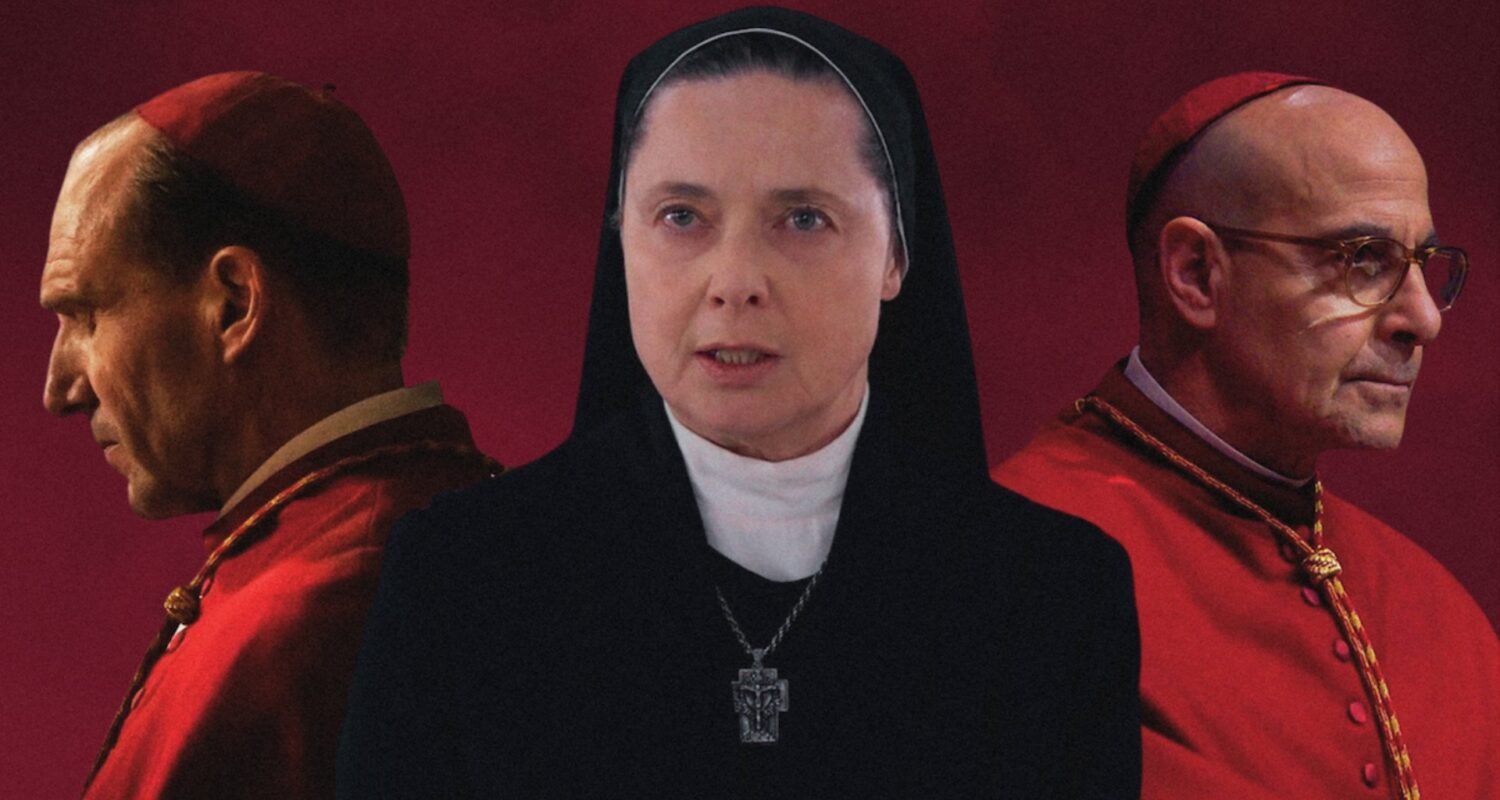
Directed by Edward Berger, Conclave competed for awards against the most critically acclaimed films of 2024, celebrated for its star-studded cast, masterful screenplay, and immaculate production design. Inside the hallowed walls of the Vatican, cardinals from across the globe gather to elect a new pope, but beneath the rituals and prayers simmers a fierce battle of ideology, ambition, and secrecy. The film thus becomes a revelation, exposing how even the most sacred institutions are not immune to the forces of ideological rifts and division. These very forces are set to unfold once more within the Sistine Chapel in the coming weeks, as the election of “God’s Greatest Servant,” as the late Pope Francis once put it, takes shape. In such turbulent times, it is wise to recognise that Conclave’s portrayal of internal power struggles is not just  confined to the walls of the Vatican but extends across contemporary society where political polarisation fractures the fabric of our society. It is therefore my objective in this piece to explore four arguments linked to Conclave that mirror the growing polarisation that defines modern society.

The Power of Swing Politics 

Informally, swing politics refers to drastic shifts in voter sentiment, where electoral strongholds that once reliably supported a particular ideology or political party drift toward an entirely new one. One of the most commonly observed swings occurs along the broad axis of left and right ideals, while another – often more deeply felt – is the swing between liberal and conservative worldviews. The Liberal-Conservative spectrum is a structural impediment within political rhetoric and electoral discourse that is indisputably part and parcel of the battle to select a new pope. In Conclave, this spectrum is explored through the various political factions that make up the college of cardinals, who through secretive agreements and deals, manipulate the ideological currents that dictate the election of a new pope. These distinct factions predominantly include the Conservative and Liberal factions whose underlying political ideologies serve as the rifts through which electoral sentiments swing across the Conclave. 

  • The Liberal Faction (Led by Cardinal Bellini) – Early in the conclave, Cardinal Bellini emerges as a potential candidate, who backs the support of Cardinal Lawrence and a few other liberal-leaning candidates (The Dean of the College of Cardinals). He symbolises the liberal, reformist faction of the College of Cardinals that pushes for the modernisation of religious scriptures through soft stance on issues such as sexuality, women and race. However, his position weakens significantly after a devastating terrorist attack on the Sistine Chapel. The attack heightens fear among the cardinals, creating a mood where conservative, security-focused ideals gain traction, and Bellini’s softer, reformist agenda begins to seem dangerously naïve to many electors. 

  • The Conservative Faction (Led by Cardinal Tedesco) – The conservatives, led by the  Cardinal Tedesco, represent a traditionalist perspective with values and ideals that are more or less congruent to the dominant views that have held Catholic Change for over a millennium. Despite being an early favourite, he astutely capitalises on the climate of fear after the attack, advocating for a strong, unyielding return to Church orthodoxy and authority. However, their momentum falters when Cardinal Vincent Benítez emerges as a moral counterpoint. Benítez’s message of peace, forgiveness, and inclusivity undercuts the fear-driven rhetoric of the traditionalists, offering the conclave a vision of strength through compassion rather than force. This shift reflects how new voices, emphasizing empathy over fear, can unexpectedly realign political landscapes. 

This dynamic within Conclave closely mirrors contemporary political landscapes, where crises – whether acts of terror, economic collapses, or pandemics – often trigger  a sharp swing towards conservative, security-driven politics. Similarly, periods of stability or instability under a conservative leaderships tends to favour progressive movements advocating for reform and inclusion. The film captures how ideological swings are less about coherent visions for the future and more reactive to fear, uncertainty, and the human desire for stability. In today’s society, we witness the same phenomena: moments of crisis fortify traditionalist forces, while emerging voices championing empathy and global solidarity struggle to find footing, only to eventually reshape the political conversation when the appetite for fear wanes. While exogeneous, like an act of terrorism, in the film could easily catalyse and expedite such a swing in ideology, the underlying force that powers swing politics is not exogenous nor endogenous shocks. Ultimately, it is a powerful group of undecided centrists that dictate ideological shifts whose uncertainty is what drives the forces of society as it did in Conclave.  

Political Centrism as a Parameter of Uncertainty 

In political theory, centrism advocates for gradual change through a diplomatic stance that resists both the right’s adherence to the status quo and the left’s pursuit of radical transformation. Unlike the liberal and conservative factions, which are hallmarked by clear leaders and ideological markers, the centrist faction within Conclave remains elusive, lacking both defined leadership and explicit values in the papal context. Although the film intentionally refrains from spotlighting any figures as explicitly centrist, it is indisputable that they collectively form the greatest majority within the College of Cardinals. This is evidenced by the repeated ideological shifts across each ballot and the ultimate twist that sees Cardinal Benítez secure the papacy. These fluid shifts mirror the cognitive and emotional volatility often seen among centrist voters, suggesting that centrism in the Vatican is less a coherent ideology than a void. Paradoxically, it is this very lack of ideological rigidity that propels the Conclave towards consensus, with the majority’s uncertainty ultimately determining the course of the Church’s future.

In this way, political centrism, with no definite definition, serves as a parameter of uncertainty – a force that can either stabilise or paralyse institutional decision-making depending on the pressures at play. Applied to broader society, centrism offers the virtue of moderation: the ability to cool down extremism, seek compromise and adapt to complex realities without resorting to ideological purism. However, its vice lies in its inherent ambiguity; in moments of profound moral or political crisis, the centrist impulse toward caution can devolve into indecision, allowing more extreme forces to set the terms of debate. In Conclave, as in the real world, the centrists’ reluctance to commit to bold positions prolongs instability, but ultimately their quiet, collective shift determines the course of history – illustrating how the “middle ground” often holds more power than either side realises, for better or for worse.

The Curse of The Populism

Beyond the liberal, conservative and centrists faction, is another faction that we are indirectly exposed to in the form of populism. In political rhetoric, populism is political philosophy that strives to appeal to ordinary people when their needs are disregarded by dominant and elite groups within society. It is an aspect of politics we witness daily as politicians carefully craft their image to represent the needs of the common man promising policies that work towards the utilitarian good of broader society. In Conclave the populist faction is primarily led by Cardinal Tremblay who positions himself as a man of the people, using simple slogans and emotional appeals rather than complex theological arguments to gain support.  Yet, as the conclave progresses, his opportunism becomes apparent, and his shallow rhetoric is exposed through an event that represents the cursed hypocrisy of populism as the next paragraph illustrates. 

Working with Sister Agnes, the head housekeeper, Cardinal Lawrence discovers that Cardinal Tremblay arranged for the sudden transfer of a servant to create issues with anotehr candiate and  conceal evidence of the electoral corruption he had taken part in. Breaking into the late pope’s sealed apartments, Cardinal Lawrence uncovers documents revealing that Tremblay had bribed cardinals to secure his votes, a revelation that shakes the integrity of the conclave. . This sequence embodies The unwritten Curse of Populism: Tremblay, who rose on promises of humility and service to the people and College of Cardinals, is unmasked as a self-serving opportunist, demonstrating how populist rhetoric often cloaks corruption and ambition, ultimately deepening public distrust in institutions that claim to represent moral authority. It is a trap that ordinary citizen could easily fall to as they are swayed by politicians choosing to represent their interests by antagonising the existence of elites through an image that hides their corrupt ambitions. 

Does Political Pragmatism win at the end of the day?  

Ultimately, all factions — liberal, conservative, centrist, and populist — fail to secure the papacy due to their inability to unify the College of Cardinals and form a majority. It is Cardinal Benítez’s nuanced response to the terrorist attack that allows him to transcend these fractured ideologies and emerge as the true figure of political pragmatism. While the liberal faction falters with its idealistic calls for reform and the conservatives cling to fear-driven orthodoxy, Benítez’s approach stands out by focusing on reconciliation, peace, and unity. His pacifist stance not only addresses the immediate crisis but also offers a broader, more inclusive vision for the Church’s future, healing divisions and bridging gaps between the conflicting factions. By recognizing that the true challenge lies in overcoming fear and division, rather than perpetuating it, Benítez successfully shifts the ideological battleground away from rigid politics to a more humanitarian and pragmatic vision. His election illustrates that, in times of great crisis, political pragmatism — the ability to adapt, heal, and unify — proves to be the most effective and enduring ideology.

Continue reading
Written by: Mineka
Critique Corner My Writing Corner

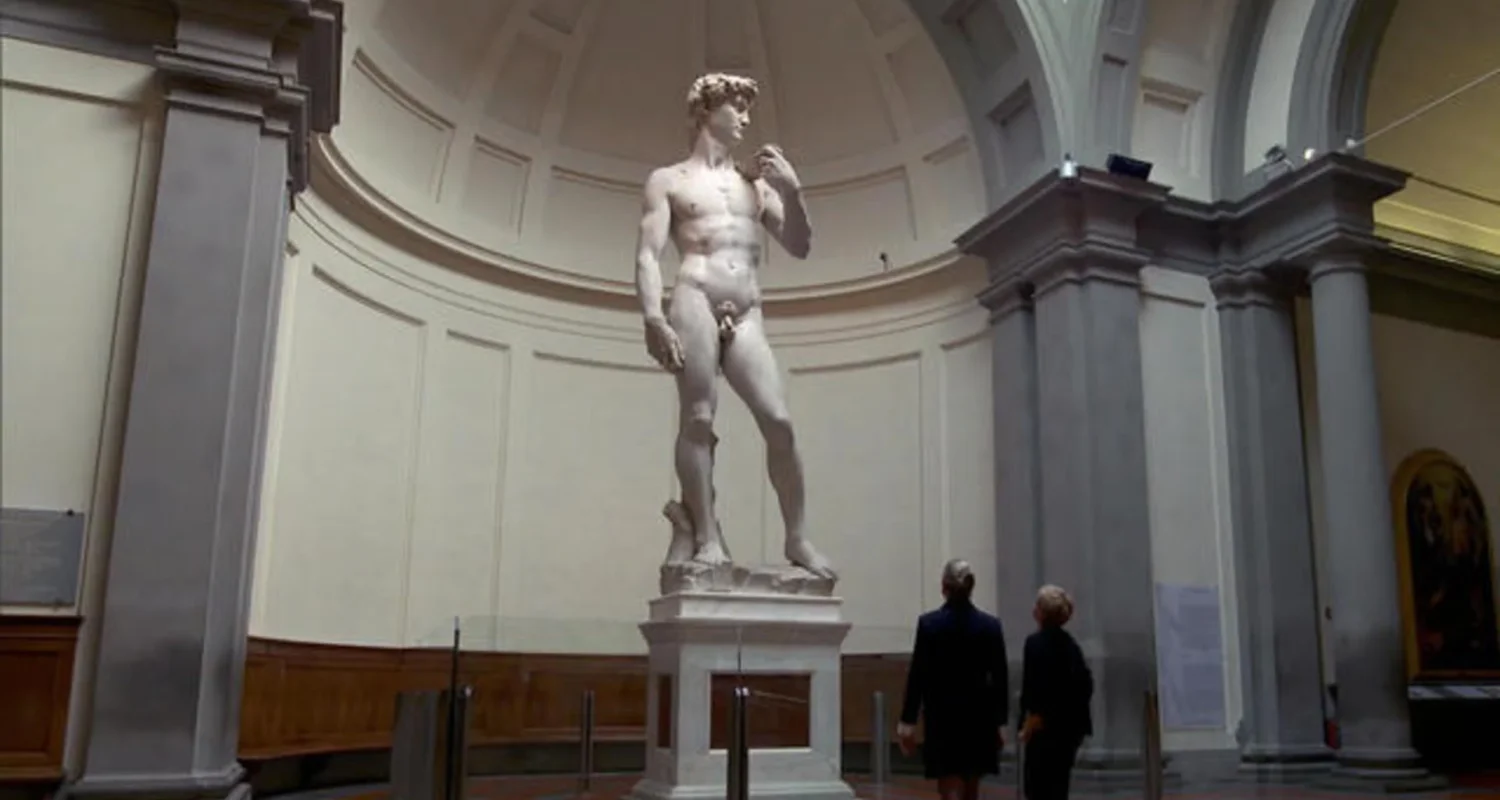
Contemplating Contrapposto: The Symbolisms and Existential Depths of Structural Art

March 25, 2025 No Comments

Contemplating Contrapposto: The Symbolisms and Existential Depths of Structural Art


The classical contrapposto is a fascinating feature of the sculpture and style of classical antiquity that traces its origins to the foundations of Western art in Ancient Greece. Known for celebrating the male physique as a naturalistic representation of athleticism, Ancient Greece’s adoration of masculine virility has been keenly depicted through its many artistic endeavours, including literature, pottery, and sculpture. Muscular Greek statues, in particular, with their chiselled torsos, rippling forms, and sensuous curves, exude an alluring and timeless eroticism, capturing the essence of divine perfection and human desire in every sculpted detail.

The contrapposto, which bears a certain anatomical specificity, is one of the many features that adorn the mystical yet luring statues and statuettes of Ancient Greece. It can be defined as a sculptural scheme in which a standing human figure is poised such that its weight rests on a single leg (called the engaged leg), which subsequently frees the other leg, which is bent at the knee. As time progressed and the Ancient World swept into slumber, resurrections of the classical contrapposto saw itself reappearing in the timeless sculptures of the European Renaissance, such as Michelangelo’s infamous David in 1501. Although this structural scheme frequently appears across the grand plethora of classical sculpture, little is known as to why this scheme may be significant or for what purpose it stands in the broader philosophical sphere of existential thought.

Those whose minds are predisposed to inquisitiveness, may gaze for hours upon a sculpture, naturally pondering the multitude of questions that interrogate the purpose, depth, and hidden motives behind the sculptor’s choices. Staring at the sculpture of Donatello’s David, our inquisitive drive demands that we understand and rationalize every distinct and precise feature of the sculptural opus through the artistic motives that have driven Donatello to construct his sculptural masterpiece. Why does he place his weight on a singular leg? Why are his eyes directed towards the earth? Why do his fingers bend in a circular motion while he places his left hand towards the starting point of his pelvic muscles? These questions seek to derive meaning from sculptural choices and in turn question the artist’s anatomical choices, which may be undiscovered through mere historical or contextualised understanding.

As humans, demystifying the world is complemented by further mystifying its secrets, which at the end of the day is what strikes the complex beauty of humanity. Hence, we would also want to contemplate contrapposto as a philosophical endeavour more than an artistic one by aiming to resurrect its metaphysical secrets by understanding the sculptural schemes in the broader context of mind’s complexity. Extending this to the analogy of Donatello’s David, we may be propelled to understand whether the circular motion of his fingers is a hidden symbol for the anxiety of stepping into conflict, whether the direction of his eyes towards the ground is a motif that suggests an inner existential conflict, or whether the general lack of balance between the sculpture’s limbs is a physiological expression of David’s epistemic dissonance in partaking in war.

The contrapposto, among many other sculptural schemes and choices, is one such feature that triggers this depth of questioning and may be imperative to unravelling the shades of meaning from an entire sculpture and demystifying its philosophical undertones. As illustrated earlier, the contrapposto seeks to focus the weight of a statue onto a single leg while the other is kept free but bent at the knee. This position is generally associated with free-standing male figures and is one that posits grace and masculine poise in a statue. Previously it was entailed that the posture is natural and relaxed, although present-day humans may reject this claim upon forcibly attempting the contrapposto, which subsequently obscures further levels of questioning. However, what humans fail to recognise is that the contrapposto is indeed a natural pose that is involuntarily achieved through the anatomical interaction between our biology and environment and is therefore harder to achieve when done forcibly. The contrapposto emerges as we take our final step in a dignified stride, our weight centred on one leg while the other remains free and bent, poised to move forward. This naturalistic stance suggests that each sculpted figure engaging in this pose has recently walked or is about to set foot decisively. For David, this could symbolise the rock from which he plans to confront the Philistine giant Goliath and lead his army. It represents a midpoint between action and anticipation, conveying a sense of the impending incompleteness inherent in the contrapposto. This pose hints at hidden doubts and uncertainties within the character, whether it is the unarmed David facing a formidable enemy or the contemplative gaze of a deity surveying the world from the heavens. This juxtaposition of doubt alongside the bold projection of the sculpted figure creates a dynamic tension that resonates with viewers, inviting empathy and shared introspection. The contrapposto thus serves not only as a physical stance but also as a metaphysical window into the inner turmoil of its subjects, offering viewers a deeper connection to the complexities of the human mind as it is hindered by the power of doubt.

Another interpretation of contrapposto, merging physiology with phenomenology, maybe the nature of epistemic dissonance. In the philosophical tradition, weight is viewed as a focus of energies that, when evenly distributed across our physiological systems, keeps us alive and human. While contrapposto may be naturally achieved between anticipation and action, as signified in the previous interpretation, when one tries to forcibly strike this pose, the previous argument is no longer valid, signifying greater philosophical questioning regarding the nature of mental balance. Although metaphysical forces tend to keep our minds in balance, there are always instances where this may be unpresented, thereby compelling us to struggle and strive in order to seek balance between our minds and subsequently our organs and organ systems.

The characters that engage in the contrapposto, by this inferential point, are undergoing some inner form of existential questioning or epistemic dissonance, as there may be an imbalance between their thoughts, feelings, and behaviour, as resonant with the physical imbalance between the distribution of their weight. This imbalance is caused by the character engaging in behaviour that confounds or is in flux with the affective and cognitive facets of the character’s attitude, leading to an unpleasant sense of anxiety. This is easily evident through images of David where he is on the verge of undertaking a war which misaligns with his value system and underlying attitudes.

Conclusively, analytical minds that value art and its expression are not just appreciators, as they seek to go into depths behind the significance of the artistic choices that drive an artwork’s meaning. In the case of sculptural works, it is the anatomical features of the statue and how they correlate with story, context, or philosophy through which that statue was constructed. The contrapposto, as natural and simple as it might seem, is a symbol of the incompleteness we experience as humans every day as we ebb and flow through cycles of hope between moments of anticipation and action. In addition to that, the imbalance caused by the pose may be a physio-psychological expression of the epistemic dissonance we undergo when our value systems and actions misalign, thus triggering a series of existential questions that ponder in the abyss of our minds. Therefore, The contrapposto as passed from the Ancient Greeks to Renaissance sculptors, is not a mere structural choice but one that deconstructs a myriad of truths about the human experience that shall never lose their inherent relevance.

Continue reading
Written by: Mineka

ABOUT ME

Welcome, curious wanderer! I'm Mineka, a student living in Melbourne, and this is your window to explore the depths of my intellectual journey. Delve into the realms of philosophy's timeless questions, immerse yourself in the rich tapestry of global literature, and uncover the strategies shaping modern business innovation. Join me on this intellectual odyssey as we navigate the pathways of knowledge that inspire my growth and passion. Welcome aboard!

Popular Posts

The Pretty Petty Ironies of Life!

The Pretty Petty Ironies of Life!

July 22, 2024
Meaning Under Pressure: The Existential Lyrics Driving ESC 2026’s Lithuania & Czechia

Meaning Under Pressure: The Existential Lyrics Driving ESC 2026’s Lithuania & Czechia

May 10, 2026

Mobiel spelen bij Baloo Casino: wat zijn de mogelijkheden?

March 13, 2026

Tortuga Casino est-il une plateforme transparente pour les joueurs ?

January 28, 2026

Betspino Casino: Een kijkje achter de schermen

February 8, 2026

MY WRITING CORNER – CATEGORIES

  • Pulse of the World
  • Critique Corner
  • Research Desk
  • Philosophy Symposium
  • Creative Chronicles

Open Mic – Categories

  • Current Affairs
  • History, Arts & Humanities
  • Science & Technology
  • Philosophy & Stoicism

Lifestyle Collective – Categories

  • IN-CAFÉ CINEMA
  • IN-CAFÉ JUKEBOX
  • IN-CAFÉ LIBRARY
  • IN-CAFÉ MAP

Recent Posts

Meaning Under Pressure: The Existential Lyrics Driving ESC 2026’s Lithuania & Czechia

Meaning Under Pressure: The Existential Lyrics Driving ESC 2026’s Lithuania & Czechia

May 10, 2026
Collapsed Regimes, Nuclear Disarmament and EU Solidarity: The Hidden Politics behind 5 Eurovision Classics

Collapsed Regimes, Nuclear Disarmament and EU Solidarity: The Hidden Politics behind 5 Eurovision Classics

Understanding Contemporary Digital Folklore: The Case of Backrooms, Cores and Liminal Spaces

Understanding Contemporary Digital Folklore: The Case of Backrooms, Cores and Liminal Spaces

April 26, 2026
The Mind Beyond the Brain: The Radical Science Behind Dan Brown’s Latest Thriller

The Mind Beyond the Brain: The Radical Science Behind Dan Brown’s Latest Thriller

Mobiel spelen bij Baloo Casino: wat zijn de mogelijkheden?

March 13, 2026

© 2025 copyright MINEKA'STHOUGHTTAPESTRY // All rights reserved
Designed by LI Studio