
Thought Tapestry - Welcome, curious wanderer! I'm Mineka, a student living in Melbourne,
  • Home
  • My Writing Corner
    • Pulse of the World
    • Critique Corner
    • Research Desk
    • Philosophy Symposium
    • Creative Chronicles
  • Lifestyle Collective
    • IN-CAFÉ CINEMA
    • IN-CAFÉ JUKEBOX
    • IN-CAFÉ LIBRARY
    • IN-CAFÉ MAP
  • Open Mic
    • Current Affairs
    • History, Arts & Humanities
    • Science & Technology
    • Philosophy & Stoicism
  • About Me
Home
My Writing Corner
    Pulse of the World
    Critique Corner
    Research Desk
    Philosophy Symposium
    Creative Chronicles
Lifestyle Collective
    IN-CAFÉ CINEMA
    IN-CAFÉ JUKEBOX
    IN-CAFÉ LIBRARY
    IN-CAFÉ MAP
Open Mic
    Current Affairs
    History, Arts & Humanities
    Science & Technology
    Philosophy & Stoicism
About Me
Thought Tapestry - Welcome, curious wanderer! I'm Mineka, a student living in Melbourne,
  • Home
  • My Writing Corner
    • Pulse of the World
    • Critique Corner
    • Research Desk
    • Philosophy Symposium
    • Creative Chronicles
  • Lifestyle Collective
    • IN-CAFÉ CINEMA
    • IN-CAFÉ JUKEBOX
    • IN-CAFÉ LIBRARY
    • IN-CAFÉ MAP
  • Open Mic
    • Current Affairs
    • History, Arts & Humanities
    • Science & Technology
    • Philosophy & Stoicism
  • About Me
Browsing Tag
streaming
My Writing Corner Pulse of the World

Independence in an Age of Giants: What Armani’s Succession Reveals About Fashion’s Next Era

February 14, 2026 No Comments

Independence in an Age of Giants: What Armani’s Succession Reveals About Fashion’s Next Era

Haute couture has long been anchored in its founding principles of exclusivity, scarcity and uncompromising craftsmanship. Yet this landscape has shifted dramatically with the rise of luxury conglomerates such as LVMH and Kering, whose scale, capital and global retail infrastructures have redefined what luxury looks like in practice. Since the 1990s, a wave of seismic M&A activity has consolidated once‑independent maisons into corporate portfolios, transforming couture from a craft‑driven cultural institution into a high‑growth asset class. Within this new order, Giorgio Armani stands as one of the last great independents, whose unfortunate demise in 2025, marks not only a pivotal moment in the story of Italian haute couture but also a profound question mark over the future trajectory of luxury fashion.

The Transformation of Luxury from Independent Foundations to Corporate Ecosystems

Giorgio Armani’s succession plan, revealed following his passing in September 2025, reveals a phased transition of ownership that protects the brand’s future within a new luxury landscape. The will instructs his heirs to sell a 15% stake in the Armani Group within 18 months, followed by a second sale of up to 54.9% within five years, with priority given to preferred luxury conglomerates like LVMH, L’Oréal and Essilor Luxottica. Simultaneously, he has instructed the Fondazione Giorgio Armani to maintain at least a 30% to ensure that the brand’s signature aesthetic and ethical values remain permanently preserved under any ownership structure. This article situates Armani’s succession plan within a luxury landscape that has shifted from standalone maisons to competing organisational systems. It asks whether the future of fashion will hinge less on a label’s “independence” and more on the system it aligns with — and, ultimately, on the deeper question of who truly owns and shapes this multifaceted industry.

The End of Independence as an Endpoint

For decades, luxury philosophy has treated independence as the ultimate badge of purity: the very idea of a free-spirited couturier standing apart from commercialised conglomerates, answering only to his muse and to a loyal clientele. Armani embodied that philosophy. Yet his will quietly challenges that, in a world of slowing growth, soaring marketing costs and global e‑commerce infrastructure, independence is no longer a sustainable endpoint but a transitional phase. By requiring a 15% stake sale within 18 months and allowing a path to 54.9% in 3-5 years, Armani’s plans demonstrate a timetable of ownership tranches rather than a binary “sell or not sell” moment. Independence becomes something to be phased out, not defended forever, and the founder himself is the one who writes the script for that phasing. The symbolism is stark: if even Armani anticipates an eventual partial takeover, it signals to the wider industry that stubborn independence is now more idealised than strategic.

Three Preferred Buyers, Three Models of Power

The most revealing part of the will is not that the company may be sold, but who is enlisted as potential buyers. Each preferred buyer embodies a different industrial model competing to shape luxury’s future:

  • L’Oréal – The Beauty Platform: L’Oréal’s long Armani beauty licence shows where the real money and visibility sit: in fragrance and cosmetics, not on the runway. Today, beauty companies use “Armani” as a label for mass‑produced, science‑driven products sold in duty‑free shops and Sephora, with fashion providing the story that helps move perfume and skincare at scale.

    LVMH – The Portfolio Conglomerate: LVMH is the clearest example of a multi‑brand group: many maisons, each treated as a distinct brand but managed as assets inside one system. If Armani joined LVMH, it would shift from independence to a model where capital allocation, synergies and market share matter more than the idealisation of the lone atelier. In a world of economic uncertainty and shifting Chinese demand, diversification is the group’s safety net.

    EssilorLuxottica – The Category Platform: EssilorLuxottica, Armani’s long‑time eyewear partner, shows a third path: a category‑focused industrial platform that controls design, manufacturing and retail for one product vertical. Fashion brands plug into this system through licences. In this setup, Armani becomes one brand among many in a hardware‑plus‑distribution machine where the real power sits in production and retail, not in fashion shows.

Taken together, these three suitors are a map of luxury’s new power structure: one where creative houses no longer sit at the centre and industrial platforms do. The future question for any brand becomes: which platform best monetises my name across beauty, accessories and lifestyle?

Foundations, Voting Rights and the New Compromise

Despite the presence of luxury conglomerates in Armani’s will, his insistence that his foundation and closest partners retain at least 30.1% of shares and 70% of voting rights appears to be the most redeeming part of the plan. At first glance, this seems like a last stand for artistic control but in reality, it is a blueprint for a new compromise between heritage and scale. Foundations and dual‑class voting structures allow founders’ values to outlive their biological tenure, ensuring that any acquirer becomes a powerful minority, and not an absolute ruler. This model provides numerous advantages:

  • Brand Maintenance: Conglomerates provide the “hard” infrastructure – That refers to the capital, logistics and digital networks required to run business operations. Meanwhile the foundation polices the “soft” elements of the brand including aesthetic direction, brand codes and philanthropic orientation.

  • Stronger Governance: The legal structure becomes a substitute for the physical presence of the founder in the studio. Instead of Armani himself vetoing an ill‑judged collaboration, voting rights and governance clauses are meant to do the work such that the brand does not compromise the client-facing appeal it has maintained throughout its years in operation.

  • National Identity: National and cultural identity are implicitly defended. By naming an Italian‑anchored industrial player (EssilorLuxottica) alongside French giants (LVMH, L’Oréal) and by keeping voting power in Italian hands, the will plays into broader anxieties about “Made in Italy” brands being controlled from abroad, even as their survival increasingly depends on transnational capital. However, this remains uncertain until a deal is actually struck. Right now, the most likely outcome is that a French conglomerate would absorb the brand and potentially strip away some of its national character.

Nevertheless, this is hybrid model – conglomerate money under foundation oversight – is likely to become more common among late‑stage founder houses. It is different from what we’ve seen in the past with brands like Yves Saint Laurent and Christian Dior, where control was largely ceded to corporate buyers once a deal was done. In contrast, this new governance setup acknowledges that the era of absolute independence is over while refusing to hand the keys entirely to the market, attempting instead to lock in a long‑term guardian for the brand’s identity even as ownership and capital structures evolve.

The Future: Luxury as Competing Operating Systems

So what, then, does Armani’s plan suggest about the long‑term direction of luxury fashion?

  • Luxury Operating Systems: First, the centre of gravity will shift from individual maisons to what once could call “operating systems” of luxury: interconnected networks of brands, factories, licences, data and retail channels under a few mega‑platforms like LVMH. Fashion labels will be like apps running on these operating systems. The strategic question for a house will not just be “who owns us?” but “which system should we turn to when survival is threatened?” which in turn affects the partnerships a brand makes along its journey.
  • ‘Quality’ Deals: Second, the independence narrative will be rewritten. Instead of glorifying independence as an absolute, success will be measured by the quality of the deal a brand can negotiate: the strength of veto rights, the durability of charters and the ability of foundations to enforce long‑term thinking against quick commercial pressures. Heritage will be less about who signs the pay cheques and more about who holds the long‑term vote.
  • Slow Transitions: Third, consolidation will become more selective and slower. Armani’s staged path – minority stake first, majority later, IPO only if needed – reflects a more cautious M&A climate: higher rates, more volatile demand in China and the US and increasing political scrutiny of foreign takeovers. The era of fast, dramatic “rescue” takeovers is fading. Instead, brands will spend longer testing whether they can join a bigger system without losing themselves in the process.

Altogether this signals that creativity itself will adapt. Designers will not just respond to runway trends but to corporate giants: a creative director at an LVMH‑owned Armani would design with cross‑category synergies in mind; under L’Oréal’s influence, beauty storytelling might dominate; under EssilorLuxottica, eyewear could become the point of differentiation. The cut of a jacket and the shape of a shoe will soon be guided by spreadsheets as much as by sketchbooks. In that sense, Armani’s final legacy may not be a set of clothes, but a legal and strategic blueprint showing how a founder can face the age of conglomerates with clear eyes, choose the system that will eventually take over his name, and still try to stop that name from becoming just another logo in a grid.
Continue reading
Written by: Mineka
My Writing Corner Pulse of the World

The Netflix, Warner Bros & Paramount Clash: Hollywood’s Surrender to Streaming Supremacy?

December 4, 2025 No Comments

The Netflix, Warner Bros & Paramount Clash: Hollywood’s Surrender to Streaming Supremacy?

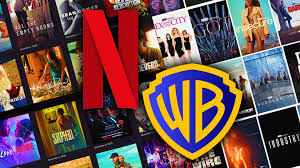
In a seismic M&A deal announced on December 5th, 2025, Netflix agreed to acquire Warner Bros. Discovery’s (WBD) film and TV studios and HBO Max for an enterprise value of $82.7 billion, outbidding rival bidders in a cutthroat auction. Shareholders will receive $23.25 in cash and $4.50 in Netflix stock per WBD share, folding icons like Game of Thrones, The Big Bang Theory, and the DC Universe into Netflix’s product portfolio. Immediately following this announcement, Paramount Skydance swiftly countered with a hostile $108.4 billion all-cash bid at $30 per share for all of WBD including cable assets like CNN and TNT claiming superior value and regulatory ease. While investment bankers and underwriters celebrate with fervour, eager to represent either side of the deal and extolling their supposed trust and the transformative power of the deal, it is essential to pause and reflect. This acquisition must be examined not only as a momentous financial transaction in the history of M&A, but within but within the broader arc of cinematic history and the uncertain future of artistic filmmaking under the weight of corporate consolidation and profit-driven uniformity.​

History of Filmmaking in Hollywood
Hollywood’s cinematic giants once thrived on the iron grip of vertical integration between the 19th and 20th centuries: studios commanded production, distribution and theatres, giving rise to the traditional studio system that dominated the 30s and 40s. That monopoly was shattered by the 1948 Paramount Decree, a landmark ruling that forced divestitures and cracked open the gates to independent filmmaking. This ushered in an era of unprecedented diversity, creativity and artistic risk where films competed for both critical acclaim and widespread popularity. Notable extensions to this ew age of cinema include the post-war New Hollywood of the 1970s with auteurs like Coppola and Scorsese and the rise of critically-acclaimed films such as Lawrence of Arabia and Space Odyssey. The trajectory of theatres and in-person cinemas was then flipped by the infamous blockbuster age of the 1980s, sparked by Jaws and Star Wars, turning movies into global events, bolstered by VHS home video and associated improvements in TV hardware. Despite its economic success, blockbuster films were characterised by a focus on high-budget, mass-appeal films, leading to several critiques including a lack of original ideas, formulaic content and the marginalisation of smaller films. As the blockbuster trajectory evolved, studios increasingly catered to their most lucrative customer segments, neglecting the middle 50% of the market. Into this critical gap stepped Netflix, positioning itself as the champion of underserved audiences and redefining how and what stories were told. The Netflix’s 1997 DVD-by-mail launch exemplified Clayton Christensen’s disruptive innovation theory, starting low-end with cheap rentals to underserved customers, then pivoting to streaming in 2007 as broadband matured, bankrupting Blockbuster by 2010 and triggering the digital deluge. Today, this deal circles back to the monopoly age with Netflix reassembling vertical control over content and distribution signifying its ulterior anxiety of being victimised to another wave of digital disruption. ​

Netflix’s and WB’s Motives
Netflix’s motives extend beyond immediate financial gains. Like any M&A deal, it is the synergies derived from the deal that ultimately determine the intrinsic worth of such a seismic deal. Netflix already projects that its deal will deliver $5-7 billion in annual synergies from combining technology platforms, cross-promoting subscribers and integrating Warner’s vast IP library, which will help offset its maturing growth after reaching 300 million global users. For Warner Bros. Discovery, burdened by over $40 billion in debt from its 2022 merger and ongoing subscriber losses at HBO Max, the deal provides much-needed cash infusion while allowing a spin-off of non-core cable networks like CNN and TNT by Q3 2026 to navigate regulatory approval. From a pre‑due diligence perspective, this financial logic appears sound for both companies: Netflix secures long‑term growth through scale and operational feasibility, while Warner Bros Discovery gains liquidity and regulatory breathing room to stabilise its debt‑laden balance sheet. However, on a deeper level, the motives of this deal seem to extend beyond the optimisation of synergies to an intrinsic need for content dominance. By acquiring the key components of WB, Netflix is essentially gaining access o the studio’s century-old content slate from classics like Casablanca to modern franchises like DC. This subsequently enhances its algorithmic recommendations and attracts premium subscribers who seek variety allowing it to derive value from previously untouched customer bases under Netflix’s current market positioning.  Warner, meanwhile, gains stability amid Wall Street pressure, but at the cost of handing creative control to a data-focused platform that prioritises high-engagement sequels and series over experimental films. This move effectively rebuilds vertical integration in digital form, where Netflix could dominate from production to delivery, potentially controlling 40% of the U.S. streaming market and pressuring competitors like Disney+ on advertising and content costs. Through another perspective, Netflix’s deal  with WB could be seen as an insurance policy hedging against the saturation of its core streaming market, the volatility of subscriber growth and the looming threat of new competitors. By locking in Warner Bros’ evergreen franchises and global distribution rights, Netflix is effectively buying resilience and safeguard against the threat of future digital disruption as Christensen’s model predicts.​

Social Implications and Cinema’s Future Trajectory
The broader social effects of a Netflix victory would reshape how we experience stories and community. Traditional cinemas, which have already seen attendance drop by 70% since the COVID-19 pandemic, would face further decline as exclusive theatrical windows shorten in favour of simultaneous streaming releases. On a psychological and cultural level, this shift replaces shared public events, like families attending a blockbuster premiere, with individualised viewing on personal devices, contributing to increased screen time (now averaging over seven hours daily for U.S. adults) and potentially heightening feelings of isolation. Algorithms would curate access to Warner’s documentaries and HBO’s investigative journalism, raising concerns about filtered narratives in an era of misinformation. One could alternatively dismiss these arguments as alarmism, but the truth remains that as generations evolve, the trajectory of cinema is bending inexorably toward a digitally‑dominated future, one where collective storytelling risks being replaced by algorithmic curation and solitary consumption. Therefore, it is not unsurprising Hollywood’s stakeholders fundamentally oppose this deal, as it reduces content diversity and erodes industry‑wide incentives to produce critically‑acclaimed films—works with the power to melt the coldest hearts and question the deepest assumptions of our society. Netflix’s reliance on viewer data favours predictable franchises, side-lining mid-budget film and underrepresented voices that thrived post-1948. If this trend continues, filmmaking could become more uniform, prioritizing profit metrics over innovation and limiting cinema’s role as a mirror for societal issues. Nevertheless, it would be interesting to see whether these trends only apply to the trajectory of the US filmmaking or whether its effects would extend to international cinema. It could possibly mean that public opposition towards Netflix could finally fuel a spotlight on the more critical-acclaimed and niche international films that are often featured and awarded at the Cannes’s Film Festival?​

Paramount’s Role: Potential Hope or Another Layer of Consolidation?
Paramount Skydance’s aggressive $108 billion all-cash counteroffer introduces a counter-narrative, positioning it as a possible alternative to Netflix’s dominance. By targeting the entirety of WBD including studios, HBO Max, and linear networks like CNN and TNT the bid promises $6 billion in cost synergies through streamlined operations, shared sports rights, and combined ad sales, without the need for complex spin-offs. Proponents argue this preserves more jobs (potentially 20,000+ across both firms) and maintains a hybrid model blending theatres, streaming, and cable, which could sustain cinema chains longer than Netflix’s streaming-first approach. However, critics view it as corporate greed in disguise: Skydance, backed by private equity, seeks its own scale to compete, absorbing valuable assets like TNT’s NBA rights while risking regulatory blocks due to overlapping media holdings. Analytically, Paramount might “save” elements of legacy Hollywood such as Warner’s theatrical commitments and diverse production arms fostering competition that encourages varied content slates. Yet it delays, rather than prevents, consolidation; a Paramount-WBD entity would still control significant market share, echoing pre-1948 monopolies and potentially leading to higher consumer prices without guaranteed creative protections.  To add another layer of political controversy, Paramount’s CEO, David Ellison (son of Oracle’s Larry Ellison) has deep ties to President Trump’s inner circle. Would this change the way Paramount is viewed in this hostile M&A landscape and if successful, what would it mean for the future of progressive media?​

This high-stakes bidding war underscores Hollywood’s crossroads: Netflix’s deal revives digital-era vertical control, while Paramount offers a bridge to hybrid survival. Both paths prioritise scale over fragmentation, but neither fully addresses how to balance profitability with artistic freedom. Regulators, creators and audiences must weigh whether reacquiring monopolistic power risks stifling the diversity that defined cinema’s golden eras. Will this saga end in innovation or imitation? The coming regulatory reviews and shareholder votes will reveal if Hollywood adapts or simply swaps one giant for another.​

Continue reading
Written by: Mineka

ABOUT ME

Welcome, curious wanderer! I'm Mineka, a student living in Melbourne, and this is your window to explore the depths of my intellectual journey. Delve into the realms of philosophy's timeless questions, immerse yourself in the rich tapestry of global literature, and uncover the strategies shaping modern business innovation. Join me on this intellectual odyssey as we navigate the pathways of knowledge that inspire my growth and passion. Welcome aboard!

Popular Posts

The Pretty Petty Ironies of Life!

The Pretty Petty Ironies of Life!

July 22, 2024
Meaning Under Pressure: The Existential Lyrics Driving ESC 2026’s Lithuania & Czechia

Meaning Under Pressure: The Existential Lyrics Driving ESC 2026’s Lithuania & Czechia

May 10, 2026

Mobiel spelen bij Baloo Casino: wat zijn de mogelijkheden?

March 13, 2026

Tortuga Casino est-il une plateforme transparente pour les joueurs ?

January 28, 2026

Betspino Casino: Een kijkje achter de schermen

February 8, 2026

MY WRITING CORNER – CATEGORIES

  • Pulse of the World
  • Critique Corner
  • Research Desk
  • Philosophy Symposium
  • Creative Chronicles

Open Mic – Categories

  • Current Affairs
  • History, Arts & Humanities
  • Science & Technology
  • Philosophy & Stoicism

Lifestyle Collective – Categories

  • IN-CAFÉ CINEMA
  • IN-CAFÉ JUKEBOX
  • IN-CAFÉ LIBRARY
  • IN-CAFÉ MAP

Recent Posts

Meaning Under Pressure: The Existential Lyrics Driving ESC 2026’s Lithuania & Czechia

Meaning Under Pressure: The Existential Lyrics Driving ESC 2026’s Lithuania & Czechia

May 10, 2026
Collapsed Regimes, Nuclear Disarmament and EU Solidarity: The Hidden Politics behind 5 Eurovision Classics

Collapsed Regimes, Nuclear Disarmament and EU Solidarity: The Hidden Politics behind 5 Eurovision Classics

Understanding Contemporary Digital Folklore: The Case of Backrooms, Cores and Liminal Spaces

Understanding Contemporary Digital Folklore: The Case of Backrooms, Cores and Liminal Spaces

April 26, 2026
The Mind Beyond the Brain: The Radical Science Behind Dan Brown’s Latest Thriller

The Mind Beyond the Brain: The Radical Science Behind Dan Brown’s Latest Thriller

Mobiel spelen bij Baloo Casino: wat zijn de mogelijkheden?

March 13, 2026

© 2025 copyright MINEKA'STHOUGHTTAPESTRY // All rights reserved
Designed by LI Studio