Instagram Pinterest Linkedin-in Envelope
    • Home
    • My Writing Corner
      • Pulse of the World
      • Critique Corner
      • Research Desk
      • Philosophy Symposium
      • Creative Chronicles
    • Lifestyle Collective
      • IN-CAFÉ CINEMA
      • IN-CAFÉ JUKEBOX
      • IN-CAFÉ LIBRARY
      • IN-CAFÉ MAP
    • Open Mic
      • Current Affairs
      • History, Arts & Humanities
      • Science & Technology
      • Philosophy & Stoicism
    • About Me
    • Home
    • My Writing Corner
      • Pulse of the World
      • Critique Corner
      • Research Desk
      • Philosophy Symposium
      • Creative Chronicles
    • Lifestyle Collective
      • IN-CAFÉ CINEMA
      • IN-CAFÉ JUKEBOX
      • IN-CAFÉ LIBRARY
      • IN-CAFÉ MAP
    • Open Mic
      • Current Affairs
      • History, Arts & Humanities
      • Science & Technology
      • Philosophy & Stoicism
    • About Me

    Home » Archives for Mineka » Page 4

    Browsing Category
    Archive
    My Writing Corner Critique Corner Photoshootings

    Guernica (1937): The Pursuit of Pacifism in a Cubist Masterpiece

    January 4, 2026 No Comments

    Guernica (1937): The Pursuit of Pacifism in a Cubist Masterpiece

    Pablo Picasso remains one of the most magnetic and polarising figures in modern art — a visionary who shattered the boundaries of representation through Cubism, collage and an unrelenting drive to reinvent form itself. His masterpieces, from the seismic Les Demoiselles d’Avignon to the haunting Guernica, force us into a state of deep interpretation and often rewiring how we see the world. However, his legacy is inseparable from the darker contours of his personal life, marked by fraught relationships and power imbalances that continue to spark debate. Despite his personal flaws, Picasso often channelled a genuine desire for social impact into his work, using art as a means to confront violence and advocate for peace. This analysis turns to one such artwork, Guernica (1937), exploring how pacifistic themes can emerge from the fractured visual language of Cubism and invite deeper reflection on the human cost of war.

    Historical Context

    In 1937, as Spain was engulfed in civil war, the Republican government commissioned Picasso to produce a monumental work for the Paris International Exhibition. The request coincided with the horrific bombing of the Basque town of Guernica, an attack that levelled the community and left hundreds of innocent civilians dead or injured. Living in Paris, Picasso encountered the tragedy through newspaper reports and photographs, and the brutality he witnessed ignited a profound sense of outrage. Guernica emerged from this moment prompting an artistic yearning to capture the violence that was tearing his homeland apart. His contempt for the perpetrators was unmistakable; when the Nazi ambassador Otto Abetz later asked whether he had created the painting, Picasso’s sharp retort “No, you did” underscored the work’s role as both witness and accusation.​
    The work toured globally as anti-fascist propaganda, later entering the UN as a peace symbol, though covered during Iraq War speeches to avoid irony.​

    Interpreting Guernica (1937) as a Cubist Manifesto for Peace

    Cubism can be understood as a fractured visual language that resists immediate clarity and instead invites meaning to surface only through sustained engagement with the artwork. In Guernica (1937), this fragmented vocabulary becomes a vehicle for a deeply embedded pacifistic message, one that interrogates the brutality of war in a surreal and transgressive way. To grasp the full force of this anti‑war sentiment, we must approach the painting not as a literal scene, but as a constellation of symbolic elements whose emotional and moral weight emerges only when they are reassembled into a unified statement about human suffering and the urgent need for peace.

    • The Lightbulb: Picasso seems to avoid literal depictions of bombs, choosing instead a glaring electric light suspended at the centre of the composition. Surrounded by sharp, radiating spikes, the bulb evokes the blinding flashes and searing flames that tore through the sky of Guernica during the bombing. Its harsh, artificial glow also suggests the cold and mechanical nature or violence and warfare. Through this symbol, Picasso leads us to a controversial proposition that both the institution and tools of warfare are against human nature and are against our collective need to attain enlightenment.
    • The Horse: Beneath the lightbulb lies the writhing horse, its body pierced and disembowelled and its mouth contorted in a scream. This figure becomes a visceral emblem of the Spanish people’s suffering under fascist aggression. Picasso embeds a subliminal skull within the horse’s features with its nostrils and teeth forming the unmistakable outline of death. It reinforces the omnipresence of mortality and the brutality inflicted on innocent civilians and animals. 
    • The Bull: The bull, rendered with a disturbingly human eye, stands as a symbol of brute force and unyielding violence. Often interpreted as the embodiment of Nationalist and totalitarian power, the creature’s stoic, almost indifferent presence contrasts sharply with the surrounding chaos. It is thereby highlighting the cold detachment of oppressive regimes from the human suffering they inflict — a theme relevant in the current age of democratic countries disguised under the power of an all-mighty executive branch with unchecked power. Picasso immediately emerges as a subtle critic of fascism which logically contribites to his critique of war through the institutions and political ideologies that appear to tolerate it.
    • The Dove: Nearly erased and barely visible, the dove appears fractured and ghostlike in this artwork. Its fading outline symbolises the disappearance of peace in Guernica, a fragile ideal extinguished by the relentless assault. The damaged bird becomes a quiet but devastating reminder of what has been lost. Despite the existence of numerous institutions that aim to protect world peace, the fading dove remains a vivid symbolism that resonates well with current geopolitical landscape. It resonates with the modern world because people are constantly exposed to images of conflict, instability, and division through global media, making the fragility of peace feel immediate and personal. In an era of rapid change, competing interests, and weakened trust in global cooperation, the fading dove mirrors widespread anxiety that peace is no longer guaranteed but increasingly vulnerable.
    • Mother with a Dead Child: In a pose reminiscent of the Pietà, the mother lifts her lifeless child toward the sky, her eyes rolled back in anguish. This figure echoes Picasso’s portraits of Dora Maar “the woman who cries” and embodies the universal grief of wartime loss. To the right, another woman emerges from the flames, her arms raised and mouth frozen in a silent scream. The jagged triangular shapes around her evoke explosions, turning her body into a living testament to terror. While there are some critics that argue that these symbols may very well embody the events and experiences of Picasso’s personal life, it is undeniable that these images complement the fading dove in its denunciation of warfare and violence in an almost spiritually-provocative manner.
    • The Man with the Sword: The fallen soldier is the only male figure and the only one lying horizontally. His dismembered body still clutches a broken sword, symbolising both heroic resistance and the futility of confronting overwhelming violence. Yet beside his hand sprouts a delicate flower, probably a quiet symbol of renewal, resilience, and the faint persistence of hope. This motif echoes the small, shrouded light of the woman’s kerosene lamp, suggesting that even in devastation, traces of humanity endure.

    Putting together this constellation of individual symbols is what paints is what elevates Guernica (1937) from being a mere record of a geopolitical event to powerful Cubist manifesto for world peace. Reinterpreted as a tapestry, the work becomes a unified moral outcry in which each fragmented form contributes to a larger, urgent plea for humanity. Through this synthesis, Guernica transcends its historical moment and emerges as a timeless visual argument for peace, reminding viewers that even in the most fractured of images, a coherent and compelling call for compassion can still be found.

    Reductionism, Motifs and Symbolism: A Methodology to Interpret Cubist Artworks

    As seen in this brief analysis, reductionism was a dominant methodology through which the meaning of Guernica (1937) was constructed from its fragmented and abstract display of various symbols. This primarily involves breaking subjects down into essential geometric forms and rejecting naturalistic representation in favour of underlying structure. These essential forms are limitless in possibilities ranging from repeated planes, intersecting angles, musical instruments to everyday objects. They act as visual anchors, guiding the viewer through the fractured composition and providing continuity across multiple perspectives. It is then up to interpreter to reframe these fragments within the contextual backdrop of the artwork. Symbolism emerges not through illusionistic detail but through the deliberate selection, repetition, and spatial arrangement of these reduced forms, encouraging the viewer to actively reconstruct meaning. By analysing how artists reduce form, deploy recurring motifs, and embed symbolic associations within fragmented space, this methodology allows Cubist works to be interpreted not as chaotic abstractions, but as carefully structured systems of visual thought that challenge conventional ways of seeing. In the search for pacifistic messaging in Guernica (1937), we rediscovered the timeless relevance of the work as a powerful manifesto against the cyclical nature of human violence and warfare. It also stands as a searing critique of the political systems and ideologies that most readily enable such brutality, exposing the catastrophic human cost they so often conceal.

    ​


    Continue reading
    Written by: Mineka
    My Writing Corner Pulse of the World

    The Netflix, Warner Bros & Paramount Clash: Hollywood’s Surrender to Streaming Supremacy?

    December 4, 2025 No Comments

    The Netflix, Warner Bros & Paramount Clash: Hollywood’s Surrender to Streaming Supremacy?

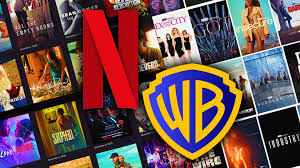
    In a seismic M&A deal announced on December 5th, 2025, Netflix agreed to acquire Warner Bros. Discovery’s (WBD) film and TV studios and HBO Max for an enterprise value of $82.7 billion, outbidding rival bidders in a cutthroat auction. Shareholders will receive $23.25 in cash and $4.50 in Netflix stock per WBD share, folding icons like Game of Thrones, The Big Bang Theory, and the DC Universe into Netflix’s product portfolio. Immediately following this announcement, Paramount Skydance swiftly countered with a hostile $108.4 billion all-cash bid at $30 per share for all of WBD including cable assets like CNN and TNT claiming superior value and regulatory ease. While investment bankers and underwriters celebrate with fervour, eager to represent either side of the deal and extolling their supposed trust and the transformative power of the deal, it is essential to pause and reflect. This acquisition must be examined not only as a momentous financial transaction in the history of M&A, but within but within the broader arc of cinematic history and the uncertain future of artistic filmmaking under the weight of corporate consolidation and profit-driven uniformity.​

    History of Filmmaking in Hollywood
    Hollywood’s cinematic giants once thrived on the iron grip of vertical integration between the 19th and 20th centuries: studios commanded production, distribution and theatres, giving rise to the traditional studio system that dominated the 30s and 40s. That monopoly was shattered by the 1948 Paramount Decree, a landmark ruling that forced divestitures and cracked open the gates to independent filmmaking. This ushered in an era of unprecedented diversity, creativity and artistic risk where films competed for both critical acclaim and widespread popularity. Notable extensions to this ew age of cinema include the post-war New Hollywood of the 1970s with auteurs like Coppola and Scorsese and the rise of critically-acclaimed films such as Lawrence of Arabia and Space Odyssey. The trajectory of theatres and in-person cinemas was then flipped by the infamous blockbuster age of the 1980s, sparked by Jaws and Star Wars, turning movies into global events, bolstered by VHS home video and associated improvements in TV hardware. Despite its economic success, blockbuster films were characterised by a focus on high-budget, mass-appeal films, leading to several critiques including a lack of original ideas, formulaic content and the marginalisation of smaller films. As the blockbuster trajectory evolved, studios increasingly catered to their most lucrative customer segments, neglecting the middle 50% of the market. Into this critical gap stepped Netflix, positioning itself as the champion of underserved audiences and redefining how and what stories were told. The Netflix’s 1997 DVD-by-mail launch exemplified Clayton Christensen’s disruptive innovation theory, starting low-end with cheap rentals to underserved customers, then pivoting to streaming in 2007 as broadband matured, bankrupting Blockbuster by 2010 and triggering the digital deluge. Today, this deal circles back to the monopoly age with Netflix reassembling vertical control over content and distribution signifying its ulterior anxiety of being victimised to another wave of digital disruption. ​

    Netflix’s and WB’s Motives
    Netflix’s motives extend beyond immediate financial gains. Like any M&A deal, it is the synergies derived from the deal that ultimately determine the intrinsic worth of such a seismic deal. Netflix already projects that its deal will deliver $5-7 billion in annual synergies from combining technology platforms, cross-promoting subscribers and integrating Warner’s vast IP library, which will help offset its maturing growth after reaching 300 million global users. For Warner Bros. Discovery, burdened by over $40 billion in debt from its 2022 merger and ongoing subscriber losses at HBO Max, the deal provides much-needed cash infusion while allowing a spin-off of non-core cable networks like CNN and TNT by Q3 2026 to navigate regulatory approval. From a pre‑due diligence perspective, this financial logic appears sound for both companies: Netflix secures long‑term growth through scale and operational feasibility, while Warner Bros Discovery gains liquidity and regulatory breathing room to stabilise its debt‑laden balance sheet. However, on a deeper level, the motives of this deal seem to extend beyond the optimisation of synergies to an intrinsic need for content dominance. By acquiring the key components of WB, Netflix is essentially gaining access o the studio’s century-old content slate from classics like Casablanca to modern franchises like DC. This subsequently enhances its algorithmic recommendations and attracts premium subscribers who seek variety allowing it to derive value from previously untouched customer bases under Netflix’s current market positioning.  Warner, meanwhile, gains stability amid Wall Street pressure, but at the cost of handing creative control to a data-focused platform that prioritises high-engagement sequels and series over experimental films. This move effectively rebuilds vertical integration in digital form, where Netflix could dominate from production to delivery, potentially controlling 40% of the U.S. streaming market and pressuring competitors like Disney+ on advertising and content costs. Through another perspective, Netflix’s deal  with WB could be seen as an insurance policy hedging against the saturation of its core streaming market, the volatility of subscriber growth and the looming threat of new competitors. By locking in Warner Bros’ evergreen franchises and global distribution rights, Netflix is effectively buying resilience and safeguard against the threat of future digital disruption as Christensen’s model predicts.​

    Social Implications and Cinema’s Future Trajectory
    The broader social effects of a Netflix victory would reshape how we experience stories and community. Traditional cinemas, which have already seen attendance drop by 70% since the COVID-19 pandemic, would face further decline as exclusive theatrical windows shorten in favour of simultaneous streaming releases. On a psychological and cultural level, this shift replaces shared public events, like families attending a blockbuster premiere, with individualised viewing on personal devices, contributing to increased screen time (now averaging over seven hours daily for U.S. adults) and potentially heightening feelings of isolation. Algorithms would curate access to Warner’s documentaries and HBO’s investigative journalism, raising concerns about filtered narratives in an era of misinformation. One could alternatively dismiss these arguments as alarmism, but the truth remains that as generations evolve, the trajectory of cinema is bending inexorably toward a digitally‑dominated future, one where collective storytelling risks being replaced by algorithmic curation and solitary consumption. Therefore, it is not unsurprising Hollywood’s stakeholders fundamentally oppose this deal, as it reduces content diversity and erodes industry‑wide incentives to produce critically‑acclaimed films—works with the power to melt the coldest hearts and question the deepest assumptions of our society. Netflix’s reliance on viewer data favours predictable franchises, side-lining mid-budget film and underrepresented voices that thrived post-1948. If this trend continues, filmmaking could become more uniform, prioritizing profit metrics over innovation and limiting cinema’s role as a mirror for societal issues. Nevertheless, it would be interesting to see whether these trends only apply to the trajectory of the US filmmaking or whether its effects would extend to international cinema. It could possibly mean that public opposition towards Netflix could finally fuel a spotlight on the more critical-acclaimed and niche international films that are often featured and awarded at the Cannes’s Film Festival?​

    Paramount’s Role: Potential Hope or Another Layer of Consolidation?
    Paramount Skydance’s aggressive $108 billion all-cash counteroffer introduces a counter-narrative, positioning it as a possible alternative to Netflix’s dominance. By targeting the entirety of WBD including studios, HBO Max, and linear networks like CNN and TNT the bid promises $6 billion in cost synergies through streamlined operations, shared sports rights, and combined ad sales, without the need for complex spin-offs. Proponents argue this preserves more jobs (potentially 20,000+ across both firms) and maintains a hybrid model blending theatres, streaming, and cable, which could sustain cinema chains longer than Netflix’s streaming-first approach. However, critics view it as corporate greed in disguise: Skydance, backed by private equity, seeks its own scale to compete, absorbing valuable assets like TNT’s NBA rights while risking regulatory blocks due to overlapping media holdings. Analytically, Paramount might “save” elements of legacy Hollywood such as Warner’s theatrical commitments and diverse production arms fostering competition that encourages varied content slates. Yet it delays, rather than prevents, consolidation; a Paramount-WBD entity would still control significant market share, echoing pre-1948 monopolies and potentially leading to higher consumer prices without guaranteed creative protections.  To add another layer of political controversy, Paramount’s CEO, David Ellison (son of Oracle’s Larry Ellison) has deep ties to President Trump’s inner circle. Would this change the way Paramount is viewed in this hostile M&A landscape and if successful, what would it mean for the future of progressive media?​

    This high-stakes bidding war underscores Hollywood’s crossroads: Netflix’s deal revives digital-era vertical control, while Paramount offers a bridge to hybrid survival. Both paths prioritise scale over fragmentation, but neither fully addresses how to balance profitability with artistic freedom. Regulators, creators and audiences must weigh whether reacquiring monopolistic power risks stifling the diversity that defined cinema’s golden eras. Will this saga end in innovation or imitation? The coming regulatory reviews and shareholder votes will reveal if Hollywood adapts or simply swaps one giant for another.​

    Continue reading
    Written by: Mineka
    My Writing Corner Pulse of the World

    The Gen Z Risk Profile: What Drives Decisions Across Life Domains

    December 3, 2025 No Comments

    The Gen Z Risk Appetite: What Drives Their Decisions Across Life’s Domains?

    In a world increasingly defined by volatility and uncertainty, risk has become a common thread weaving through many discussions in contemporary life from finance, politics, careers and relationships.  Against this backdrop, Generation Z (Gen Z), the next wave of leaders, consumers, and citizens, emerges with a distinctive risk philosophy that blends an intrinsic drive for growth and impact with a strong sense of measured caution. This produces unique decision-making patterns that are neither reckless nor risk-averse, but rather adaptive and agile. Their risk profile is shaped by a plethora of factors from growing up amid geopolitical conflicts, rapid digital and a heightened awareness of social and environmental inequalities, leading to selective approach to risk (Trivedi, 2024). This article delves deeper into this fascinating topic, by detailing and examining Gen Z’s risk appetite 6 key domains that shape the majority of one life trajectory: Careers and work, Money and investing, Health and wellbeing, Relationships and social life,​ Consumption and Civic responsibility and politics.

    Core mindset and risk lens

    Gen Z is often characterised by a “cautious but ambitious” mindset: they treat many everyday choices through a safety lens, but still want progress, growth and self‑expression (Hatami, 2024). While this mindset may be juxtapositional to most readers, it can be understood by delving deeper into the dynamics of Gen Z’s upbring. Having tackled through financial crises, political instability, climate anxiety and a pandemic that has normalised the language of risk, it is explicable the Gen Z’s risk mindset is one shape by an altruistic ambition for progress but through cautionary and realistic approach  (Trivedi, 2024). Furthermore, this generation consumes an enormous volume of information and is used to researching options, comparing reviews, and seeking expert or peer validation before acting, which supports a more calculated, data‑driven style of risk‑taking  especially within domains like careers and health (Minuskin, 2025). In general, this creates a dual profile: high perceived ambient risk, but selective willingness to take “asymmetric bets” where downside is bounded and upside is meaningful. Many Gen Z decisions resemble portfolio management: they minimise exposure to irreversible, high‑stakes risks while accepting controlled risks that promise learning, autonomy or long‑term payoff. It also means institutions must now communicate clearly, share evidence and build psychological safety can significantly expand Gen Z’s risk tolerance, whereas opacity and perceived manipulation quickly shut it down.​

    Domain 1: Career and work

    In careers, Gen Z tends to see work as a vehicle for self‑development and impact rather than a purely transactional exchange of time for money, although this proposition is purely generalised. Nevertheless, it is observed that they prioritise roles that offer learning, flexibility and alignment with personal values, even if this means more frequent job moves or non‑linear career paths (Minuskin, 2025). Notable trends include job‑hopping, freelancing and portfolio careers which at face value are inherently risky practices especially when compared against the highly concentrated and competitive job market of 2025. However, academic position this practice as a risk management mechanism: instead of staying in a stagnant or toxic role that introduces future risks to to long‑term wellbeing, job hoping practices allow Gen  Z to manage intangible long-term risks that extend beyond simple career growth  (Dobrowolski et al., 2022).  Many also evaluate employers through multiple lenses (culture, purpose, stability and growth) and use social proof (Glassdoor, TikTok, LinkedIn) to assess hidden risks before committing.

    From an analytical standpoint, Gen Z’s career risk profile is about optionality and resilience. They trade the traditional “single employer security” model for a diversified skills and experience portfolio that can absorb shocks and open multiple future paths. The main risk they are willing to take is short‑term instability or experimentation  in exchange for longer‑term adaptability and fulfilment. However, this also raises new vulnerabilities: frequent mobility can reduce institutional support, and high expectations for value alignment may lead to faster disengagement when reality falls short. Organisations that frame stretch opportunities with clear support, transparent progression and genuine inclusion are more likely to be seen as “worth the risk,” while those that ignore mental health or ethics will see Gen Z treat them as existential threats to their identity and wellbeing.

    ​Domain 2: Money and investing

    Financially, Gen Z often carries a strong sense of economic precarity combined with a desire for independence and control. Like many of us, Gen Z worries about housing affordability, student debt and inflation, yet still believe that disciplined planning and smart investing can help them achieve long‑term goals. This aligns with insights from the current economic landscape across numerous developed economies where in inflationary pressures continue to spiral against recessionary economic indicators and poor fiscal outlooks.  Therefore, Gen Z’s behaviour frequently combines defensive tactics such as learning on family support, saving when possible as well as being wary of opaque products implying selective risk‑taking in assets like equities or ETFs ​(Heidelberg, 2025). However, the evidence around Gen Z’s financial risk philosophy is mixes especially in relation to investments and trading. One contrasting view, based on empirical trading data, argues that when markets drop, Gen Z investors  run towards the action, and invest differently to previous generations (Dale, 2025). Nevertheless, this was framed as an impact of digital transformation and increasing information flows within the investment landscape and is unlikely to undermine previous findings on selective risk-taking.

    The dominant view still suggests that financial education, perceived returns, and hands‑on experience are key levers in shaping Gen Z’s investment risk appetite (Daniel, 2024). When they understand risk–return trade‑offs and see examples of successful long‑term investing, their tolerance for market volatility increases, shifting them away from cash hoarding and towards diversified portfolios. Analytically, this could mean  many Gen Z individuals are “latent investors”: once informational and trust barriers are lowered (via transparent apps, bite‑sized education and peer case studies), they adopt behaviours closer to classical rational investors than stereotypes of impulsive traders. Conversely, without guidance, they may  over‑concentrate in trendy high‑risk assets promoted on social media, illustrating how information quality, not just personality, shapes their financial risk profile.

    Domain 3: Health and wellbeing

    Health and wellbeing sit at the centre of Gen Z’s priorities, strongly colouring how they perceive and manage risk in daily life. Notably, many show more conservative attitudes toward certain traditional adolescent risks such as binge drinking or unprotected sex when compared with prior generations at the same age, reflecting both better information and a heightened sense that bodily harm is unacceptable ​(Trivedi, 2024). In the media landscape, this has created a split view . Across multiple international studies, risky behaviours among teens have dropped sharply — for example, adolescent cigarette smoking declined by more than 80% from 1999 to 2019, and the share of 10th-graders attending monthly social parties fell from 80% in the 1990s to 57% by 2017 (Oleksinski, 2022). These declines suggest that Gen Z’s reduced substance use and sexual activity are not isolated trends but part of a broader shift toward more structured, supervised and academically focused lifestyles, where diminished unstructured social time  rather than moral persuasion alone  appears to be a primary driver of their more restrained behaviour patterns.

    Despite this conservative approach to health risks, mental health struggles are more visible and frequently reported: anxiety, depression, and burnout are often linked to constant exposure to global threats, social comparison on digital platforms, and intense performance pressure in school and work (The Society for Risk Analysis & Nair, 2023). From an analytical perspective, Gen Z’s health risk calculations heavily weighs chronic and cumulative harms, not just acute events. Psychological safety, both online and offline, is a key decision driver: they are more willing to leave a course, employer, or social group that consistently harms their mental state, even if this entails economic or reputational costs (Dobrowolski et al., 2022). Seeking therapy, coaching, medication or structured self‑care is increasingly normalised and seen as an active risk‑management strategy rather than a sign of failure. This mindset reshapes how institutions must present trade‑offs; pushing productivity at the expense of wellbeing is not seen as a bold or necessary risk, but as an avoidable hazard that rational actors should reject.

    Domain 4: Relationships and social life

    Relationships, whether romantic or platonic, are ranked similarly to health and financial as some of the key pillars of a good life according to Gen Z audiences (Miia Grénman et al., 2023). Many actively seek emotionally safe and inclusive environments and are relatively quick to disengage from relationships, groups, or workplaces that feel discriminatory, manipulative or psychologically unsafe. Social decisions often weigh respect, communication quality, and shared values as heavily as more traditional markers like status or convenience .​ At the same time, Gen Z navigates a complex digital social layer that amplifies both opportunity and risk. They are prolific users of social media and messaging platforms but increasingly attuned to reputational risk, using privacy settings, alternate accounts or pseudonyms to experiment with identity while protecting their official profile (Minuskin, 2025). While these insights are rather general, considerable research has been conducted on Gen Z’s approach to romantic relationships, with much of the evidence pointing to a cohort that increasingly deprioritizes traditional dating pathways in favour of personal stability, emotional safety, and digital connection (Hall, 2025). Studies consistently show that Gen Z is both more cautious and more intentional about intimacy, delaying romantic involvement until they feel financially and psychologically secure. This shift suggests that their retreat from romance is less a rejection of connection and more a redefinition of what healthy, sustainable relationships should look like in an era marked by economic uncertainty and pervasive digital life. Ultimately, social risk-taking appears to be a fascinating area in the context of understanding Gen Z’s risk appetite. While it’s unlikely these observations are invariant and universal, the underlying idea suggests that  Gen Z tries to balance the psychological benefits of being real with the strategic need to manage future exposure.​

    Domain 5: Consumption

    Each generation appears to carry their own abstract conception y of what constitutes a good life. Based on empirical evidence, Gen Z’s conception of good life increasingly  “good life” increasingly extends beyond material ownership to encompass meaningful experiences, strong relationships, purpose and environmental responsibility (Miia Grénman et al., 2023). Many display scepticism towards hyper‑consumerism and are more likely to factor in the social and ecological impact of brands, perceiving unsustainable or unethical consumption as a long‑term risk to both personal identity and planetary stability. In practice, this can show up in preferences for second‑hand, rental, or repair options, as well as support for brands that communicate transparently about sustainability and social impact (Miia Grénman et al., 2023).​ Lifestyle choices become a site of identity construction and risk management at once. Gen Z often channels risk‑taking into experiential domains—travel, creative projects, side businesses where failure is framed as learning and the downside is relatively contained. Conversely, they tend to treat high‑debt obligations, long lock‑in contracts and opaque financial or subscription products as structural risks to autonomy and future freedom, leading to avoidance or demand for greater flexibility. This creates pressure on brands and institutions to offer more reversible commitments, clear information, and authentic purpose, or risk being perceived as threats rather than enablers of the good life. However, much of these insights, are contradicted by alternative perspectives that argue Gen Z’s commitment to sustainability is often more symbolic than substantive, as their consumption patterns continue to mirror  and in some cases exceed those of prior generations. Critics note that despite vocal climate activism, Gen Z remains deeply embedded in fast-fashion cycles, influencer-driven trends, and e-commerce ecosystems that encourage constant purchasing and rapid product turnover (Sarika Pruthi & Arushi Parnika Kharbanda, 2024). From this viewpoint, the tension between proclaimed environmental values and habitual overconsumption reveals not hypocrisy alone, but the structural pressures of a digital marketplace designed to convert identity, aspiration,and social belonging into perpetual buying behaviour.

    ​Domain 6: Civic engagement and politics

    Civically, Gen Z is unusually attuned to systemic risks such as climate change, social inequality, and political instability. Many view these as defining threats to their future and expect governments, businesses, and communities to share responsibility for mitigation. Their engagement spans voting, protests, online campaigns, and economic actions like boycotts or buycotts, often motivated by a sense of moral urgency rather than traditional partisan loyalty.​ From an analytical angle, Gen Z’s civic risk‑taking often reinterprets what counts as “rational.” Participating in protests, speaking out on social media, or challenging workplace practices may carry personal risks (backlash, conflict, lost opportunities), but these are weighed against perceived existential risks to democracy, equality, or the climate. As a result, many accept reputational or relational costs in the short term to push for systemic change they see as necessary for long‑term survival and justice. This shift suggests that organisations and policymakers who downplay or delay action on systemic risks will increasingly be perceived not just as out of touch, but as actively endangering Gen Z’s future, prompting more confrontational forms of engagement.

    Across careers, money, health, relationships consumption and civic life, Gen Z reveals a risk philosophy defined not by impulsivity nor avoidance, but by disciplined selectivity. They increasingly treat life as a landscape of interconnected risks whether economic, psychological, digital and planetary and choose paths that maximise long-term options while protecting wellbeing, identity and future freedom. Their approach pushes institutions, employers, brands and governments to become more transparent, ethical and psychologically safe. Ultimately, understanding Gen Z’s risk appetite is less about predicting their choices and more about recognising the conditions under which they are willing to take a leap. 

    Continue reading
    Written by: Mineka
    Critique Corner My Writing Corner

    Is this a Religious Portrait or An Image  of Conformist Commercial Exploitation?

    July 28, 2025 No Comments

    Is this a Religious Portrait or An Image  of Conformist Commercial Exploitation?

    The “Son of man” is one of surrealism’s most well-known artworks that now propagates through pop culture through its revival in countless comic strips, plays and cartoonish imageries. At the surface level of analysis, the artwork captures a man dressed in an articulate formal attire (Overcoat, red tie and hat) standing in front of grey-bricked wall amidst the view of an endless blue sea that is merged with a dusk-lit cloudy sky. Most notably, his facial features are camouflaged and obscured by a floating green apple whose leaves are unplucked and consequently becomes the explicit indicator of the painting’s surreal character.

    An Algorithm for Artistic Analysis
    To analyse artworks, I use the approach of establishing an artwork’s contextual foundation through acts such as skimming through the artists personal history and linking it with the motifs and design elements used in his paintings. This step also involves viewing the painting through the lens of time: it entails re-examining the historical events, societal structures, and artistic themes that were prevalent during the period when the painting was completed or the era it depicted. These elements serve as crucial sources that help establish the contextual backdrop of the artwork.

    Contextual insights are then fed through a phase in which artworks are scrutinised in search for obscured symbols and stories that are inherent through artistic techniques be it colour, objects, lines, forms or any other artistic elements. Summing individual stories can rebuild a new narrative, culminating in interpretation that re-epitomises the meaning behind the artwork. Through, this analysis I’ve narrowed the results of this algorithm into two broad thematic interpretations on what I believe this artwork portrays and manifests.

    1. Divinity, Curiosity & Jesus’s Portrait
    In René Magritte’s “The Son of Man,” the apple is often seen as a meaningless distracter, drawing the viewer’s eyes away from the man’s covered face. This obscured visage naturally sparks a sense of curiosity and alacrity in the viewer, compelling them to seek the hidden details of the face. This element suggests the inherently curious nature of humanity, always desiring to uncover the ideas and truths concealed behind visible surfaces. Magritte posits that everything we see hides another thing, paralleling the notion that the for instance, the smiling face of a depressed person can conceal his/her deep sorrow or how a sunflower’s pistil is a numerical pattern of a recursive summation of consecutive numbers. The covered face in the painting underscores the totality of thus theme, highlighting humanity’s natural inclination to seek truth hidden behind everyday things which remains integral in all human endeavours be it scientific exploration, philosophical reasoning or artistry itself. Through this lens, Magritte deftly incorporates and integrates the viewer into his artwork, thereby reinforcing his message on human curiosity and its innate inquisitiveness.

    The apple in the painting can also be interpreted through its biblical symbolism. In the story of Adam and Eve, the apple signifies knowledge and power. The title of the painting, “The Son of Man,” ironically refers to a title used for Jesus, which appears 64 times in the Bible and signifies both Jesus and a universal term for humanity. Combining these divine elements, we can see the apple once again as symbolising mankind’s quest for knowledge, striving to uncover meanings concealed beneath the surface.

    Further exploring the divine aspect, “The Son of Man” can be seen as a portrait of Jesus. The title itself is a biblical term frequently associated with Jesus Christ. This connection invites an interpretation that aligns the painting with themes of spirituality and redemption. The apple, reminiscent of the forbidden fruit from the Garden of Eden, symbolises humanity’s fall and the subsequent need for redemption—a role Jesus is believed to fulfill in Christian theology.
    The unplucked leaves on the apple enhance this interpretation. They suggest purity and untouched nature, possibly symbolizing Jesus’ untainted and divine essence. The leaves also emphasise the natural state of the apple, linking it to the story of original sin and the quest for knowledge. Magritte’s surreal style often challenges the viewer’s perception by placing ordinary objects in extraordinary contexts. The apple obscuring the man’s face serves as a metaphor for the hidden aspects of reality. It compels the viewer to look beyond the surface and question the deeper meanings concealed within.

    This interplay of the hidden and the revealed is central to human experience. Just as the apple hides the man’s face, everyday objects and actions often conceal deeper truths. This theme resonates with the idea of spiritual and philosophical exploration, where uncovering hidden truths is a path to greater understanding.

    The apple’s symbolism as the forbidden fruit ties into the human pursuit of knowledge. In the biblical narrative, the apple represents the knowledge of good and evil, and humanity’s insatiable curiosity to understand the world. This quest for knowledge is a fundamental aspect of human nature, driving scientific discovery, religious enlightenment, and intellectual growth. The painting, with its surreal elements and symbolic depth, invites viewers to contemplate the nature of existence and the layers of meaning hidden within the visible world. It challenges us to consider how much of reality is masked and how our quest for knowledge is a journey to uncover these hidden truths.


    2.Conformity, Commercial Exploitation and Frustration
    René Magritte’s “The Son of Man” can be interpreted through multiple lenses, and one particularly compelling perspective is viewing the surreal masterpiece through the eyes of Magritte’s critique of the commercial world. This interpretation examines the tapestry of businesses, trade, and deals explicitly communicated through the man’s formal attire, reflecting the intricate dynamics of corporate life.

    The apple obscuring the man’s face becomes a potent symbol of compliance and conformity. Magritte was known to be critical of societal norms and expectations, and this painting can be seen as a direct commentary on the corporate world’s demand for conformity. In this context, the apple is a tool that obscures not only the man’s vision of the world but also the world’s view of the man. This deliberate concealment represents how corporate systems often force individuals to hide their true selves, including personal preferences, facial defects, or controversial ideas, in order to fit into established norms and standards. This phenomenon, known as conformity, is a psychological process where individuals alter their beliefs and behaviours to align with those of the majority. In the corporate world, this pressure to conform can stifle creativity, individuality, and authenticity. Employees often feel compelled to present a façade that aligns with corporate expectations, which can lead to a suppression of true identity and personal values.

    Despite conformity being largely viewed as a negative force that inhibits our ability to showcase our true selves, it also allows the world to be less complex and more standardized, fostering unified ideas and opinions. However, the dark, gloomy, and dull colours reflected in the background of this artwork suggest that Magritte viewed conformity in a negative light, portraying it as a phenomenon that leads to inner guilt, distrust, dishonesty, and forgery. The faceless businessman epitomizes the loss of personal identity and the emotional toll of adhering to corporate norms.

    This painting also reflects the frustration and commercial exploitation inherent in the corporate world. The man’s formal attire represents the articulate, meticulously crafted image that individuals in the corporate sphere are often forced to maintain. This image is a mask that conceals their true selves, driven by the need to fit in and succeed within a system that prioritizes uniformity and compliance over individuality and authenticity. The apple, then, can be seen as a symbol of the distractions and superficial goals imposed by the corporate world, diverting attention from genuine self-expression and personal fulfillment.

    Magritte’s work invites viewers to reflect on the psychological and emotional consequences of conformity in the business environment. The pressure to conform can lead to a loss of personal integrity and a sense of alienation, as individuals feel disconnected from their true selves. This alienation is further emphasized by the surreal nature of the painting, which blurs the line between reality and illusion, underscoring the disorienting effects of a life lived in constant conformity.


    Continue reading
    Written by: Mineka
    Page 4 of 20« First...«3456»1020...Last »

    ABOUT ME

    Welcome, curious wanderer! I'm Mineka, a student living in Melbourne, and this is your window to explore the depths of my intellectual journey. Delve into the realms of philosophy's timeless questions, immerse yourself in the rich tapestry of global literature, and uncover the strategies shaping modern business innovation. Join me on this intellectual odyssey as we navigate the pathways of knowledge that inspire my growth and passion. Welcome aboard!

    Popular Posts

    The Pretty Petty Ironies of Life!

    The Pretty Petty Ironies of Life!

    July 22, 2024
    Economic Intuitions behind Australia’s Right to Disconnect

    Economic Intuitions behind Australia’s Right to Disconnect

    Dragons, Myths and Pearls: Reimagining Tomorrowland as a 21st Century Heterotopia

    Dragons, Myths and Pearls: Reimagining Tomorrowland as a 21st Century Heterotopia

    August 4, 2026
    Sergio Leone’s Desert of Absurdity: Extracting the Existential Philosophy of “The Good, The Bad & The Ugly”

    Sergio Leone’s Desert of Absurdity: Extracting the Existential Philosophy of “The Good, The Bad & The Ugly”

    July 22, 2024
    The Saviour From Hell? Psychological Personality Analysis Of Sienna Brooks (Inferno, 2016)

    The Saviour From Hell? Psychological Personality Analysis Of Sienna Brooks (Inferno, 2016)

    MY WRITING CORNER – CATEGORIES

    • Pulse of the World
    • Critique Corner
    • Research Desk
    • Philosophy Symposium
    • Creative Chronicles

    Open Mic – Categories

    • Current Affairs
    • History, Arts & Humanities
    • Science & Technology
    • Philosophy & Stoicism

    Lifestyle Collective – Categories

    • IN-CAFÉ CINEMA
    • IN-CAFÉ JUKEBOX
    • IN-CAFÉ LIBRARY
    • IN-CAFÉ MAP

    Recent Posts

    Dragons, Myths and Pearls: Reimagining Tomorrowland as a 21st Century Heterotopia

    Dragons, Myths and Pearls: Reimagining Tomorrowland as a 21st Century Heterotopia

    August 4, 2026
    Financial Hubris and Intecultural Miscalculations: Why Did JPMorgan Fail Twice in Global Football?

    Financial Hubris and Intecultural Miscalculations: Why Did JPMorgan Fail Twice in Global Football?

    Dynamic Pricing, “Hydration” Breaks and Market Control: The Influence of US Commercial Practices in the 2026 FIFA World Cup

    Dynamic Pricing, “Hydration” Breaks and Market Control: The Influence of US Commercial Practices in the 2026 FIFA World Cup

    June 17, 2026
    Meaning Under Pressure: The Existential Lyrics Driving ESC 2026’s Lithuania & Czechia

    Meaning Under Pressure: The Existential Lyrics Driving ESC 2026’s Lithuania & Czechia

    May 10, 2026
    Collapsed Regimes, Nuclear Disarmament and EU Solidarity: The Hidden Politics behind 5 Eurovision Classics

    Collapsed Regimes, Nuclear Disarmament and EU Solidarity: The Hidden Politics behind 5 Eurovision Classics

    This error message is only visible to WordPress admins

    Error: No feed found.

    Please go to the Instagram Feed settings page to create a feed.

    © 2025 copyright MINEKA'STHOUGHTTAPESTRY // All rights reserved
    Designed by LI Studio