
Recapping The 2026 FIFA World Cup Recap: The Good, The Bad and The Ugly
Recapping The 2026 FIFA World Cup Recap: The Good, The Bad and The Ugly
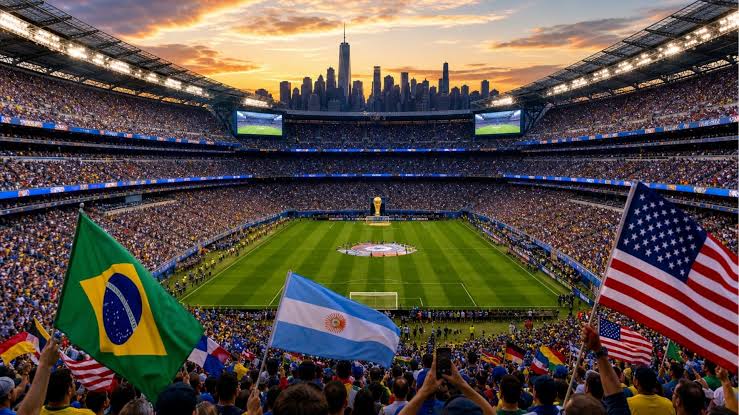
The 2026 FIFA World Cup brought to life the largest tournament in football history: 48 teams, 104 matches and a tri-nation stage set across Canada, USA and Mexico. From rising stars to departing greats and the collective joy exuberating across the fandom, it lived up to its expectations as a tournament that will be remembered for setting a new precedent in the history of football. However, when you throw 48 nations, billions of dollars, deep-seated geopolitical histories and raw human emotion into a single one-month tournament, the World Cup also creates a volatile environment where the highest peaks of human achievement and the lowest valleys of human flaw coexist. Football has always been a universal language — the undisputed beautiful game that unites the world — yet it remains vulnerable to the forces of corruption, greed and fanaticism. In this article, I recap the 2026 World Cup through a trichotomy of stories: The Good (inspiring narratives that capture the collective joy, unity and excellence that define the sport), The Bad (clear and consequential flaws that distance the game from its unified heart), and The Ugly (contested stories that fracture fan opinion and demand deeper nuance).
The Good: Inspiring Stories, Enduring Memories
It’s undoubted that the 2026 FIFA World Cup brought to life a multitude of inspiring narratives — stories that will endure far longer in our collective memory than any controversies, debates or flawed moments that surrounded the tournament. We can trace these narratives to two underlying sources. Firstly, football itself is a universal sport that almost functions as a living mythology, where unity is sparked at the intersection of fiery fortitude and collective passion. Secondly, these narratives emerge from the people who animate the game — the fans and the communities whose emotions and identities transform football from a mere sport into a shared human experience. Together, they generate stories that transcend the pitch, revealing football as a global stage where meaning, memory, and myth are continuously created. So what were these stories at the 2026 World Cup?
- The Cabo Verde Fairytale: In one of the greatest underdog stories in football history, the African volcanic island nation of Cabo Verde — home to just over 500,000 people — became the smallest country ever to reach the knockout stage of the World Cup, crafting the ultimate fairytale narrative. At the heart of the story was 40-year-old veteran keeper Josimar Dias, famously known as Vozinha, who became a global viral sensation for his impeccable goal-keeping capabilities. Notably, he kept clean sheets against world-class attacks from Spain and Uruguay leading to consecutive draws and making 18 crucial tournament saves. Cabo Verde’s climax arrived at the Round of 32, facing the reigning champions, Argentina, whom they pushed to the absolute brink by twice equalising in a resilient display that left the global giants barely surviving until a cruel, extra-time own goal. Together, Cabo Verde’s story proves that micronations posses the power to turn impossible sporting dreams into reality, instilling hope to every underdog dreamer that they too could one day be present on the global stage.
- The Passing Torch Prophecy (Lamine Yamal and Lionel Messi): The 2026 World Cup Final has set up a poetic, full-circle narrative between Lionel Messi (39) and Lamine Yamal (19). The story goes that nearly two decades prior, a 20-year-old rising Lionel Messi participated in a 2007 UNICEF charity calendar photoshoot, where his family randomly won a neighbourhood raffle to have Messi hold and gently bathe a 5-month-old infant in a plastic tub. Nineteen years later, that exact baby has grown into Spain’s teenage talisman, Lamine Yamal, who is now wearing the same number 19 jersey Messi wore during his own World Cup debut. Today, the faced each other at the 2026 FIFA World Cup culminating in an epic coincidence that fits the narrative of an ultimate passing-of-the-torch prophecy. This story sheds light on the old adage that age is just a number, proving that greatness knows no generational bounds as a 39-year-old master and a 19-year-old prodigy met at opposite ends of their careers to contest the ultimate prize.
- The Revival of The Vikings: Norway has never been known as a football powerhouse, historically failing to qualify for major tournaments despite producing individual talents. However, in 2026, they completely reversed that narrative by riding the generational brilliance of Erling Haaland and Martin Ødegaard to secure a historic, first-ever World Cup quarter final appearance. Beyond their historic success and fierce attack, they softened the game by bringing together a series of pop culture moments that made us chuckle, laugh and smile throughout the tournament. At its centre was the unique personality of Norway’s key striker Haaland, who captured hearts by celebrating goals with his iconic yoga meditation pose and delivering famously robotic, deadpan post-match interviews that quickly became viral memes. In addition to that was the sheer passion of the fandom, with thousands of traveling supporters famously turning stadium stands into giant longships to perform synchronized, thunderous “Viking rowing” chants. Ultimately, their light-hearted spirit proved that even the fiercest competitors can bring pure, contagious fun to the world’s biggest sporting stage.
- Rise of New Stars and the Conclusion of Past Greats: The tournament has also balanced the sunset of an era with the dawning of another, serving as a poignant final chapter for aging icons like Cristiano Ronaldo and Neymar who gracefully passed the torch. This emotional farewell was also highlighted by Croatia’s Luka Modrić, whose legendary career felt monumentally poetic for a player who overcame the challenges of war and childhood displacement to define one of the best eras in Croatian football history. Simultaneously, a new generation of talent took the field with remarkable authority. Kylian Mbappé extended his relentless World Cup podium streak, while Erling Haaland delivered a goal‑scoring masterclass that defined Norway’s rise. Even younger stars — Lamine Yamal and the ever‑composed Jude Bellingham — also played with a maturity far beyond their years, announcing themselves as the next custodians of the sport.
- USA Embraces the Spirit of Football: Fears of a cold home reception in the United States were thoroughly dispelled, as mainstream American sports fans completely leaned into “soccer” culture. For many domestic supporters, the tournament became an intense crash course in global geography and heritage as they traded traditional NFL-style tailgates to learn international chants, history and customs directly from traveling foreign fans. Throughout the tournament, we witnessed some memorable moments with Americans learning the intricate lyrics of Argentine stadium anthems, dressing up in traditional Scottish kilts alongside traveling supporters and jumping into synchronised Viking rows with Norwegian fans. It proved that even the most insulated sports cultures can be swept up by a shared global rhythm, binding diverse people together – a testament to the unifying force of football.
The Bad: Disrespect, Greed and Hooliganism
While football indisputably unites generations, it is important to recognise that the FIFA World Cup is still a by-product of the beautiful game colliding with massive global capitalism, geopolitical rivalries and shifting international alliances. Through this lens, the 2026 World Cup revealed its fair share of “Bad” stories — moments where athletic excellence, unity and sporting purity were undermined by political interests, commercial excess and hooliganism. Four stories stood out most clearly:
- The Red Card Scandal: FIFA triggered a massive civil war within the football community after taking the unprecedented step to suspend the automatic one-match ban for USA forward Folarin Balogun following his red card against Bosnia and Herzegovina. Notably, this shocking decision was finalised just hours before the crucial Round of 16 clash against Belgium, coming as a direct response to a high-level phone call between the US President, Donald Trump and FIFA’s President, Gianni Infantino UEFA immediately condemned the intervention, accusing FIFA of crossing an ethical “red line” amidst swirling rumors of intense political and commercial pressure to keep the host nation alive in the tournament. This dark episode raises serious new questions regarding the integrity of the sport, proving how easily a single executive phone call can bend the rules forcing FIFA to take considerable, transparent steps to repair its shattered credibility.
- Disrespectful Attacks towards Players: It is historically known that a footballer’s fate at a World Cup can be met with either a wave of grace or a barrage of hate. The latter remained true in the 2026 World Cup. Notably, France captain Kylian Mbappé faced abhorrent racial slurs from Paraguayan Senator Celeste Amarilla, who mocked his ancestry on social media after France eliminated Paraguay 1–0 in the Round of 16. Previously similar events conspired when blatant racism was targeted at the Dutch squad following their Round of 32 exit against Morocco and more recently deaths threats were directed at a Norwegian player following a critical mistake. This behaviour highlights a deeply troubling lack of perspective, serving as a reminder that football is ultimately just a game that should never be taken with such cut-throat solemnity that fans resort to racial attacks and violent threats when they are unable to handle a loss.
- Corprorate Greed vs. Fan Experience: The 2026 World Cup also saw FIFA take commercialism to an unprecedented level that portrayed the very limits of corporate greed. The heart of this issue was FIFA’s decision to leverage aggressive dynamic ticket pricing that locked out ordinary fans, alongside mandating artificial hydration breaks specifically engineered to insert extra television commercial slots that thoroughly destroyed the natural rhythm of the matches. This unchecked monetisation was further compounded by exorbitant concessions and strict crackdowns on independent local vendors, completely prioritising corporate sponsorship over tournament accessibility. While the games can never be truly non-commercial, organisations like FIFA must understand the difference between meaningful commercialism and commercialism that creates pain points within the fan experience. When a tournament like the FIFA World Cup sacrifices its own sporting soul to feed corporate appetites, football distances away from its core identity around being the common man’s game.
- Endless VISA Scandals: The tournament was also marred by severe geopolitical friction, heavily driven by hostile United States visa policies and controversial referee assignments. The Iranian national team was a frequent target of such hostility, enduring extensive security screening delays at the border and having to leave the US to Mexico following each match. This diplomatic friction also spilled onto the pitch through the appointment of politically sensitive referee crews, which sparked immediate accusations of systemic bias and unfair officiating. Ultimately, it raises question on what FIFA’s agenda really is and why they have not used their immense power to try and create a neutral space where geopolitical influence does not disrupt player welfare or compromise sporting fairness.
- Football Hooliganism (Fan Clashes): As always, the dark side of football was exposed by the resurgence of football hooliganism, a violent subculture originally dubbed “the English Disease” (a now derogatory term) during its rise in the 1970s and 1980s when British fan riots plagued European stadiums. This modern manifestation of organised fan violence erupted into chaotic street clashes in Mexico City, where rival factions engaged in running brawls that overwhelmed local stadium security. The toxicity spilled over into targeted hostility when a mob of Argentina supporters physically harassed and racially abused American streaming personality IShowSpeed inside the stadium, while other Argentine fan groups sparked diplomatic fury by loudly drowning out the English national anthem with jeers. The unrest culminated across the Atlantic as massive riots erupted in several major European cities following Morocco’s elimination, with disappointed crowds clashing with riot police and damaging public infrastructure. These dangerous disruptions proved that despite decades of strict policing, the destructive legacy of stadium rioting still threatens to overshadow the sport’s greatest global celebration.
The Ugly: Controversies and Debates
So there is the Good and the Bad, so what is the Ugly? The “Ugly” captures the stories that split audiences and resist any stable interpretation. As the decisions made on the field are always prone to debate, these moments persist because they unsettle the viewer in ways the tournament cannot easily absorb.
- Refereeing Consistency and VARgentina: Refereeing consistency has remained a significant issue throughout this World Cup year, culminating in controversial 2026 decisions involving soft penalties, erratic offside calls and a total blind eye turned toward severe fouls. “VARgentina” represents a digital phenomenon stemming from this deeply rooted issue, proposing that tournament officials systematically manipulate video reviews to clear a path of least resistance for Lionel Messi’s squad to reach the final. Believers in this theory point to a pattern of highly subjective penalty calls and lenient disciplinary breaks as proof of narrative-driven corruption, while defenders argue this outrage stems from pure confirmation bias. Ultimately it can never be truly known whether it is sheer luck or systematic manipulate though it does not mitigate FIFA’s responsibility to restore refereeing consistency and officiating integrity. Notably, FIFA must enforce strict refereeing consistency by standardising the threshold for VAR interventions and making the live audio communication between referees and video officials completely transparent to the global public.
- Political Symbology and Storytelling: Politics in the fields of Art and Sport can never be truly separated. The infectiously global nature of the game creates a multitude of opportunities for key players to utilise the pitch as a megaphone for political symbology. This multifaceted practice has historically been used to bring vital attention to urgent human rights issues, much like Germany’s powerful 2022 protest highlighting the exploitation embedded within Qatar’s kafala system. However, the 2026 tournament exposed the darker side of this weaponised activism when several Argentine players flashed nationalistic gestures referencing the contested Falkland Islands. Rather than fostering global solidarity, such specific displays deeply alienate audiences, reignites historic diplomatic tensions and threaten to destroy the tournament’s inherent sense of sporting disunity. Ultimately, while individual expression can be utilitarian, what and who decides the limits of political expression on global stages like the FIFA World Cup will always be a matter of fierce debate.







Leave a Comment