Instagram Pinterest Linkedin-in Envelope
    • Home
    • My Writing Corner
      • Pulse of the World
      • Critique Corner
      • Research Desk
      • Philosophy Symposium
      • Creative Chronicles
    • Lifestyle Collective
      • IN-CAFÉ CINEMA
      • IN-CAFÉ JUKEBOX
      • IN-CAFÉ LIBRARY
      • IN-CAFÉ MAP
    • Open Mic
      • Current Affairs
      • History, Arts & Humanities
      • Science & Technology
      • Philosophy & Stoicism
    • About Me
    • Home
    • My Writing Corner
      • Pulse of the World
      • Critique Corner
      • Research Desk
      • Philosophy Symposium
      • Creative Chronicles
    • Lifestyle Collective
      • IN-CAFÉ CINEMA
      • IN-CAFÉ JUKEBOX
      • IN-CAFÉ LIBRARY
      • IN-CAFÉ MAP
    • Open Mic
      • Current Affairs
      • History, Arts & Humanities
      • Science & Technology
      • Philosophy & Stoicism
    • About Me

    Home » My Writing Corner » Pulse of the World » Page 2

    Browsing Category
    Pulse of the World
    My Writing Corner Pulse of the World

    Mixed Races, Locks & Campaigning: My Predictions for the 2026 Oscars

    March 6, 2026 No Comments
    2026 Oscar Best Picture Nominees - Film Covers

    Mixed Races, Locks & Campaigning: My 2026 Oscar Forecast

    Last year’s Academy Awards unfolded along an unpredictable trajectory, with each precursor ceremony revealing its own biases before a wave of controversies spanning representation debates, resurfaced tweet  and AI‑related backlash upended the campaigns of several front‑runners. The result was a slate of unexpected snubs and surprise victories at the 2026 Oscars. This season, by contrast, feels markedly more stable: a field with clearer frontrunners, a handful of genuinely competitive races and only a few categories still searching for a lock. One of the strongest indicators of a Best Picture front‑runner is the film that leads the nominations tally—a position claimed this year by Ryan Coogler’s Sinners, which shattered records with an extraordinary 16 nominations. Yet despite its all-rounded strength, its repeated losses in top categories at comparable awards shows have led many to believe that One Battle After Another holds the stronger path to the night’s biggest prize. While One Battle After Another and Hamnet claimed the top Golden Globe honours, One Battle After Another went on to dominate the DGA, BAFTA  and PGA awards complicated only by Sinners securing the SAG ensemble win. These precursors suggest that One Battle After Another may indeed be the closest thing to a Best Picture lock, though voting dynamics across dozens of categories always leave room for late‑stage surprises. In this article, I lay out my predictions for the major film categories—who is poised to win, who could upend the race and who, in my view, most genuinely deserves to take home the honour.

    Acting Awards

    It’s an exceptionally strong year for acting, but with only one category presenting anything close to a true lock: Best Actress. Jessie Buckley’s soul‑stirring performances as Agnes in Hamnet has swept every major precursor from the Golden Globes to the BAFTAs placing her in a commanding position to take home the Oscar. Meanwhile the lead actor category demonstrates a mixed narrative. While Timothée Chalamet from Marty Supreme was the assumed front-runner, it was not until the SAG and BAFTA awards that a race was created with Michael B. Jordan from Sinners and Robert Aramayo from I Swear winning their respective award shows. This leaves us to a race between Timothée Chalamet and Michael B. Jordan Both; both actors have delivered powerful performances with Jordan’s excellence demonstrated through double acting  and Chalamet’s comedic yet emotionally-sublte portrayal of an ambitious ping pong player in pursuit of greatness. More complicated, however, are the supporting acting races, with a two-way race between Sean Penn and Stellan Skarsgård for the actor category and a three-way between Amy Madigan, Wunmi Moussaku and Teyana Taylor for the supporting actress category. Realistically, the awards could be given to anyone in each of these categories and only then can a judgment be made on what type of acting really stood out to the academy this year.

    Additional Note: In 2026, we also celebrate a new milestone in Oscar history, as the Norwegian  film Sentimental Value becomes the first non‑English language film to score four acting nominations (Renate Reinsve, Inga Ibsdotter Lilleaas, Stellan Skarsgård, and Elle Fanning). Adding to this landmark moment, Secret Agents star Wagner Moura joins the field with his own nomination, signalling a new era in Hollywood where non-English language performances have received proper recognition. 

    Technical Awards

    Technical categories as always are voted by industry experts and are shaped by precision, spectacle and ingenuity, with several films staking clear claims. F1 is the frontrunner for sound and possibly visual effects, for its immersive racing sequences and high-octane pacing making it a technical marvel. Meanwhile editing, an award largely tied to Best Picture, is most likely to be claimed by One Battle After Another for its stunning well-edited filming sequences and effective transitions between scenes.  One Battle After Another is also likely to earn attention for cinematography, having won the BAFTA and ASC awards, recognising its dynamic camera angles and use of vista vision. However, this can easily be challenged by Sinners who also presents a strong technical proposition around the use of colour, visual design and composition. Despite this, one of the biggest anticipated winners of the night across several technical categories is likely to Guillermo del Toro’s Frankenstein. It is currently the frontrunner for 3 technical categories reinforced by previous wins – These categories include Production Design, Costume Design and Makeup and Hairstyling. Overall, the field is competitive, but these films collectively demonstrate technical excellence in 2026 and it’s unliked that any win would be perceived as controversial or not meticulous.

    Musical Awards

    Musical storytelling has made a striking return to the Oscars this year, with Sinners delivering some of the strongest cinematic music in recent years and emerging as a clear frontrunner for Original Score. Ludwig Groanse’s blues-infused compositions blend modern and traditional elements, culminating in a surreal musical sequence that perfectly integrates narrative and performance, earning the film consistent wins at major precursors including The Golden Globes and BAFTAs. For Original Song, K-pop sensation Golden has dominated the awards conversation as much as the charts; Its global popularity and inventive structure making it one of the year’s biggest hits probably hinting for a revival of Kpop. While there is always a chance the Academy could reward I Lied to You, the consistent recognition of Golden across earlier ceremonies makes it a safe pick. Meanwhile, films like Train Dreams and Bugonia continue to demonstrate the creative possibilities of music in film, but the momentum clearly favours Sinners and Golden as the leading contenders this awards season.

    Writing Awards

    Screenwriting remains a cornerstone of cinematic recognition, and 2026 has begun to clarify the races despite a tumultuous WGA season marked by strikes and controversies. One Battle After Another’s victory in the Adapted Screenplay category at the WGA positions it as the clear frontrunner, creating less hope for films like Hamnet which have failed to properly capture the attention of voting groups. In Original Screenplay, Sinners continues to dominate following its WGA win, Ryan Coogler’s mix of social commentary, character depth and inventive storytelling giving it a strong edge. Nevertheless, It was Just an Accident and Sentimental Value also remain in contention, offering great case of well-constructed foreign language screenplays that blend slight comedic elements with emotional depth, but the awards season so far suggests Sinners and One Battle After Another are the films to beat, with both races showing strong momentum.

    The table below summarises my predictions for the 98th Academy Awards – highlighting the likely winners, the potential surprises and my own perspective on who I would like to see taking the prize.

    The 98th Oscars: My Predictions for Film Categories

    Award CategoryPredicted WinCould WinShould Win
    Best PictureOne Battle After AnotherSinners One Battle After Another and Sinners – Indecisive! 
    DirectorPaul Thomas Anderson,  One Battle After AnotherRyan Coogler, SinnersPaul Thomas Anderson,  One Battle After Another
    ActresssJessie Buckley, HamnetRose Byrne, If I had legs I’d kick youJessie Buckley, Hamnet
    ActorMichael B. Jordan, SinnersTimothée Chalamet, Marty SupremeTimothée Chalamet, Marty Supreme
    Supporting ActressAmy Madigan, WeaponsWunmi Moussaku, Sinners Inga Ibsdotter Lilleaas, Sentimental Value
    Supporting ActorSean Penn,  One Battle After AnotherBenicio Del Toro,  One Battle After AnotherStellan Skarsgård, Sentimental Value
    Writing (Adapted Screenplay)One Battle After AnotherHamnetOne Battle After Another
    Writing (Original Screenplay)SinnersSentimental ValueIt was Just an Accident
    International FilmSentimental Value (Norway)The Secret Agent (Brazil)Sentimental Value (Norway)
    Animated Feature FilmKPop Demon HuntersZootopia 2Arco
    Music (Original Score)SinnersOne Battle After AnotherSinners
    Music (Original Song)Golden – KPop Demon HuntersI Lied To You – Sinners I Lied To You – Sinners
    CinematographSinnersOne Battle After AnotherOne Battle After Another
    SoundF1SinnersSirât
    Production DesignFrankensteinSinnersFrankenstein
    Film EditingOne Battle After AnotherF1One Battle After Another
    Visual EffectsAvatar: Fire and AshF1Sinners
    Makeup & HairstylingFrankensteinSinnersFrankenstein
    Costume DesignFrankensteinSinners

    Frankenstein


    Continue reading
    Written by: Mineka
    My Writing Corner Pulse of the World

    Independence in an Age of Giants: What Armani’s Succession Reveals About Fashion’s Next Era

    February 14, 2026 No Comments

    Independence in an Age of Giants: What Armani’s Succession Reveals About Fashion’s Next Era

    Haute couture has long been anchored in its founding principles of exclusivity, scarcity and uncompromising craftsmanship. Yet this landscape has shifted dramatically with the rise of luxury conglomerates such as LVMH and Kering, whose scale, capital and global retail infrastructures have redefined what luxury looks like in practice. Since the 1990s, a wave of seismic M&A activity has consolidated once‑independent maisons into corporate portfolios, transforming couture from a craft‑driven cultural institution into a high‑growth asset class. Within this new order, Giorgio Armani stands as one of the last great independents, whose unfortunate demise in 2025, marks not only a pivotal moment in the story of Italian haute couture but also a profound question mark over the future trajectory of luxury fashion.

    The Transformation of Luxury from Independent Foundations to Corporate Ecosystems

    Giorgio Armani’s succession plan, revealed following his passing in September 2025, reveals a phased transition of ownership that protects the brand’s future within a new luxury landscape. The will instructs his heirs to sell a 15% stake in the Armani Group within 18 months, followed by a second sale of up to 54.9% within five years, with priority given to preferred luxury conglomerates like LVMH, L’Oréal and Essilor Luxottica. Simultaneously, he has instructed the Fondazione Giorgio Armani to maintain at least a 30% to ensure that the brand’s signature aesthetic and ethical values remain permanently preserved under any ownership structure. This article situates Armani’s succession plan within a luxury landscape that has shifted from standalone maisons to competing organisational systems. It asks whether the future of fashion will hinge less on a label’s “independence” and more on the system it aligns with — and, ultimately, on the deeper question of who truly owns and shapes this multifaceted industry.

    The End of Independence as an Endpoint

    For decades, luxury philosophy has treated independence as the ultimate badge of purity: the very idea of a free-spirited couturier standing apart from commercialised conglomerates, answering only to his muse and to a loyal clientele. Armani embodied that philosophy. Yet his will quietly challenges that, in a world of slowing growth, soaring marketing costs and global e‑commerce infrastructure, independence is no longer a sustainable endpoint but a transitional phase. By requiring a 15% stake sale within 18 months and allowing a path to 54.9% in 3-5 years, Armani’s plans demonstrate a timetable of ownership tranches rather than a binary “sell or not sell” moment. Independence becomes something to be phased out, not defended forever, and the founder himself is the one who writes the script for that phasing. The symbolism is stark: if even Armani anticipates an eventual partial takeover, it signals to the wider industry that stubborn independence is now more idealised than strategic.

    Three Preferred Buyers, Three Models of Power

    The most revealing part of the will is not that the company may be sold, but who is enlisted as potential buyers. Each preferred buyer embodies a different industrial model competing to shape luxury’s future:

    • L’Oréal – The Beauty Platform: L’Oréal’s long Armani beauty licence shows where the real money and visibility sit: in fragrance and cosmetics, not on the runway. Today, beauty companies use “Armani” as a label for mass‑produced, science‑driven products sold in duty‑free shops and Sephora, with fashion providing the story that helps move perfume and skincare at scale.

      LVMH – The Portfolio Conglomerate: LVMH is the clearest example of a multi‑brand group: many maisons, each treated as a distinct brand but managed as assets inside one system. If Armani joined LVMH, it would shift from independence to a model where capital allocation, synergies and market share matter more than the idealisation of the lone atelier. In a world of economic uncertainty and shifting Chinese demand, diversification is the group’s safety net.

      EssilorLuxottica – The Category Platform: EssilorLuxottica, Armani’s long‑time eyewear partner, shows a third path: a category‑focused industrial platform that controls design, manufacturing and retail for one product vertical. Fashion brands plug into this system through licences. In this setup, Armani becomes one brand among many in a hardware‑plus‑distribution machine where the real power sits in production and retail, not in fashion shows.

    Taken together, these three suitors are a map of luxury’s new power structure: one where creative houses no longer sit at the centre and industrial platforms do. The future question for any brand becomes: which platform best monetises my name across beauty, accessories and lifestyle?

    Foundations, Voting Rights and the New Compromise

    Despite the presence of luxury conglomerates in Armani’s will, his insistence that his foundation and closest partners retain at least 30.1% of shares and 70% of voting rights appears to be the most redeeming part of the plan. At first glance, this seems like a last stand for artistic control but in reality, it is a blueprint for a new compromise between heritage and scale. Foundations and dual‑class voting structures allow founders’ values to outlive their biological tenure, ensuring that any acquirer becomes a powerful minority, and not an absolute ruler. This model provides numerous advantages:

    • Brand Maintenance: Conglomerates provide the “hard” infrastructure – That refers to the capital, logistics and digital networks required to run business operations. Meanwhile the foundation polices the “soft” elements of the brand including aesthetic direction, brand codes and philanthropic orientation.

    • Stronger Governance: The legal structure becomes a substitute for the physical presence of the founder in the studio. Instead of Armani himself vetoing an ill‑judged collaboration, voting rights and governance clauses are meant to do the work such that the brand does not compromise the client-facing appeal it has maintained throughout its years in operation.

    • National Identity: National and cultural identity are implicitly defended. By naming an Italian‑anchored industrial player (EssilorLuxottica) alongside French giants (LVMH, L’Oréal) and by keeping voting power in Italian hands, the will plays into broader anxieties about “Made in Italy” brands being controlled from abroad, even as their survival increasingly depends on transnational capital. However, this remains uncertain until a deal is actually struck. Right now, the most likely outcome is that a French conglomerate would absorb the brand and potentially strip away some of its national character.

    Nevertheless, this is hybrid model – conglomerate money under foundation oversight – is likely to become more common among late‑stage founder houses. It is different from what we’ve seen in the past with brands like Yves Saint Laurent and Christian Dior, where control was largely ceded to corporate buyers once a deal was done. In contrast, this new governance setup acknowledges that the era of absolute independence is over while refusing to hand the keys entirely to the market, attempting instead to lock in a long‑term guardian for the brand’s identity even as ownership and capital structures evolve.

    The Future: Luxury as Competing Operating Systems

    So what, then, does Armani’s plan suggest about the long‑term direction of luxury fashion?

    • Luxury Operating Systems: First, the centre of gravity will shift from individual maisons to what once could call “operating systems” of luxury: interconnected networks of brands, factories, licences, data and retail channels under a few mega‑platforms like LVMH. Fashion labels will be like apps running on these operating systems. The strategic question for a house will not just be “who owns us?” but “which system should we turn to when survival is threatened?” which in turn affects the partnerships a brand makes along its journey.
    • ‘Quality’ Deals: Second, the independence narrative will be rewritten. Instead of glorifying independence as an absolute, success will be measured by the quality of the deal a brand can negotiate: the strength of veto rights, the durability of charters and the ability of foundations to enforce long‑term thinking against quick commercial pressures. Heritage will be less about who signs the pay cheques and more about who holds the long‑term vote.
    • Slow Transitions: Third, consolidation will become more selective and slower. Armani’s staged path – minority stake first, majority later, IPO only if needed – reflects a more cautious M&A climate: higher rates, more volatile demand in China and the US and increasing political scrutiny of foreign takeovers. The era of fast, dramatic “rescue” takeovers is fading. Instead, brands will spend longer testing whether they can join a bigger system without losing themselves in the process.

    Altogether this signals that creativity itself will adapt. Designers will not just respond to runway trends but to corporate giants: a creative director at an LVMH‑owned Armani would design with cross‑category synergies in mind; under L’Oréal’s influence, beauty storytelling might dominate; under EssilorLuxottica, eyewear could become the point of differentiation. The cut of a jacket and the shape of a shoe will soon be guided by spreadsheets as much as by sketchbooks. In that sense, Armani’s final legacy may not be a set of clothes, but a legal and strategic blueprint showing how a founder can face the age of conglomerates with clear eyes, choose the system that will eventually take over his name, and still try to stop that name from becoming just another logo in a grid.

    Continue reading
    Written by: Mineka
    My Writing Corner Pulse of the World

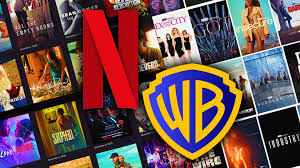
    The Netflix, Warner Bros & Paramount Clash: Hollywood’s Surrender to Streaming Supremacy?

    December 4, 2025 No Comments

    The Netflix, Warner Bros & Paramount Clash: Hollywood’s Surrender to Streaming Supremacy?

    In a seismic M&A deal announced on December 5th, 2025, Netflix agreed to acquire Warner Bros. Discovery’s (WBD) film and TV studios and HBO Max for an enterprise value of $82.7 billion, outbidding rival bidders in a cutthroat auction. Shareholders will receive $23.25 in cash and $4.50 in Netflix stock per WBD share, folding icons like Game of Thrones, The Big Bang Theory, and the DC Universe into Netflix’s product portfolio. Immediately following this announcement, Paramount Skydance swiftly countered with a hostile $108.4 billion all-cash bid at $30 per share for all of WBD including cable assets like CNN and TNT claiming superior value and regulatory ease. While investment bankers and underwriters celebrate with fervour, eager to represent either side of the deal and extolling their supposed trust and the transformative power of the deal, it is essential to pause and reflect. This acquisition must be examined not only as a momentous financial transaction in the history of M&A, but within but within the broader arc of cinematic history and the uncertain future of artistic filmmaking under the weight of corporate consolidation and profit-driven uniformity.​

    History of Filmmaking in Hollywood
    Hollywood’s cinematic giants once thrived on the iron grip of vertical integration between the 19th and 20th centuries: studios commanded production, distribution and theatres, giving rise to the traditional studio system that dominated the 30s and 40s. That monopoly was shattered by the 1948 Paramount Decree, a landmark ruling that forced divestitures and cracked open the gates to independent filmmaking. This ushered in an era of unprecedented diversity, creativity and artistic risk where films competed for both critical acclaim and widespread popularity. Notable extensions to this ew age of cinema include the post-war New Hollywood of the 1970s with auteurs like Coppola and Scorsese and the rise of critically-acclaimed films such as Lawrence of Arabia and Space Odyssey. The trajectory of theatres and in-person cinemas was then flipped by the infamous blockbuster age of the 1980s, sparked by Jaws and Star Wars, turning movies into global events, bolstered by VHS home video and associated improvements in TV hardware. Despite its economic success, blockbuster films were characterised by a focus on high-budget, mass-appeal films, leading to several critiques including a lack of original ideas, formulaic content and the marginalisation of smaller films. As the blockbuster trajectory evolved, studios increasingly catered to their most lucrative customer segments, neglecting the middle 50% of the market. Into this critical gap stepped Netflix, positioning itself as the champion of underserved audiences and redefining how and what stories were told. The Netflix’s 1997 DVD-by-mail launch exemplified Clayton Christensen’s disruptive innovation theory, starting low-end with cheap rentals to underserved customers, then pivoting to streaming in 2007 as broadband matured, bankrupting Blockbuster by 2010 and triggering the digital deluge. Today, this deal circles back to the monopoly age with Netflix reassembling vertical control over content and distribution signifying its ulterior anxiety of being victimised to another wave of digital disruption. ​

    Netflix’s and WB’s Motives
    Netflix’s motives extend beyond immediate financial gains. Like any M&A deal, it is the synergies derived from the deal that ultimately determine the intrinsic worth of such a seismic deal. Netflix already projects that its deal will deliver $5-7 billion in annual synergies from combining technology platforms, cross-promoting subscribers and integrating Warner’s vast IP library, which will help offset its maturing growth after reaching 300 million global users. For Warner Bros. Discovery, burdened by over $40 billion in debt from its 2022 merger and ongoing subscriber losses at HBO Max, the deal provides much-needed cash infusion while allowing a spin-off of non-core cable networks like CNN and TNT by Q3 2026 to navigate regulatory approval. From a pre‑due diligence perspective, this financial logic appears sound for both companies: Netflix secures long‑term growth through scale and operational feasibility, while Warner Bros Discovery gains liquidity and regulatory breathing room to stabilise its debt‑laden balance sheet. However, on a deeper level, the motives of this deal seem to extend beyond the optimisation of synergies to an intrinsic need for content dominance. By acquiring the key components of WB, Netflix is essentially gaining access o the studio’s century-old content slate from classics like Casablanca to modern franchises like DC. This subsequently enhances its algorithmic recommendations and attracts premium subscribers who seek variety allowing it to derive value from previously untouched customer bases under Netflix’s current market positioning.  Warner, meanwhile, gains stability amid Wall Street pressure, but at the cost of handing creative control to a data-focused platform that prioritises high-engagement sequels and series over experimental films. This move effectively rebuilds vertical integration in digital form, where Netflix could dominate from production to delivery, potentially controlling 40% of the U.S. streaming market and pressuring competitors like Disney+ on advertising and content costs. Through another perspective, Netflix’s deal  with WB could be seen as an insurance policy hedging against the saturation of its core streaming market, the volatility of subscriber growth and the looming threat of new competitors. By locking in Warner Bros’ evergreen franchises and global distribution rights, Netflix is effectively buying resilience and safeguard against the threat of future digital disruption as Christensen’s model predicts.​

    Social Implications and Cinema’s Future Trajectory
    The broader social effects of a Netflix victory would reshape how we experience stories and community. Traditional cinemas, which have already seen attendance drop by 70% since the COVID-19 pandemic, would face further decline as exclusive theatrical windows shorten in favour of simultaneous streaming releases. On a psychological and cultural level, this shift replaces shared public events, like families attending a blockbuster premiere, with individualised viewing on personal devices, contributing to increased screen time (now averaging over seven hours daily for U.S. adults) and potentially heightening feelings of isolation. Algorithms would curate access to Warner’s documentaries and HBO’s investigative journalism, raising concerns about filtered narratives in an era of misinformation. One could alternatively dismiss these arguments as alarmism, but the truth remains that as generations evolve, the trajectory of cinema is bending inexorably toward a digitally‑dominated future, one where collective storytelling risks being replaced by algorithmic curation and solitary consumption. Therefore, it is not unsurprising Hollywood’s stakeholders fundamentally oppose this deal, as it reduces content diversity and erodes industry‑wide incentives to produce critically‑acclaimed films—works with the power to melt the coldest hearts and question the deepest assumptions of our society. Netflix’s reliance on viewer data favours predictable franchises, side-lining mid-budget film and underrepresented voices that thrived post-1948. If this trend continues, filmmaking could become more uniform, prioritizing profit metrics over innovation and limiting cinema’s role as a mirror for societal issues. Nevertheless, it would be interesting to see whether these trends only apply to the trajectory of the US filmmaking or whether its effects would extend to international cinema. It could possibly mean that public opposition towards Netflix could finally fuel a spotlight on the more critical-acclaimed and niche international films that are often featured and awarded at the Cannes’s Film Festival?​

    Paramount’s Role: Potential Hope or Another Layer of Consolidation?
    Paramount Skydance’s aggressive $108 billion all-cash counteroffer introduces a counter-narrative, positioning it as a possible alternative to Netflix’s dominance. By targeting the entirety of WBD including studios, HBO Max, and linear networks like CNN and TNT the bid promises $6 billion in cost synergies through streamlined operations, shared sports rights, and combined ad sales, without the need for complex spin-offs. Proponents argue this preserves more jobs (potentially 20,000+ across both firms) and maintains a hybrid model blending theatres, streaming, and cable, which could sustain cinema chains longer than Netflix’s streaming-first approach. However, critics view it as corporate greed in disguise: Skydance, backed by private equity, seeks its own scale to compete, absorbing valuable assets like TNT’s NBA rights while risking regulatory blocks due to overlapping media holdings. Analytically, Paramount might “save” elements of legacy Hollywood such as Warner’s theatrical commitments and diverse production arms fostering competition that encourages varied content slates. Yet it delays, rather than prevents, consolidation; a Paramount-WBD entity would still control significant market share, echoing pre-1948 monopolies and potentially leading to higher consumer prices without guaranteed creative protections.  To add another layer of political controversy, Paramount’s CEO, David Ellison (son of Oracle’s Larry Ellison) has deep ties to President Trump’s inner circle. Would this change the way Paramount is viewed in this hostile M&A landscape and if successful, what would it mean for the future of progressive media?​

    This high-stakes bidding war underscores Hollywood’s crossroads: Netflix’s deal revives digital-era vertical control, while Paramount offers a bridge to hybrid survival. Both paths prioritise scale over fragmentation, but neither fully addresses how to balance profitability with artistic freedom. Regulators, creators and audiences must weigh whether reacquiring monopolistic power risks stifling the diversity that defined cinema’s golden eras. Will this saga end in innovation or imitation? The coming regulatory reviews and shareholder votes will reveal if Hollywood adapts or simply swaps one giant for another.​

    Continue reading
    Written by: Mineka
    My Writing Corner Pulse of the World

    The Gen Z Risk Profile: What Drives Decisions Across Life Domains

    December 3, 2025 No Comments

    The Gen Z Risk Appetite: What Drives Their Decisions Across Life’s Domains?

    In a world increasingly defined by volatility and uncertainty, risk has become a common thread weaving through many discussions in contemporary life from finance, politics, careers and relationships.  Against this backdrop, Generation Z (Gen Z), the next wave of leaders, consumers, and citizens, emerges with a distinctive risk philosophy that blends an intrinsic drive for growth and impact with a strong sense of measured caution. This produces unique decision-making patterns that are neither reckless nor risk-averse, but rather adaptive and agile. Their risk profile is shaped by a plethora of factors from growing up amid geopolitical conflicts, rapid digital and a heightened awareness of social and environmental inequalities, leading to selective approach to risk (Trivedi, 2024). This article delves deeper into this fascinating topic, by detailing and examining Gen Z’s risk appetite 6 key domains that shape the majority of one life trajectory: Careers and work, Money and investing, Health and wellbeing, Relationships and social life,​ Consumption and Civic responsibility and politics.

    Core mindset and risk lens

    Gen Z is often characterised by a “cautious but ambitious” mindset: they treat many everyday choices through a safety lens, but still want progress, growth and self‑expression (Hatami, 2024). While this mindset may be juxtapositional to most readers, it can be understood by delving deeper into the dynamics of Gen Z’s upbring. Having tackled through financial crises, political instability, climate anxiety and a pandemic that has normalised the language of risk, it is explicable the Gen Z’s risk mindset is one shape by an altruistic ambition for progress but through cautionary and realistic approach  (Trivedi, 2024). Furthermore, this generation consumes an enormous volume of information and is used to researching options, comparing reviews, and seeking expert or peer validation before acting, which supports a more calculated, data‑driven style of risk‑taking  especially within domains like careers and health (Minuskin, 2025). In general, this creates a dual profile: high perceived ambient risk, but selective willingness to take “asymmetric bets” where downside is bounded and upside is meaningful. Many Gen Z decisions resemble portfolio management: they minimise exposure to irreversible, high‑stakes risks while accepting controlled risks that promise learning, autonomy or long‑term payoff. It also means institutions must now communicate clearly, share evidence and build psychological safety can significantly expand Gen Z’s risk tolerance, whereas opacity and perceived manipulation quickly shut it down.​

    Domain 1: Career and work

    In careers, Gen Z tends to see work as a vehicle for self‑development and impact rather than a purely transactional exchange of time for money, although this proposition is purely generalised. Nevertheless, it is observed that they prioritise roles that offer learning, flexibility and alignment with personal values, even if this means more frequent job moves or non‑linear career paths (Minuskin, 2025). Notable trends include job‑hopping, freelancing and portfolio careers which at face value are inherently risky practices especially when compared against the highly concentrated and competitive job market of 2025. However, academic position this practice as a risk management mechanism: instead of staying in a stagnant or toxic role that introduces future risks to to long‑term wellbeing, job hoping practices allow Gen  Z to manage intangible long-term risks that extend beyond simple career growth  (Dobrowolski et al., 2022).  Many also evaluate employers through multiple lenses (culture, purpose, stability and growth) and use social proof (Glassdoor, TikTok, LinkedIn) to assess hidden risks before committing.

    From an analytical standpoint, Gen Z’s career risk profile is about optionality and resilience. They trade the traditional “single employer security” model for a diversified skills and experience portfolio that can absorb shocks and open multiple future paths. The main risk they are willing to take is short‑term instability or experimentation  in exchange for longer‑term adaptability and fulfilment. However, this also raises new vulnerabilities: frequent mobility can reduce institutional support, and high expectations for value alignment may lead to faster disengagement when reality falls short. Organisations that frame stretch opportunities with clear support, transparent progression and genuine inclusion are more likely to be seen as “worth the risk,” while those that ignore mental health or ethics will see Gen Z treat them as existential threats to their identity and wellbeing.

    ​Domain 2: Money and investing

    Financially, Gen Z often carries a strong sense of economic precarity combined with a desire for independence and control. Like many of us, Gen Z worries about housing affordability, student debt and inflation, yet still believe that disciplined planning and smart investing can help them achieve long‑term goals. This aligns with insights from the current economic landscape across numerous developed economies where in inflationary pressures continue to spiral against recessionary economic indicators and poor fiscal outlooks.  Therefore, Gen Z’s behaviour frequently combines defensive tactics such as learning on family support, saving when possible as well as being wary of opaque products implying selective risk‑taking in assets like equities or ETFs ​(Heidelberg, 2025). However, the evidence around Gen Z’s financial risk philosophy is mixes especially in relation to investments and trading. One contrasting view, based on empirical trading data, argues that when markets drop, Gen Z investors  run towards the action, and invest differently to previous generations (Dale, 2025). Nevertheless, this was framed as an impact of digital transformation and increasing information flows within the investment landscape and is unlikely to undermine previous findings on selective risk-taking.

    The dominant view still suggests that financial education, perceived returns, and hands‑on experience are key levers in shaping Gen Z’s investment risk appetite (Daniel, 2024). When they understand risk–return trade‑offs and see examples of successful long‑term investing, their tolerance for market volatility increases, shifting them away from cash hoarding and towards diversified portfolios. Analytically, this could mean  many Gen Z individuals are “latent investors”: once informational and trust barriers are lowered (via transparent apps, bite‑sized education and peer case studies), they adopt behaviours closer to classical rational investors than stereotypes of impulsive traders. Conversely, without guidance, they may  over‑concentrate in trendy high‑risk assets promoted on social media, illustrating how information quality, not just personality, shapes their financial risk profile.

    Domain 3: Health and wellbeing

    Health and wellbeing sit at the centre of Gen Z’s priorities, strongly colouring how they perceive and manage risk in daily life. Notably, many show more conservative attitudes toward certain traditional adolescent risks such as binge drinking or unprotected sex when compared with prior generations at the same age, reflecting both better information and a heightened sense that bodily harm is unacceptable ​(Trivedi, 2024). In the media landscape, this has created a split view . Across multiple international studies, risky behaviours among teens have dropped sharply — for example, adolescent cigarette smoking declined by more than 80% from 1999 to 2019, and the share of 10th-graders attending monthly social parties fell from 80% in the 1990s to 57% by 2017 (Oleksinski, 2022). These declines suggest that Gen Z’s reduced substance use and sexual activity are not isolated trends but part of a broader shift toward more structured, supervised and academically focused lifestyles, where diminished unstructured social time  rather than moral persuasion alone  appears to be a primary driver of their more restrained behaviour patterns.

    Despite this conservative approach to health risks, mental health struggles are more visible and frequently reported: anxiety, depression, and burnout are often linked to constant exposure to global threats, social comparison on digital platforms, and intense performance pressure in school and work (The Society for Risk Analysis & Nair, 2023). From an analytical perspective, Gen Z’s health risk calculations heavily weighs chronic and cumulative harms, not just acute events. Psychological safety, both online and offline, is a key decision driver: they are more willing to leave a course, employer, or social group that consistently harms their mental state, even if this entails economic or reputational costs (Dobrowolski et al., 2022). Seeking therapy, coaching, medication or structured self‑care is increasingly normalised and seen as an active risk‑management strategy rather than a sign of failure. This mindset reshapes how institutions must present trade‑offs; pushing productivity at the expense of wellbeing is not seen as a bold or necessary risk, but as an avoidable hazard that rational actors should reject.

    Domain 4: Relationships and social life

    Relationships, whether romantic or platonic, are ranked similarly to health and financial as some of the key pillars of a good life according to Gen Z audiences (Miia Grénman et al., 2023). Many actively seek emotionally safe and inclusive environments and are relatively quick to disengage from relationships, groups, or workplaces that feel discriminatory, manipulative or psychologically unsafe. Social decisions often weigh respect, communication quality, and shared values as heavily as more traditional markers like status or convenience .​ At the same time, Gen Z navigates a complex digital social layer that amplifies both opportunity and risk. They are prolific users of social media and messaging platforms but increasingly attuned to reputational risk, using privacy settings, alternate accounts or pseudonyms to experiment with identity while protecting their official profile (Minuskin, 2025). While these insights are rather general, considerable research has been conducted on Gen Z’s approach to romantic relationships, with much of the evidence pointing to a cohort that increasingly deprioritizes traditional dating pathways in favour of personal stability, emotional safety, and digital connection (Hall, 2025). Studies consistently show that Gen Z is both more cautious and more intentional about intimacy, delaying romantic involvement until they feel financially and psychologically secure. This shift suggests that their retreat from romance is less a rejection of connection and more a redefinition of what healthy, sustainable relationships should look like in an era marked by economic uncertainty and pervasive digital life. Ultimately, social risk-taking appears to be a fascinating area in the context of understanding Gen Z’s risk appetite. While it’s unlikely these observations are invariant and universal, the underlying idea suggests that  Gen Z tries to balance the psychological benefits of being real with the strategic need to manage future exposure.​

    Domain 5: Consumption

    Each generation appears to carry their own abstract conception y of what constitutes a good life. Based on empirical evidence, Gen Z’s conception of good life increasingly  “good life” increasingly extends beyond material ownership to encompass meaningful experiences, strong relationships, purpose and environmental responsibility (Miia Grénman et al., 2023). Many display scepticism towards hyper‑consumerism and are more likely to factor in the social and ecological impact of brands, perceiving unsustainable or unethical consumption as a long‑term risk to both personal identity and planetary stability. In practice, this can show up in preferences for second‑hand, rental, or repair options, as well as support for brands that communicate transparently about sustainability and social impact (Miia Grénman et al., 2023).​ Lifestyle choices become a site of identity construction and risk management at once. Gen Z often channels risk‑taking into experiential domains—travel, creative projects, side businesses where failure is framed as learning and the downside is relatively contained. Conversely, they tend to treat high‑debt obligations, long lock‑in contracts and opaque financial or subscription products as structural risks to autonomy and future freedom, leading to avoidance or demand for greater flexibility. This creates pressure on brands and institutions to offer more reversible commitments, clear information, and authentic purpose, or risk being perceived as threats rather than enablers of the good life. However, much of these insights, are contradicted by alternative perspectives that argue Gen Z’s commitment to sustainability is often more symbolic than substantive, as their consumption patterns continue to mirror  and in some cases exceed those of prior generations. Critics note that despite vocal climate activism, Gen Z remains deeply embedded in fast-fashion cycles, influencer-driven trends, and e-commerce ecosystems that encourage constant purchasing and rapid product turnover (Sarika Pruthi & Arushi Parnika Kharbanda, 2024). From this viewpoint, the tension between proclaimed environmental values and habitual overconsumption reveals not hypocrisy alone, but the structural pressures of a digital marketplace designed to convert identity, aspiration,and social belonging into perpetual buying behaviour.

    ​Domain 6: Civic engagement and politics

    Civically, Gen Z is unusually attuned to systemic risks such as climate change, social inequality, and political instability. Many view these as defining threats to their future and expect governments, businesses, and communities to share responsibility for mitigation. Their engagement spans voting, protests, online campaigns, and economic actions like boycotts or buycotts, often motivated by a sense of moral urgency rather than traditional partisan loyalty.​ From an analytical angle, Gen Z’s civic risk‑taking often reinterprets what counts as “rational.” Participating in protests, speaking out on social media, or challenging workplace practices may carry personal risks (backlash, conflict, lost opportunities), but these are weighed against perceived existential risks to democracy, equality, or the climate. As a result, many accept reputational or relational costs in the short term to push for systemic change they see as necessary for long‑term survival and justice. This shift suggests that organisations and policymakers who downplay or delay action on systemic risks will increasingly be perceived not just as out of touch, but as actively endangering Gen Z’s future, prompting more confrontational forms of engagement.

    Across careers, money, health, relationships consumption and civic life, Gen Z reveals a risk philosophy defined not by impulsivity nor avoidance, but by disciplined selectivity. They increasingly treat life as a landscape of interconnected risks whether economic, psychological, digital and planetary and choose paths that maximise long-term options while protecting wellbeing, identity and future freedom. Their approach pushes institutions, employers, brands and governments to become more transparent, ethical and psychologically safe. Ultimately, understanding Gen Z’s risk appetite is less about predicting their choices and more about recognising the conditions under which they are willing to take a leap. 

    Continue reading
    Written by: Mineka
    Page 2 of 5«1234»...Last »

    ABOUT ME

    Welcome, curious wanderer! I'm Mineka, a student living in Melbourne, and this is your window to explore the depths of my intellectual journey. Delve into the realms of philosophy's timeless questions, immerse yourself in the rich tapestry of global literature, and uncover the strategies shaping modern business innovation. Join me on this intellectual odyssey as we navigate the pathways of knowledge that inspire my growth and passion. Welcome aboard!

    Popular Posts

    The Pretty Petty Ironies of Life!

    The Pretty Petty Ironies of Life!

    July 22, 2024
    Economic Intuitions behind Australia’s Right to Disconnect

    Economic Intuitions behind Australia’s Right to Disconnect

    Beyond the Border: Why Canada’s EBU Move is a Geopolitical Masterstroke

    Beyond the Border: Why Canada’s EBU Move is a Geopolitical Masterstroke

    July 17, 2026
    Sergio Leone’s Desert of Absurdity: Extracting the Existential Philosophy of “The Good, The Bad & The Ugly”

    Sergio Leone’s Desert of Absurdity: Extracting the Existential Philosophy of “The Good, The Bad & The Ugly”

    July 22, 2024
    The Saviour From Hell? Psychological Personality Analysis Of Sienna Brooks (Inferno, 2016)

    The Saviour From Hell? Psychological Personality Analysis Of Sienna Brooks (Inferno, 2016)

    MY WRITING CORNER – CATEGORIES

    • Pulse of the World
    • Critique Corner
    • Research Desk
    • Philosophy Symposium
    • Creative Chronicles

    Open Mic – Categories

    • Current Affairs
    • History, Arts & Humanities
    • Science & Technology
    • Philosophy & Stoicism

    Lifestyle Collective – Categories

    • IN-CAFÉ CINEMA
    • IN-CAFÉ JUKEBOX
    • IN-CAFÉ LIBRARY
    • IN-CAFÉ MAP

    Recent Posts

    Beyond the Border: Why Canada’s EBU Move is a Geopolitical Masterstroke

    Beyond the Border: Why Canada’s EBU Move is a Geopolitical Masterstroke

    July 17, 2026
    Recapping The 2026 FIFA World Cup Recap: The Good, The Bad and The Ugly

    Recapping The 2026 FIFA World Cup Recap: The Good, The Bad and The Ugly

    Small Islands, Infinite Hearts: What Curaçao and World Cup Micro-Nations Teach the World About Collective Joy?

    Small Islands, Infinite Hearts: What Curaçao and World Cup Micro-Nations Teach the World About Collective Joy?

    June 27, 2026
    Dynamic Pricing, “Hydration” Breaks and Market Control: The Heavy Commercialisation of the 2026 FIFA World Cup

    Dynamic Pricing, “Hydration” Breaks and Market Control: The Heavy Commercialisation of the 2026 FIFA World Cup

    Meaning Under Pressure: The Existential Lyrics Driving ESC 2026’s Lithuania & Czechia

    Meaning Under Pressure: The Existential Lyrics Driving ESC 2026’s Lithuania & Czechia

    May 10, 2026
    This error message is only visible to WordPress admins

    Error: No feed found.

    Please go to the Instagram Feed settings page to create a feed.

    © 2025 copyright MINEKA'STHOUGHTTAPESTRY // All rights reserved
    Designed by LI Studio